CATCHER IN THE DRY

Bullets, Beer and Buffalos – Surviving the Outback

I migrated to Australia many years ago, when life was a lot simpler than it is these days. Within a week, I left Sydney for Darwin where I’d planned to work with a friend on a buffalo station, helping to build an abattoir. Sadly we fell out after a couple of months and I was back in Darwin, looking for a job. I got a job driving a truck for a week. I should’ve stuck with that but I ended up on another buffalo station, a fully functioning one. 

By the time I arrived at Mudginberry Station, some two hundred miles south of Darwin, the sun was fading. After dodging wild pigs and stalling the old Austin A30 while crossing a creek, I felt pretty good about getting here at all. I pulled up by the impressive homestead where two fellows stood, chatting.

‘G’day,’ I said. ‘I’m Kim. I’m here to work in the abattoir.’

They looked at me and smirked. I was covered with the grey dust of the dirt track I’d travelled; it sticks to the sweat on your skin and to your wet clothes. One of them pointed to some older buildings on the other side of the airstrip, saying ‘John Barling’s the bloke you want.’

I drove around the airstrip in the fading light and stopped outside a shack, where I could see people sitting around a table on a kind of porch enclosed with fly screen. A wiry bloke in shorts came out to greet me. His black beard and leather-brown skin he made me think of a Mexican bandit.

‘You must be Kim,’ he said, offering his hand. ‘John Barling.’ He grinned as he looked me up and down. ‘Bloody rough country, hey? Get some of that bloody dust off ya and come inside. You’re just in time for tea.’

I heard a clunk behind me and saw John laughing his head off. I turned around and saw the Austin leaning on its front bumper, a wheel lying on the ground next to it. ‘Shit.’

‘Pommy cars are no bloody good around here,’ John said. ‘Don’t worry. We’ll fix the bloody thing tomorrow.’

Over ‘tea’ and several beers I met the rest of the crew. They looked more or less like John: rough as guts, as they say around here. John’s wife, an ex-school-teacher, was the only one who looked neat – she was the one who’d offered me a job here, last week in Darwin where I met her through a friend.

A few months ago, I’d finished high school in Hamm, a dull town on the edge of the Ruhr, the heart of Germany’s steel industry. I’d come to Australia looking for adventure, as you do at nineteen. The broad Aussie accent of the Northern Territory was a far cry from the English I’d learnt at school and I was still struggling to follow conversations. Aussies tend to mumble as well, more so in the bush since the flies crawl into your mouth if you open it too far.

As I answered their questions, one of the guys gave me a strange look. ‘You’re not a Pom, are you?’

‘No, I’m German.’ It was 1966 and I expected my nationality to be a problem.

He smiled. ‘That’s alright then. Rommel said: give me a division of Australian soldiers and I’ll conquer the world.’

I hadn’t expected the field marshal to have celebrity status in outback NT. ‘What’s wrong with Englishmen?’ I asked.

‘They whinge all the time, and they don’t wash.’

His summary seemed to sell the English short but I was glad to get off so lightly.

After dinner I followed my new companions to our quarters, a tin hut with slats for windows, a bunch of bunk beds and a table in the middle. We sat around it, drinking more beer and listening to Beatles records. Even at this late hour I was in a sweat. I was so tired I excused myself and crashed on my bunk.

‘Can’t handle a few beers,’ were the last words I heard.


Breakfast was in the same place as dinner, the chicken coop. The food was the same too: buffalo steak, eggs and white bread. At seven, we were at the abattoir, waiting for Bill the shooter. Bill was a rough version of Paul Newman. He’d left at dawn and soon came back with two dead buffaloes on his trailer. I wondered why they didn’t call him Buffalo Bill.

After we’d winched them onto the concrete landing, Bill hopped back into his Landcruiser with its chopped-off roof and shot off again, a cigarette between his teeth and the wind in his hair.

Wayne showed me how to skin a buffalo. He made it look easy, starting near a hoof and working up to the body with his knife, as if he was unzipping an overall. Thor cut the belly open to get the guts and organs out. Blood and piss washed around my boots. It took three of us to shift the stomach, a bloated grey thing.

‘Stab it with your knife,’ Thor told me as he and Wayne stepped back. I did what I was told and the stench nearly knocked me off my feet. They laughed and laughed. High School doesn’t prepare you for life, does it?

Soon the beasts were ready for Claude, the meat inspector. He lived across the airstrip at the ‘Hilton’. That’s what they called it over here. Claude wore a beret and sported a black mo but when I tried my French on him, he looked confused.

I was the rouse-about, as they call it. I’d chip in on the slaughter floor when the rush was on or I’d give Bruce a hand boning, or I’d help the two aborigine women trim meat. One of them was pretty and smiled at me more than once.

‘Stay well clear of her,’ was Bruce’s advice, ‘unless you want to wake up with a knife in your back.’

I had enough trouble adjusting to my new environment. If the days were an exhausting grind of blood and guts and sweat and flies and mossies, the nights were dull. We ate buffalo meat, drank beer and talked. After that, it was back to our quarters for more beer and talk and Beatles. I grew up with Mozart and Beethoven. I also liked Dylan and Donovan. Some nights I played their songs on my guitar, under the light outside the cold store, until the monster mozzies forced me back inside.

The nights belonged to the vampires and the days were ruled by squadrons of sticky flies that homed in on the moisture around your eyes, nose and mouth. The glowing stories I’d read about the great southern land never mentioned the flies or the mossies.

‘It’s your shout,’ Thor would tell me back inside the dorm and I’d trudge back out to the cold store. The lanky Norwegian drank more than anybody. He didn’t contribute a lot else. Bill the shooter didn’t talk much, either; Bruce and Wayne did most of that.

Bruce’s voice sounded like the whining diff in the truck I drove in Darwin. He had a constant sniffle that he’d wipe with the back of his hand. He shaved about once a week. He even looked sweaty at breakfast, in the relative cool of the morning.

Wayne was about my age, jet-black hair, tattoos on his arms that matched the dark blue of his faded blue Bonds singlet. If he wasn’t smoking a cigarette, he was rolling one. He’d left home at fourteen to get away from his ‘bastard of an old man’. I soon discovered that all the guys were here to get away from somebody: the cops or a divorced wife chasing them for alimony.

Wayne had learnt to talk like the others: grown-up and tough. For Wayne, the world was a source of wondrous surprises, which he tended to express with succinct phrases like ‘Fuck me rotten!’

I never asked what that meant. Sexual terms doing duty as swear words was very confusing for this young German. I admired the discipline these blokes showed in the chicken coop, when Mrs Barling was with us. The F word would turn into bloody, F me became bugger me, and dirty Cs became bloody bastards, all in the blink of an eye. Despite that accommodation, she kept her two kids right away from us.

Wayne showed no restraint when he flicked through magazines in the dorm, gaping at photos of pop stars and Hollywood celebrities. It was the closest any of us got to women out here. I can’t imagine what Wayne would say these days, in response to the pussies they thrust at the cameras of Penthouse.


Once a week, a semi would pull up with supplies, and that night there’d be pumpkin and potatoes to go with the buffalo. In the morning, we’d load the truck up with frozen meat bound for pet food processors in Darwin.

One day, a different semi arrived to collect the buffalo hides. They were as heavy as buggery and there was no shade where we were loading them. I began to feel faint but I toughed it out, still smarting from the slur of not being up to scratch in the drinking stakes. That night I went to bed early with a killer headache, which I kept to myself.

The next morning I couldn’t get my head off the pillow, it was pounding so hard. To my surprise the guys didn’t make fun of me; they said I looked green, pushed a bowl and a towel at me and fetched Mrs Barling.

She checked me over and asked a few questions. You were loading hides in the midday sun, and you weren’t wearing a hat? I don’t own a hat. Probably sunstroke. That’ll teach you to respect the sun in the territory!

She came back with a cup of tea and a blanket for the window, to stop the sun stabbing my head. I started throwing up. The pain in the head got so bad I kept passing out. I lost count of the days I lay there semi-conscious, only waking to drink and to throw up what I’d drunk.

One morning, Mrs Barling came to my bed with a cheerful bloke in a salvation army uniform. ‘This is Major Woods,’ she said. ‘He can take you to the Mission Hospital in Arnhem Land, in his aeroplane.’

I looked at them. The heavens had sentenced me to slave labour and condemned me to a diet of buffalo meat and beer. Then they’d tried to kill me by frying my brains. Now they wanted to finish me off. I knew it, but I was too weak to put up a fight.

‘You’re very sick,’ Mrs Barling said, as if I didn’t know.

As I sat behind the Major in his single-engined Auster, trying not to throw up all over him, my head throbbing to the thrum of the engine, I passed out again.

I woke up the next day, I think, glimpsing a starched white uniform. The nurse smiled and told me I would live. In fact, she promised I would get better soon. She spoke the truth: a couple of days later, the Major was back to return me to Mudginberry. His flying scared the life right back out of me and this time I told him.

‘Sorry, mate,’ he said, ‘I have to hug the contours – the instruments are on the blink.’

That night over dinner, John Barling’s black eyes sparkled with delight, as he said, ‘You’re bloody lucky, Kim.’

I let out a sigh. ‘That sunstroke nearly killed me.’

He chuckled. ‘I’m not talking about the bloody sunstroke, mate.’ He nodded toward Wayne. ‘Tell him.’

Wayne gave me his ‘you won’t fucking believe this’ look. ‘That Major Woods,’ he crowed, ‘do you know how many planes he’s crashed?’

‘No.’

Wayne held his hand up, looking around the table to ensure the other guys were watching. ‘FIVE!’

I was about to use Wayne’s favourite expression when Mrs Barling walked in.

‘I’ll be buggered,’ I said.

‘Five bloody planes,’ Wayne repeated, ‘and the bugger’s still flying!’

John and the others were heaving with laughter.

Mrs Barling wasn’t. ‘Why’d you have to tell him that? The Major’s a good man. God looks after his own.’

John gave her a crooked grin. ‘He’d bloody want to, in his case.’


John was a tinkerer. One day, the semi brought a shiny new set of wheels for his Landcruiser and John asked Wayne and me to help put them on.

‘You fucking beauty,’ Wayne said, ‘where’d you get them from?’
‘They’re aeroplane tires,’ John said. ‘Had the bloody rims specially made, in Darwin.’

He turned to me. ‘These trucks last two seasons before the bloody wheels fall off, like on your bloody Austin. There’s no vehicle built for this bloody country. With these wheels,’ he said, ‘I’ll bloody well float over the rough stuff.’

As soon as we’d bolted the wheels on, John bounced off into the scrub for a test drive. He’d invented the all-terrain vehicle long before its time; wide wheels and Desert Dueller tires, like Penthouse, were still way in the future.

When we finished work that day, John still hadn’t returned so Bill the shooter went out looking for him. Thor, Wayne and I jumped into the old Land Rover with everything chopped off and followed.

John’s rifle shots helped us locate him just before dark. Behind him was his moon mobile, sitting on four flat tires.

Wayne’s eyes were enormous. ‘Fuck me dead,’ he stammered.

That was poetry compared to what came out of John’s mouth. He swore he’d take the wheels back to the bloke in Darwin and shove them right up his big arse.

‘What the fuck happened?’ asked Wayne, rolling a cigarette.

It wouldn’t be right for me to repeat what John said because he was in quite a rage. From what I could gather, the tires had slipped on the rims and torn the inner tubes.

Bill the shooter helped calm John down. He turned to us. ‘You blokes better come back first thing and put the old wheels back on this thing.’

Dinner was late that night. John had settled down by then, even saw the bright side of it. ‘The truck bounced around so much I could hardly steer the bloody thing,’ he said. ‘I was going in all bloody directions at once – it was like riding a bucking ‘roo.’

He said bucking, I’m pretty sure.


One afternoon a couple of blokes turned up, one in a truck with a steel cage on the back, the other in a ‘cruiser with its top sawn-off and a steel platform welded to the front, crowned with the biggest bull bar Wayne had ever seen. By now you’ll know what he said.

John invited Gunther and Dave in for dinner. Gunther was ‘one of my mob’ and he’d come to sell John his buffalo catching services. The end of the dry season loomed and the buffaloes had figured out that Bill had a limited reach, imposed by Claude the meat inspector: the beasts had to be in the cool room, neatly carved up within an hour of meeting Bill’s bullet. Gunther could go further out and bring back live buffaloes.

Next morning, the two were gone by sparrow’s fart. They came back hours later with four buffaloes on the truck. The bad news was that Dave had broken his right arm.

Lucky for him, the bloke I’d met on my arrival at the Hilton was having a chat with John. It was a strange sight, the clean-shaven boss-cocky in his crisp blue shirt, his new hat and cream moleskins, talking to leather-skinned John in his grubby shorts. The boss-cocky offered to take Dave to Darwin in his Cessna. Where was he when I lay dying?

I’d asked my comrades a while back what the blokes across the airstrip did.

‘It’s a tax dodge,’ was Bill’s response.

‘They’re a bunch of wankers,’ Bruce scoffed.

Some nights, I’d look across the strip at the brightly lit Hilton, listening to the distant laughter, wondering how wanking could be that much fun. I also wondered what I’d done to end up on the wrong side of this strange world.

John was paying me 12 pounds a week, but a quick check with his wife revealed that my earnings were growing at just two pounds a week after the beer was accounted for. I told her that I’d gladly cut down on the beer but she shrugged that off.

‘I have to take an average,’ she said. ‘The boys wouldn’t like it any other way.’

Mateship meant all for one and one for all. I had to grin and bear it. I’d come to realize that the Territory was not the land of my dreams, and planned to leave as soon as I’d saved enough money to buy a decent car to go east in; the Austin was back on four wheels but it’d be lucky to make the trip back to Darwin.

Over dinner, Gunther asked John if one of the fellas could step in for his side-kick Dave. John looked around the table and found all eyes avoiding his. Even gung-ho Thor looked down at his plate of buffalo meat.

John gave me that grin of his. ‘Hey, Kim, you’re the biggest bugger here. Why don’t you give it a go?’

I weighed 220 pounds before I started here; now I was as lean as John. Let me tell you, these high protein diets really work, especially when you spend your days wrestling with dead buffaloes. Now he wanted me to wrestle with live ones. The eyes of the others were on me. It’s a male thing: you can’t say NO when you’re put on the spot like that, so I said I’d give it a go.

Wayne’s eyebrows went up as he exhaled cigarette smoke through pursed lips.

‘Bloody good on you, Kim,’ John said and slapped me on the back.

Gunther smiled. ‘Great. I’ll show you the ropes in the morning. Nothing to it.’


In the morning I followed in the truck as Gunther led the way through the scrub, flat as far as the eye could see, and bone-jarring. When the dry heat bakes the ground, the hoof prints left by buffalos in the wet season turn rock hard.

Eventually we came upon a herd of buffaloes and Gunther stopped. Time for him to show me the ropes – steel ropes. He stood on the ‘cruiser’s front platform and held up a noose.

‘You drive next to the buffalo,’ he said in his thick German accent. ‘I throw the noose over his head and when I give you the signal, you slam on the brakes.’

‘What happens then?’

‘When the buffalo runs out of rope, he falls down. I jump on him and hold his head down by the horns while you tie his legs up. Then we winch him on the truck and get the next one.’ He grinned. ‘It’s dead simple.’

English is a compact language: to translate ‘shit-scared’ would take a hole sentence in German. I couldn’t think of a way to tell Gunther that I needed to go behind the bushes, in either language. It’s that male thing again: what would he think of me?

I bit my lip and drove his ‘cruiser toward the herd, with him standing on the front verandah, steel rope in hand. The buffaloes started to run off in all directions. He pointed to the biggest one and I went after him.

‘Faster,’ Gunther yelled. I grit my teeth, foot hard on the gas. I had trouble lining up the beast, which was ducking and weaving; Gunther was bouncing up and down on the steel platform in front of me because of the rough terrain. When I got close enough to the buffalo, Gunther threw the noose over his head. ‘Hit the brakes; stand on them,’ he yelled and braced himself on the bull bar.

The rope lifted off the ground and there was an almighty twang that nearly threw me out of the truck. I don’t know how Gunther stayed on the platform. Big Buff was still standing, however, shaking his head like a boxer who’d taken a big hit. If his name were Wayne, I could imagine what’d be going through his mind.

‘Reverse, fast,’ Gunther screamed.

I did but Buff followed at full gallop. Shit! He was gaining on us.

‘Drive faster, in a circle.’
Have you ever tried outrunning a charging buffalo, driving backwards in circles? I turned left; I turned right, but the thing followed my every turn.

‘Drive faster!’ Gunther screamed.

How the … ? I had the engine revving, the gearbox whining. On my next turn I got lucky: Buff went the other way.

‘Hit the brakes.’

I did and thought the cable would snap from the jolt. I don’t know how it didn’t. Buff crashed to the ground as Gunther leapt off the truck and ran toward him. I grabbed some rope and followed. He had the beast’s head pinned down by the ends of the long horns. Buff’s legs were still free and it took me a while to get the front ones tied up, my hands were shaking so much.

Gunther was getting anxious. ‘Come on, I can’t hold the bastard down forever.’

Buff’s hind legs kicked hard and his bloodshot eyes left no doubt about his frame of mind. When I got him tied up Gunther jumped clear. He checked my knots while I fished a cigarette out of my shirt pocket. It was soaked in sweat.

He drove me back to the big truck and I backed it up to big Buff so we could winch him up on the tray. We caught three more buffaloes in that fashion.

Gunther seemed happy with the day’s work. ‘You handled yourself OK.’

‘I’m not doing this again,’ I said. I didn’t care what he thought of me anymore. I wanted to live long enough to leave Mudginberry and find the world I’d lost.

‘Come on,’ he said, ‘it wasn’t that bad.’

I climbed into the driver’s seat of the big truck. I couldn’t think of anything that could be worse. Wrestling crocodiles?

Over dinner in the chicken coop, Gunther talked about our day’s adventures and sang my praises. Wayne’s mouth was stuck open. Even Thor raised a respectful eyebrow.

John grinned. ‘Knew you could bloody do it, you big bugger.’

This time, my will to live prevailed. ‘I’m not going back out tomorrow.’

They looked at me, all of them.

‘Why not?’ John demanded.

‘I might be green but I’m not stupid.’

Consternation all round.

‘What about one of you blokes?’ Gunther checked, looking around.

John’s eyes followed his. My companions were looking every other way.

‘I can’t do it on my own,’ Gunther pleaded. ‘I’d have to go back to Darwin to find someone else. The season’ll be over soon.’

Still no takers.

John shrugged. ‘Sorry, mate.’

On the way to the dorm later, Wayne was talking to Bill ahead of me. All I could make out was the punch line, ‘Catching the bastards live? Fuck me stupid!’

Bill nodded. ‘You wouldn’t catch me near one without a 303 in my hand.’

Gunther left for Darwin in the morning. I’ve never been so happy to say goodbye to someone.


The old 303 was Bill’s weapon of choice but John had bought himself a shiny new Remington 375 Magnum, complete with telescopic sight. He went out shooting with Bill when buffaloes became scarce, as they were now. The Magnum looked like it could kill a buff a miles away.

One Sunday morning we sat around the breakfast table, chatting. John was polishing his gun. He pushed some cartridges into the magazine, bigger than my middle finger. All the blokes admired the thing except Bill. He always said ‘a real shooter doesn’t need anything bigger than a 303.’

A big fat crow landed outside the coop and let out its horrible ‘argh, argh, aaaaaaaaarrrrrgggghhhhh!’ Shooting crows was a bit of sport around here but they were canny buggers: as soon you picked up a rifle or anything that looked like a rifle, they were gone. If you could hit a crow at all, you were considered a good shot. A shotgun improves your chances but real shooters don’t use shotguns.

As it happened, John’s Magnum was on his lap when the crow landed, pointing in the right direction. Once more the crow burst into song: ‘aarrgghh, aarrgghh, aaaaarrrr – BANG!’

John had fired straight through the fly wire. For the next five minutes it rained crow feathers. His wife came into the coop and stood there, mouth open, looking at the feathers raining down and the smoking hole in the chicken wire. ‘John, that’s the limit,’ she said and stormed off.

John was pissing himself laughing. We all were.

‘Bugger me dead,’ Wayne said, looking at the feathers, still raining down.

Not long after that I told John I was leaving. He gave me one of his wry grins, nodded and said, ‘Bit bloody rough for you, isn’t it?’

‘I just want to move on.’

‘Good luck to you then. We gave you a fair go, didn’t we?’

‘Sure.’ Within his parameters, he had.

His wife was less happy to see me go. ‘Thought you were settling in well, Kim.’

‘I did my best, but it’s time to move on.’

The boys weren’t surprised. They knew right from the start that I wouldn’t last.

Wayne showed genuine concern. ‘Anything you need, Kim? Some beer? Some petrol?’

He made sure the Austin’s tank was full and the oil topped up.

‘Take care of yourself,’ I told him. ‘And get the hell out of here. Do something with yourself before it’s too late.’

He shrugged as he rolled another cigarette. ‘Yeah, I will, one of these days.’


About twenty years later on a pleasant Saturday morning, I sat on the deck of my house in Avalon on the northern beaches of Sydney, reading the weekend paper. A headline on page 4 caught my eye: ‘Meat Workers Dig In at Mudginberry.’ The subtitle said: ‘Strike lames Northern Territory meat industry.’

Couldn’t be the same place, surely! But it was: Mudginberry had grown into a large commercial abattoir, and its workers were demanding better conditions such as air-conditioned quarters, danger money, a living away from home allowance and more. Their current earnings were close to $1,000 a week, the paper said.

I had to laugh, and then laughed some more. I knew exactly what Wayne would’ve said.
Why did you trash my Favourite Wine?


Money, Marketing and Madness

You can see it, can’t you? The marketing director comes back from his meeting with the CEO, and addresses his troops.

‘We need to show stronger growth,’ he tells them. ‘The fastest way to do that is growth by acquisition, and we have an open cheque book.’

The eyes of the young marketing minds light up as they shout ‘yeah, let’s do it’, accompanied by high fives. They used to work for Fabergé, Kimberly-Clark, David Jones, Lion-Nathan and Coca-Cola.

It was the 1980s, when corporate raiders swept across Australia buying wineries; or the 1990s when there wasn’t enough Chardonnay to go around and Robert Parker fell in love with Duck Muck; or the new millennium when the export boom was in full swing, with huge bladders of cheap Aussie plonk crossing the oceans to Britain and America.

Wineries were bought and sold like shares on the stock exchange. Others were simply allowed to die or swallowed by the suburban sprawl. Basedow’s, Stonyfell, Kaiserstuhl, Reynella, Minchinbury, Rothbury.

History and Mystery

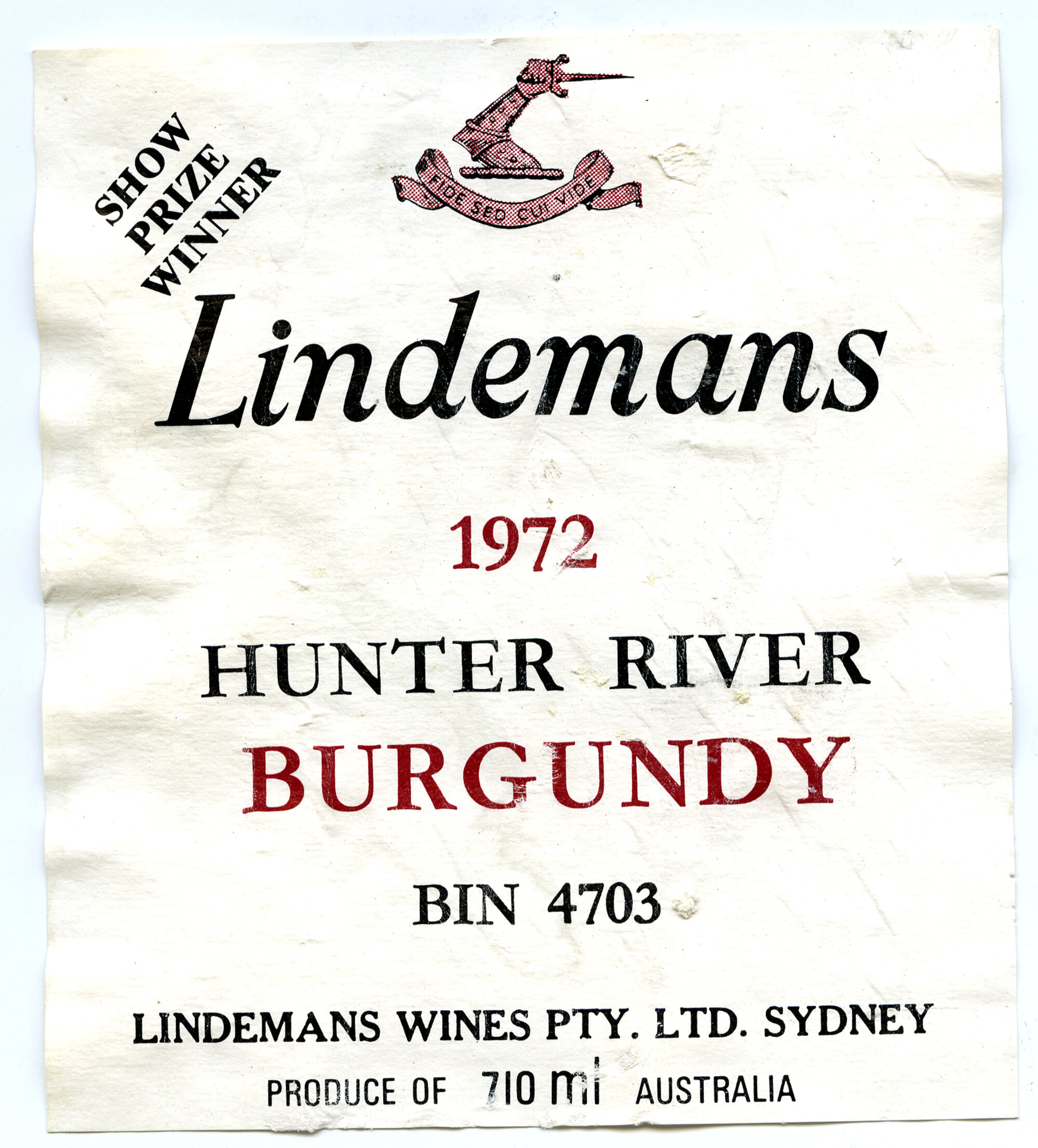
Others were rebranded by the bright young marketing minds, like Lindeman’s. One of our great wine brands, once up at the top with Penfolds et al, making stunning wines from the Hunter to Coonawarra.

‘It’s old-fashioned, stuffy.’

‘Yeah, look at those labels!’

‘It needs a serious make-over. A new identity, a new narrative.’

‘Hey, I read that low alcohol wines are the coming thing – we could be at the head of the trend, or even set the trend.’

‘What do we do with Rouge Homme? What about that shocker of a label?’

‘Does anyone remember why we bought that brand?’

Silence all round.

‘History, who needs it? Stories is what we need. Marketing in the new millennium is story telling. Wine is such a blokey business; we need stories about women in wine, like Eliza Lindeman.’

Yeah! All agreed and high fives all around

Indigestion

The challenges at Southcorp were far more dramatic.

‘The stock market still hasn’t forgiven us for buying Rosemount,’ said the CFO. ‘They say 1.5 billion was far too much.’

‘Fosters paid more than that for Beringer-Blass,’ CEO John Ballard argued, ‘and we bought more than a winery, we bought a crack management team with it.’

‘You mean a fucked up management team,’ said chairman Brian Finn.

Ballard’s face was a grimace. ‘It was the integration of the 2 teams that was fucked up.’ He shrugged and added, ‘are we done? I’ve got to put the final touches on the revamped organization chart before we announce it to the press.’

Ballard had taken over as CEO earlier in 2003. He was still smarting form the remark made by one analyst who’d said: ‘He’s not a boom recruit. He’s not the big name the market was looking for.’

Ballard was new to the wine business. He had built APD/Smith’s Snackfoods into a major force, and then run United Biscuits Asia Pacific. The last few years he’d focused on his work as a board member of top companies. He’d never experienced a mess like the one he found himself in now.

Walking Winemakers

It wasn’t just the stock market and Rosemount’s management team; some of Australia’s top winemakers had walked out after Rosemount’s Chardonnay wizard Philip Shaw took over as chief winemaker: Neville Falkenberg, Philip John, Geoff Henriks, Ian McKenzie and even Grange winemaker John Duval. All gone.

Later that week, Ballard told the press: ‘As we put behind us the problems we have caused for ourselves, I think the Rosemount acquisition will prove to have been a very good one.’ He had his fingers crossed behind his back.

Two years later, Ballard walked as well. Southcorp was a Boa Constrictor that had swallowed a very large pig. A billion dollar write-down hadn’t reduced the pressure on its stomach – it just poured fuel on the ire of the analysts and shareholders. Worse, revenue was half of what it had been when Ballard took over. Then Fosters had launched a hostile take-over bid.
Ballard had read about the shareholder meeting in the Fin Review. There were angry scenes. One shareholder argued that chairman Brian Finn should resign since he had been ‘a party to all the disastrous decisions that had brought this company to its knees.’

Another shareholder said: ‘It’s all right to sit up there in your flash suits and get your big money, but none of you are suffering like we are. I’m an investor. I rely on the income from dividends.’

Buying Back the Farm

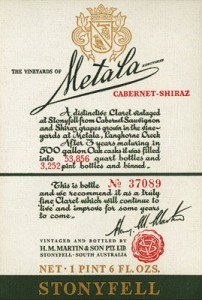
Special Homecoming For Much-Loved Metala was a headline in a recent WBM mailer. The Adams family had bought the brand back from Treasury Wine Estates, a rare good news story.

Metala is the oldest family-owned Cabernet vineyard in the world, and one of the oldest Shiraz vineyards in Langhorne Creek. I had long wondered how much local content had remained in this once great red from Langhorne Creek, which sells for about $10 these days.

Not much in recent years, according to Guy Adams. He says: ‘The homecoming and relaunch of the brand means that when wine lovers buy a bottle of Metala wine, they will once again be getting the original, rich and full bodied Metala fruit they’ve come to expect.’

Before Wolf Blass picked Langhorne Creek as one of South Australia’s great wine areas, the late Peter Lehmann made the wine for Stoneyfell. I remember a night when we had dinner in town in the early eighties, when my best friend Reg brought along a 1966 Grange, and I brought a 1967 Metala. It was the better wine of the two, we all agreed. 
Trashing hallowed Names

This story made me think of all the great brands that were swallowed up by the corporate raiders in the greed- and alcohol-fuelled 1970s, 80s and 90s.
Adelaide wine merchant Woodley’s once sold the Treasure Chest series of fabled Coonawarra reds. The pretty Treasure Chest label ended up in the clutches of Treasury Wine Estates, and soon graced $5 bottles of cheap and nasty bubbly.

It seems the marketing people at TWE despise all things old, and any kind of tradition, or don’t know what to do with it because they learnt their craft selling beer, cosmetics and toilet paper.

Lindemans bought Rough Homme in the sixties from the Redman family. Years later, the brand went through the hands of various corporate owners until the Digiorgio Family bought the winery in 2001 (which was the death knell for the label according to the Redmans). There was no official death notice or burial.

Led by CEO Ray Kidd, Lindemans had a towering reputation until it was bought by Philip Morris, and then passed through numerous uncaring hands until it ended up at Southcorp and then TWE. It now graces low-alcohol concoctions with utterly silly stories about Eliza Lindeman and her daughters.

What happened to the famous Hunter River Burgundies? Don’t ask. The Coonawarra Trio still exists somewhere in the bowels of TWE, well-hidden from public view. Most likely dead and awaiting burial.

Stanley Leasingham – after various owners that included Heinz of 57 varieties fame, this once great brand was bought by Hardy’s in the late eighties and later ended up in the hands of private equity firm Accolade, bereft of life. Tim Adams bought the winery and equipment.

Thomas Hardy and Sons – this was one of our greatest wine companies, which ended up owning Chateau Reynella, Stanley Leasingham and Houghtons in the West. It merged with Berry-Renmano in the early nineties and became BRL Hardy before it was gobbled up by Accolade, which became Champ Equity, which became part of an international conglomerate called Constellation brands.

Hardy’s flagship wines are fairly recent creations, but at least they honour their founders Thomas and Eileen Hardy with serious wines. Chateau Reynella, named after the man who planted the first commercial vineyard in South Australia, is now a housing estate, which may be a better fate than ending up gracing cheap plonk.

Quelltaler became Annie’s Lane some years ago, and its role in the TWE theatre was to produce rich, soft, easy-drinking affordable table wines. No more interesting white Burgundies made from Semillon, or brilliant Rieslings. TWE recently sold the vineyards to Warren Randall of Seppeltsfield, but kept the Annie’s Lane label which will no doubt end up gracing some vin ordinaire in the near future.

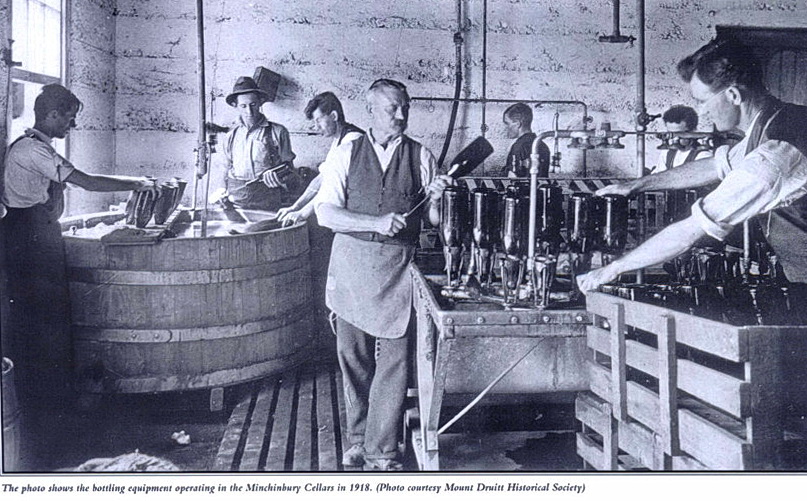
Minchinbury was once a powerhouse sparkling wine maker on the outskirts of western Sydney, with its best Great Wesstern bubblies fetching a much higher price than Penfolds Grange.

Today almost all remnants of the once proud estate have been swallowed up by another housing estate near the Great Western Highway. The once hallowed brand belongs to TWE these days, and graces $6 bottles  of awful wines with names like Minchinbury Dolce.

The New Guard

The sixties and seventies saw a whole lot of new wineries burst onto the scene; most of them crashed and burnt or were forced to regroup, but some of them built big reputations.

The ambitious Rothbury Estate in the heart of the Hunter Valley was the brainchild of Len Evans and Murray Tyrrell, and the expectations were flying high when it came to life in the early seventies.

Len and Murray put all their eggs into 2 famous baskets, planting 400 hectares to Semillon and Shiraz. The fickle punters never loved these varieties like Len and Murray did, and chased the fancy new Chardonnays and Pinots Noir. That was a serious problem for Rothbury. Various acquisitions broadened the company’s offerings, but looked like random hits rather than planned acquisitions.

Lexicon tells us that, ‘in 1995, despite fierce opposition from Evans, Rothbury Estate was hostilely (sic) taken over by Mildara Blass.’ Some people should stick to whatever they’re good at instead of mangling the English language, ja? What happened in between is a fascinating story of its own. Today the Rothbury name graces a range of $10 non-vintage wines of no apparent distinction.

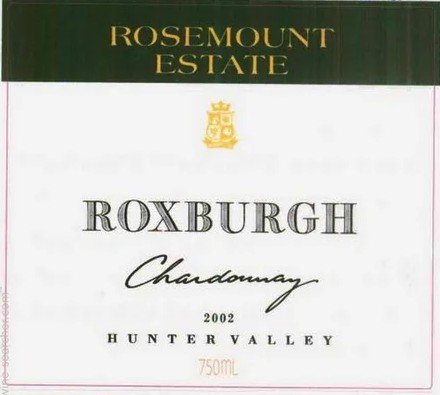
Bob Oatley built the Rosemount brand into an icon, on the back of some big Chardonnays from the Hunter and fine reds from McLaren Vale. After a decade-long struggle, the once famous Rosemount brand died of mortal wounds inflicted by series of massive marketing blunders. OK, you can still find bottles of it in the discount bins of the big chains, but they bear no resemblance to the wines of the glorious past.

The story goes that Bob Oatley talked Fosters into buying Southcorp, in the hope that they’d return the Rosemount brand to its former glory. Fosters did no such thing; instead it spun off the whole wine business – including Penfolds – into Treasury Wine estates, telling the media that it was a distraction to the beer business.

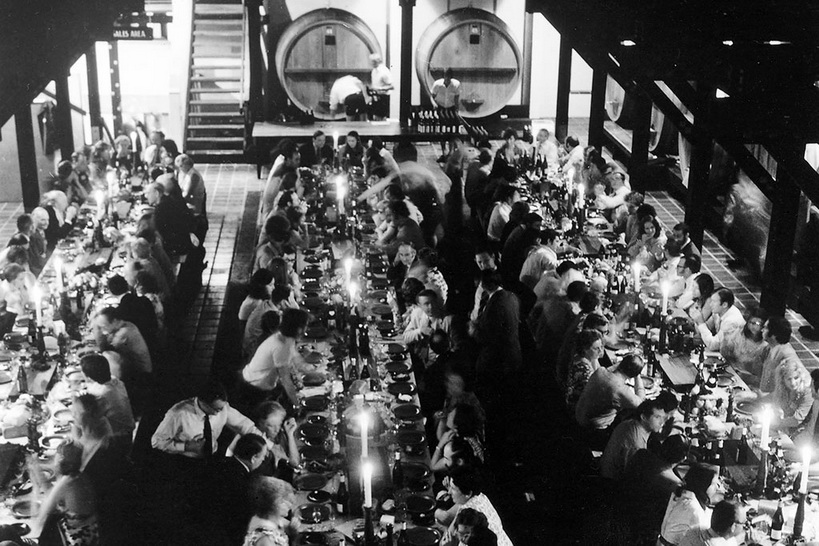
The great cask hall at Rothbury Estate.

Is Champagne really better than the best Aussie bubbles?


That question usually produces a waffly answer about apples and oranges, or in plain English: surely you know that you can’t compare the two styles. This is despite the fact that our winemakers have been busting a gut for decades to produce a bubbly that could challenge the French icons.

Half a century ago we didn’t have the grape varieties or the cool climate of the champagne region. Since we planted Chardonnay and Pinot Noir in the Yarra Valley, Macedon and Tasmania a few decades ago, those limitations have gone away.

Aussie Prestige vs bulk champagne

As our ambitious producers developed better cool climate styles, they took a leaf out of the champagne marketing guide and introduced special ‘cuvees’ – fancy bottles from the House of Arras, Jansz and Chandon, Clover Hill, Hanging Rock, Brown Brothers and then a whole host of new producers.

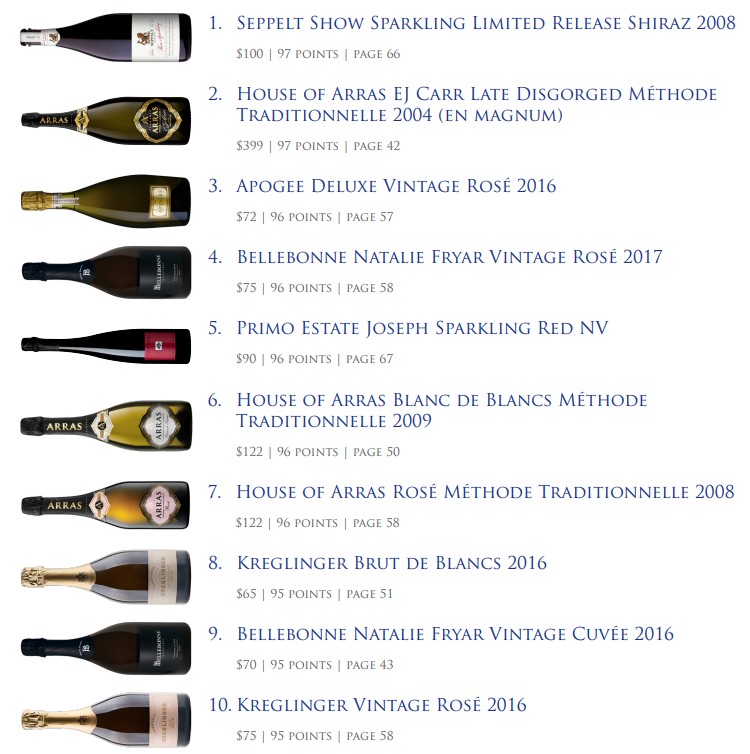
The prices went up and soon reached the same $50 level as the basic wines of the champagne houses, which are made in vast quantities and owe more to smart marketing than smart winemaking. Today we have a number of bubblies that sell for $100 or more, as you cansee from the excerpt of Tyson Stelzer’s Australian Sparkling Report 2020 below.

Image Source: Tyson Stelzer’s Australian Sparkling Wine Review 2020

Game over but hold it – there’s a late scratching

It’s rare to find a review that pitches Aussie bubblies against champagne, but I found a piece James Halliday wrote for the Weekend Australian magazine a couple of years ago. JH reviewed a bunch of local and French wines, and the $40 – $60 locals acquitted themselves remarkably well with scores ranging from 94 -96 points. The champagnes scoring points in that range were $100 or more.

This was music to my ears until I saw this caveat form the G.O.M. of Aussie wine: ‘… are the points for the Champagnes comparable with those of Australian sparkling wines? The answer is no, they are not. Nor would points for great red Burgundies compare with those for Australian and New Zealand pinot noirs; or First Growth Bordeauxs with Margaret River cabernet merlots.’

I always thought we had a single 100 point scale for wine reviews, but James seems to suggest that we have a range of scales for wine styles from different parts of the globe. News to me, but James writes: ‘Points are as subjective as the words in the tasting notes, but are a separate way of expressing the taster’s opinion, to be assimilated along with the description of the wine in the context of the particular tasting. All this may frustrate some consumers, but the ultimate reality is that Australia can never make Champagne, a Burgundy or a Bordeaux, so direct points comparison is fraught with contradictions and qualifications.’

Frustrated? No, Confused

Why? Because comparative tastings are as common as heatwaves, and they always use just one scale for obvious reasons. Remember the Judgement of Paris in 1976? When French judges pronounced Californian Cabernet and Chardonnay superior to their French counterparts? Thousands of comparative tastings have followed over the years – Burgundies vs Pinot Noir, Aussie Chardonnays vs white Burgundies.

Chardonnays from New Zealand have held their own more than once against white Burgundies that cost ten times as much, in tastings organized by British wine writers. Did they use a different scale for the Kiwi chardies? Of course not.

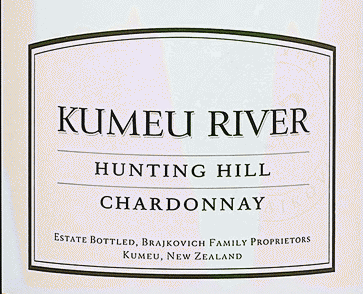
By way of a final stamp of approval from the highest court in the world of wine, Grand Dame du vin Jancis Robinson chose a Chardonnay from Kumeu River (NZ) for her youngest daughter’s recent wedding.

Max Headroom

We review different wine styles and different wines from different countries all the time, and we always use the same system for reviewing and scoring. The reviews are based on the same criteria: the qualities of the wine in the glass.

In Australia, we’ve adopted what we might call a Readers’s Digest version of the 100 point system. Any wine under 90 points is regarded as a waste of time, and 98 points is about the limit on the sublime end of the scale. How is an 8-point scale better than the old 20 point system?

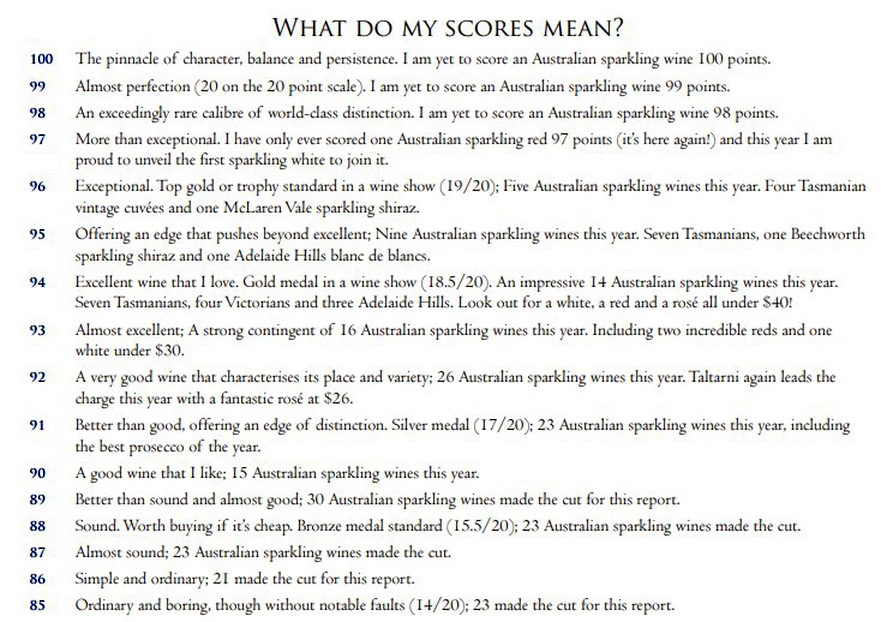
Bubles specialist Tyson Stelzer outlines his more nuanced criteria in the Australian Sparkling Wine report. He’s stretched the boundaries a little way down the scle, but it still comes down to 98 points = sublime, 88 points = vin ordinaire. Tyson clearly wants to give himself more headroom since he reviews wines like a $6 Wolf Blass red label on one hand, and a $400 Louis Roederer Crystal on the other. That’s a huge range to cover with one tiny scale. So he’s extended the range downward below 90 by about 6 points. The problem now is that his scores no longer match his reviews.

Brown Bros Pinot Noir Chardonnay & Pinot Meunier NV is an example. This is quite a recipe for this bargain price’, says Tyson. ‘Crafted according to the full regime of méthode traditionnelle, … four years on lees has built layers of spicy, toasty, honeyed complexity and a creamy structure, amplified by old French oak … Led confidently by pinot noir, the cool heights of King Valley have evolved into spicy, baked apple and fig character. Honeyed dosage counters a little phenolic bite on the finish, but you can’t have everything for $25.’

Great Review, right? Tyson’s score is a measly 89 points. I’ve rated it 93 over the years, others have rated it higher. In other words, we need to see Tyson’t scores in HIS CONTEXT. At least he’s not suggesting that we use different scoring systems for wines from Europe.

Almost across the board however, Tyson’s Aussie sparkling wine scores are a lot lower than his champagne scores, and he includes wines that score just 85 points. That’s a score he reserves for wines that he describes as ‘ordinary and boring, though without notable faults’. I’m confused again since Tyson’s lowest score for ‘sound’ wines is 88 points. I thought ‘sound’ meant without notable faults. Here is his list:

The vast majority of bubbles under $30 score fewer than 90 points in Tyson’s list, which suggests (more logically than Halliday) that our efforts are not in the same class as the froggy bubbles.

That’s it from me – over to you.

Penfolds and the Art of Fleecing the Faithful


‘If this year’s average auction price for the past 20 vintages is anything to go by, Grange should sell for $523. Will you pay $900?’ Tyson Stelzer.

You’ve gotta give it to Penfolds

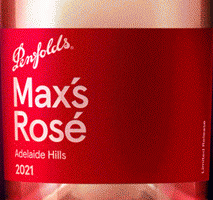
They know how to milk their loyal customers. And they know how to milk Max Schubert’s towering legacy for every last dollar. They have no shame. They put the great man’s name on all kinds of garish labels. Max never made a Rosé, but they made one for him. They have no shame.

The latest stunt is the Penfolds g5, a five-vintage blend of Granges stretching back to 2010 that sells for $3500 a 750 ml bottle. Is that it? YUP, that’s it. They pour bottles from 5 vintages into a vat, stir the blend and bottle it under a fancy new label. Then they sell it at 4 times the price of the current vintage Grange. Or 6 times the average auction price of the 2008 Grange, which scored 100 perfect points with Robert Parker’s Wine Advocate.

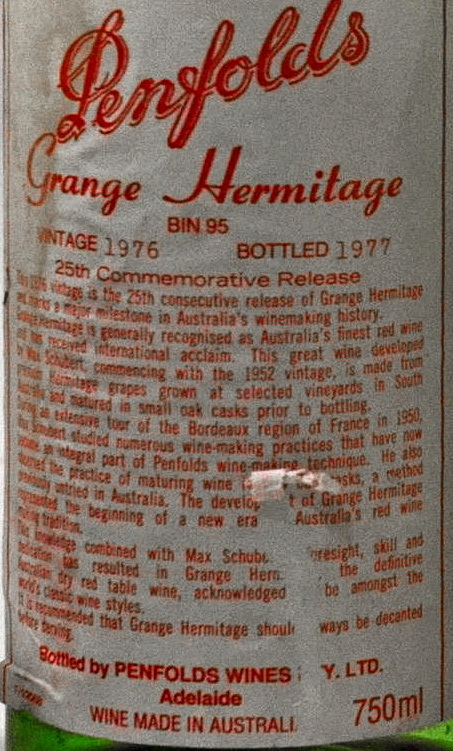
Is the blend of 5 recent vintages worth so much more than older vintages of Grange? And I’m talking about pitch-perfect Granges here such as the 1976, 1986, 1990, 1991 or 1996? Do you know that you can buy these FIVE vintages at auction for a total of $3500?That’s right: FIVE bottles of the best Granges made in the last 50 years for the same money as a single bottle of g5, or the same money as FOUR bottles of the current Grange 2017.

You’ll never get your money back 

It’s a myth that Grange will appreciate with age. You can buy every Grange made since the stunning 1976 for less than the current release. How come? Penfolds got too greedy at the turn of the millennium when it pushed the price of Grange to $500 and beyond. That’s about the average price of Grange on the auction scene today, the ‘secondary market.’

The result is that you’ll lose money when selling bottles of Grange you’ve bought in the last 20 years. And you’ll be lucky to get your money back if you paid more than $500 a bottle. So why is Penfolds selling Grange for more than it will fetch at auction decades later? Because they’re greedy, and the faithful keep buying the wine.

Peter Gago claims that Penfolds’ high prices reflect the strong demand for Grange. That’s obvious nonsense given that the auction market is awash with top notch Granges at prices close to half those of the current releases. Check the latest auction prices here.

The 2011 vintage in South Australia was a washout. When this happens in Bordeaux, they don’t make the Grand Vin in that vintage, yet Penfolds sold their 2011 Grange for $785 in 2015, while the great 2008 and 2010 Granges sold for $600 at auction.

‘What’s the true value of Penfolds Grange?’ asks Tyson Stelzer in a post headed Grange, the Big Dilemma. He goes on to say: ‘If this year’s average auction price for the past 20 vintages is anything to go by, the answer is $523. Will you pay $900?’

Hunters & Collectors

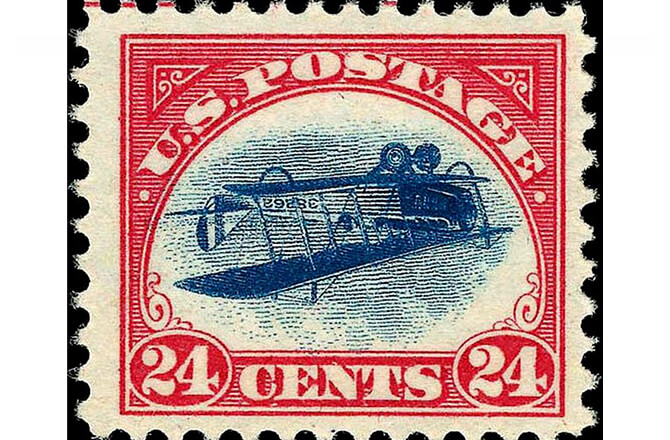
The people at Penfolds know their market. Many of the punters lining up to buy the g5, or new releases of Grange, are not wine lovers or connoisseurs. They’re collectors. Grange is more often collected and traded than enjoyed, but most buyers say they’re happy to drink the wines rather than lose money selling them. Think of the g5 as a famous stamp or a special minting of Bitcoin. The stamp below is worth a million dollars.

Inverted Jenny 1918 Stamp (photo via Wikimedia Commons

Unlike wine, stamps become more valuable when a mistake was made in their production. As with fine wine, rarity plays a crucial role. Among Penfolds’ top end reds, the most valuable Granges are the early ones (1951 – 1953), which were produced in tiny numbers, and are now rare as hen’s teeth.

A very rare Grange Hermitage Bin 1 Shiraz 1951, the first ever vintage made, recently sold for $142,131 and became the most expensive bottle of Australian wine ever. Other Granges that fetch high prices are those Max Schubert made in the late fifties after he was ordered to stop making this wine. Again, the small quantities made, and the story behind them, have been good investments despite the fact that Max couldn’t buy the new oak barrels that are so vital to the make-up of this wine.

Unbroken sets of Grange also fetch high prices if they contain a few rare vintages.

Special Bottlings

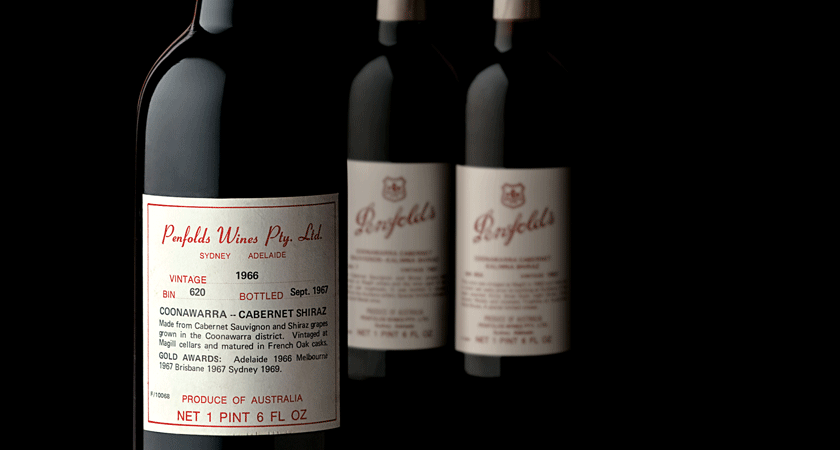
Max made a couple of these in the sixties: the Bin 60A Coonawarra Cabernet Barossa Shiraz 1962, and the Bin 620 Cabernet Sauvignon Shiraz 1966 (also from Coonawarra). The Bin 60A is among the top wines ever made down under, the experts tell us, and fetched some $20,000 at a recent Barossa auction. The Bin 620 isn’t far behind.

A couple of mates of mine who own a number of old Penfolds reds went to a re-corking clinic in Sydney, where a Penfolds staffer pronounced the Bin 620 dead on arrival. My mates argued that the lady was wrong, so she got a second opinion from a colleague who confirmed her verdict.

My mates took the wine home with them, and just for fun opened it the following evening with dinner where it astonished them with its sheer delights. Needless to add: they don’t have a high opinion of Penfolds recorking clinics.

When Peter Gago took over as chief winemaker, he released new wines under the same 2 bin numbers in 2004 and 2008. There was a new special bottling as well: Block 42 Kalimna Cabernet Sauvignon 2004 (the wine that went into the 168,000 dollar ampoule). The follow-up was the Bin 170 Kalimna Vineyard Block 3C 2010.

The faithful snapped these wines up despite prices double those of the mighty Grange, which can’t have been thrilled about being upstaged by newcomers with no lineage.

Super Blends

In 2017 Penfolds released the g3, a blend of 3 vintages. Had Penfolds’ marketing minions run out of ideas for special blends? ‘Blending across vintages is part of Penfolds winemaking philosophy,’ Peter Gago told the media and referred to Penfolds’ Tawny ports, ‘famous in the mid-1800’s (you’d think they could afford a competent copywriter, wouldn’t you?) made by blending multiple vintages. ‘A natural progression was to apply this venerated technique to create a new Penfolds red style,’ said Gago.

This claim is fanciful at best, and cynical at worst as Gago well knows: most ports are blended from multiple vintages, and so are most champagnes. However, in both cases the single vintage wines fetch much higher prices than the blends because they’re only made in great vintages in limited quantities.

I don’t know of any reds in the world with 4 digit price tags that are blends of several vintages (although someone is bound to correct me). Such blends are typically found on supermarket shelves at single digit prices. That said, the faithful snapped the g3 up, and the g4 followed in 2020. An obvious move by Penfolds since it’s all money for jam. And now the g5.

Where do you get it? You can’t just walk into your local Dan Murphy’s and buy a 6-pack. No, you have to go through an expression of interest process with Penfolds, where you might score a bottle or 2 if you’re fast enough. No kidding.

Profusion & Confusion

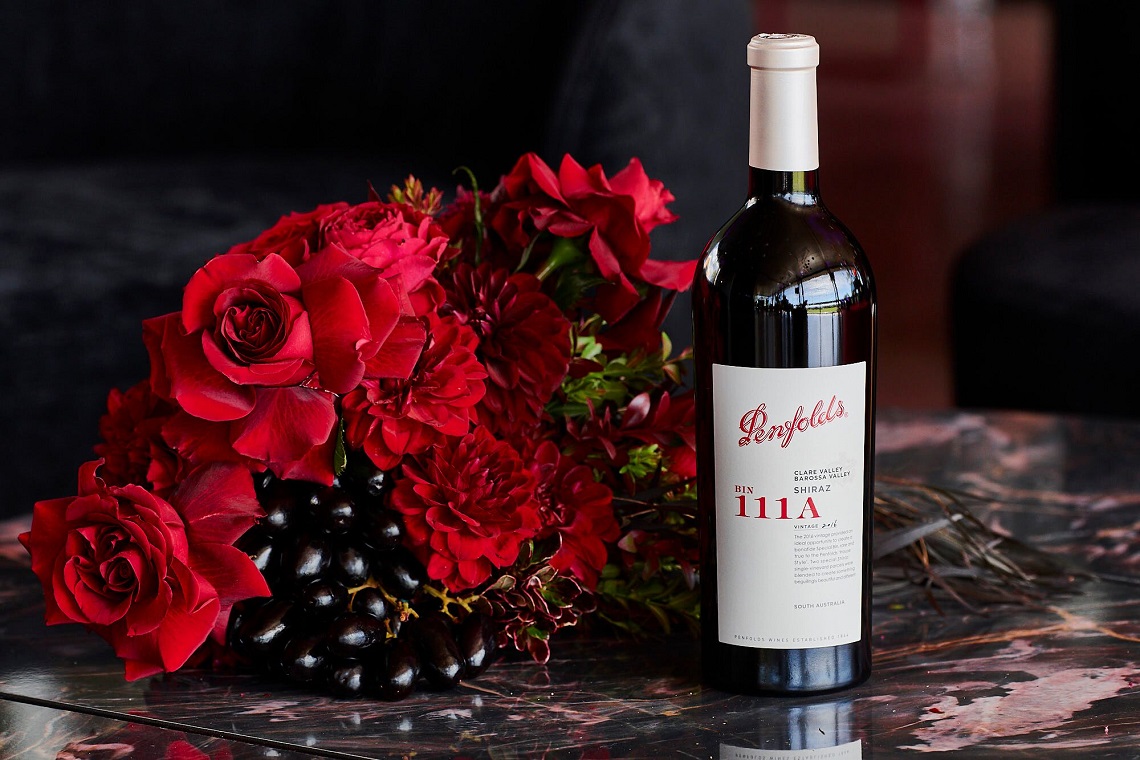
In between the g3 and g4, Penfolds released the Bin 111A Clare Valley Barossa Valley Shiraz 2016, which scored a perfect 100 points with several reviewers. You can actually still buy this wine today, for $1500 a bottle. I suspect the faithful either couldn’t keep up with all the new releases or they were terminally confused.

You’d think Penfolds would’ve kept a wine of this caliber for the 70th birthday of Grange (2021), but you’d be wrong. Instead Gago launched ‘Superblend’ 802-A Cabernet Sauvignon Shiraz 2018 on an unsuspecting world in 2021, for the same price as the current Grange. This was a double release as there was a twin called Superblend 802-B. One is matured in American oak, the other in French.

These superblends didn’t impress Huon Hooke or Ken Gargett, who came up with scores of 93 points. Others score the wines between 95 and 97 points. Either way, these releases diminish the stature of Grange, and that of Penfolds, unless they are are really special.

The Penfolds Collection

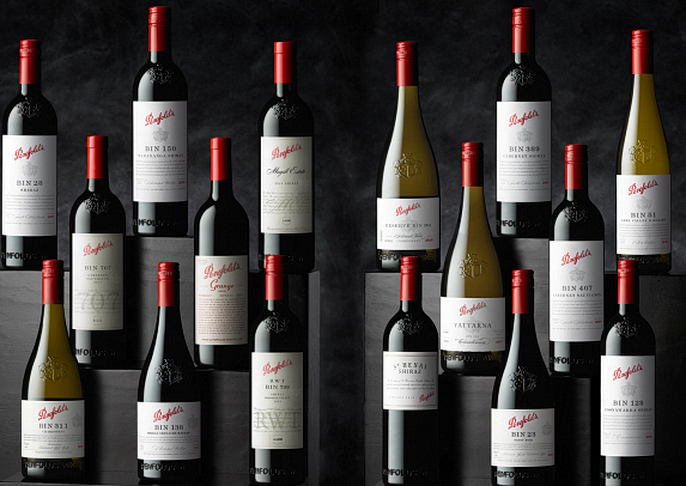
Once the collection numbered half a dozen wines: Grange, St Henri, bins 707, 389, 28 and 128. The 2021 Penfolds Collection. contains over 30 wines. Penfolds has become a fashion house, turning out new styles for every season, except that they’re not new styles but new takes on an existing themes.

The style has changed dramatically from the days when Max Schubert made elegant reds of sublime caliber, complexity and staying power, often with 13% alcohol or less.

The custodians of Grange and its offspring have lost the master’s magic touch, and replaced it with more of everything – super-ripe fruit, massive oak, lots of polish and huge alcohol levels. It seems their leitmotif these days is ‘More is Better’. That goes for other labels as well: Penfolds now makes in excess of 150 wines.

Their website resembles a vast department store where finding what you’re looking for demands steely determination and endless patience.  The Collection is just the beginning.  There are subgroups of wines: Classics, Esteemed Reds, Favourites, vertical sets of wines, gift box sets and more.

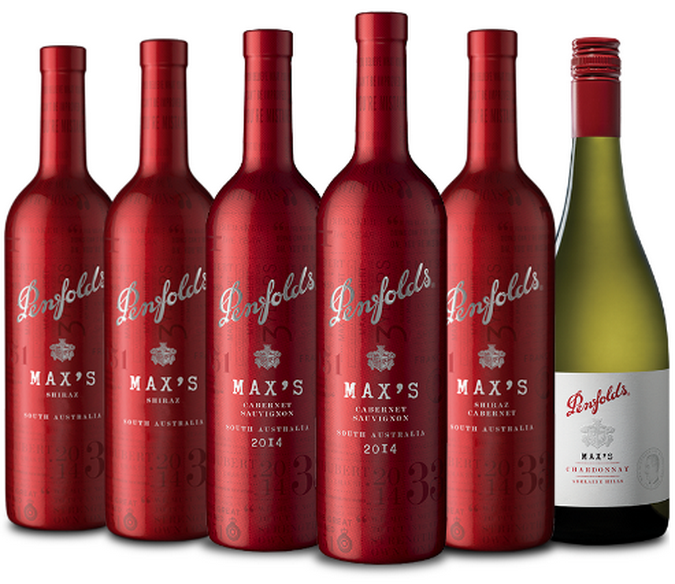
Then there’s a section called MAX’s that serves up a mishmash of 7 reds that would embarrass Max, were he still alive. Then there’s the Cellar Reserve with another 9 wines, and 5 more wines appear in the Tribute Range. More embarrassments. Then there are the ordinary wines Penfolds makes, the wines they would rather not talk about: Koonunga Hill et al. Rawson’s Retreat labels no longer mention Penfolds’ name.

It all reminds me of that Stainmaster carpet ad, where the cleaning lady exclaims: Oh, Mr Hart – what a mess!

FOOTNOTE

I sold my last dozen of Grange (1972) many years ago for a decent profit, and I haven’t bought any since. I did buy some St Henri 2010 in 2014 for around $80 a bottle. The critics scored the wine between 98 and 100 points, higher than the then current Grange (2009?). Today the 2010 St Henri sells for about $300 at auction, close to 4 times what I paid 8 years ago. Here’s my take on the 2010 St Henri back in 2010.

The 2018 is another sublime St Henri from a great vintage that scores 97 to 100 points with the critics. It will appreciate in value for sure, and you can buy it for $115 a bottle or $690 for a 6-pack. At that price, you can enjoy it on special occasions over the next 3 decades.

Additional Reading

Penfolds Bin 60A 1962: Australia’s Greatest Wine Ever, via Quill & Pad

Grange, the Big Dilemma, by Tyson Stelzer

Penfolds Grange – Rich Wine – Poor Investment

Great Wines to Celebrate the End of Lockdown


Yes, we should celebrate the end of the longest lockdown ever – we’ve had so little to celebrate in recent months. We can have friends around at last and share a meal, up to 10 if they’re double vaccinated. So we put together a list of wines fit for modest and not so modest celebs; we’ve gone outside our usual boundaries here, but you can keep the leftovers for Christmas.

MODEST

Deep Woods Harmony Rose 2020 / 21 – 2 for $20 at Vintage Cellars. This is a bargain at its usual price, and steal at this price. Great for lunches and picnics in the sunshine.

Brokenwood Cricket Pitch White 1.5L Magnum 2018 – $24 at Jim’s Cellars. I’m not a huge fan of this wine, but a magnum at this price must come in handy for Freedom from Lockdown and Chrsitmas / New Year celebrations.

Brown Bros Pinot Noir Chardonnay Pinot Meunier NV – $15 at DM’s (member special). This is consistently among the top bubbles around $20, and a steal at this price. I’m grabbing a 6-pack for Christmas / New Year.

Robert Oatley Signature Series Margaret River Cabernet Sauvignon Magnum 2018 – $45 at Nicks. A big bottle of classy red from one of our favourite places, big enough to share with friends.

Grosset Gaia Magnum 2016 – $175 at Kemenys. Top notch Bordeaux blend from Jeffrey Grosset at Clare.

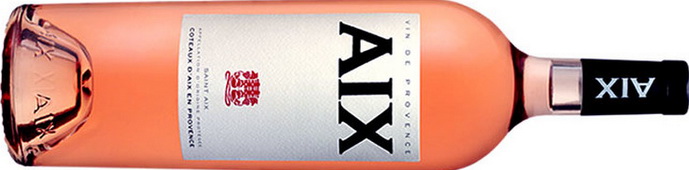
AIX Rosé Jeroboam – Aix en Provence – $189 at wine experience. Jeroboams are also called double magnums since they hold 3 litres. Big enough to impress friends and neighbours.

Black Label Champagne Brut NV Magnum – $119 at DM’s. It’s a big name champagne from one of the oldest houses in a big bottle. Pinot Noir, Chardonnay and Pinot Meunier, 50, 30, 20. The style is fresh and crisp (no malo), with green apples and lemons tempered by warm bready notes and 4 years in the bottle.

Seppeltsfield 1992 Para Liqueur Tawny$135 at Seppeltsfield. Almost 30 years old, and always a rich delight.

Bouvet Saphir Saumur Brut Vintage Methuselah – $325 at Nicks. Yes it looks expensive and it’s not from Champagne, but from Saumur down on the river Loire. A Methuselah holds 8 standard bottles, and a Champagne in this format would come with a $2000 price tag – if you could find one down under.

IMMODEST

It’s time to let loose, go OTT, make a splash … and here are some great wines to do that with. On a practical note, magnums and bigger bottles demand a premium because they’re made in tiny volumes. Standard size bottles are both cheaper and more practical, but this is not the time to worry about these minutiae is it?

Fancy Bubbles

Billecart-Salmon Reserve Brut Champagne Magnum – $199 at Nicks. This is one of the better, more individual champagnes from a smaller house focused on quality.

Louis Roederer Brut Premier NV Jeroboam$500 at Wine Experience. This is one of the finest non-vintages Champagnes you can buy, and the bottle will impress friends and family.

Bollinger Special Cuvee NV Jeroboam with timber box – $600 at the champagne shop. This silky, seamless, superb Champagne is my personal favourite.

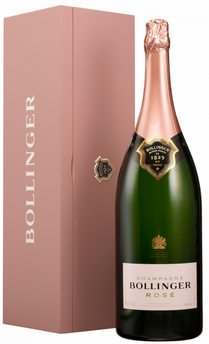
Bollinger Rosé NV Jeroboam – $750 at the champagne shop. We can only wonder why it costs $150 to add a bit of pink to a bottle of wine, but it’s a big bottle.

Reds

Argiano Brunello di Montalcino Magnum – $215 at Winesquare. The first Brunello I ever tasted was in Cologne with an old school friend and my best mate Reg from down under. I can still taste it, and Reg still raves about the wild pigeon we had with it. Review at the link

Yalumba The Signature Cabernet Sauvignon Shiraz Jeroboam 2008 – $500 at Nicks. Review at the link

Clos des Papes Chateauneuf du Pape Magnum 2016 – $550 at Nicks. Review at the link

Penfolds RWT Barossa Shiraz Magnum 2012 – $599 at Nicks. A lot more affordable than a a magnum of Grange

Sweet Treats

Joh. Jos. Prüm Wehlener Sonnenuhr Spätlese Magnum 2019 – $229 at Winesquare. The length of a Riesling magnum is something to behold, and the wine is a joy to drink.

Chateau Rieussec 2006 Magnum – $359 at Winesquare. Top flight Barsac, the twin of Sauternes, 15 years old. Mouthwatering.

Seppelt Para Liqueur 1947 – $490 at JIMURPHY. You can buy a 100-year old Para but a thimble-full will set you back $800. By comparison this is still on the sane side of the ledger, at almost 75 years of age, and probably just as sticky.

Best Value Chardonnays Part 3 – 2021


Chasing the best quality /price ratio between $20 and $50

You can read Part 4 HEREPart 2 HERE, and Part 1 HERE

After completing part 2 of this series last year, I looked forward to doing this sequel with great expectations. This time, the disappointments outnumbered the great surprises, and any kind of consistency among the various reviews still eludes us.

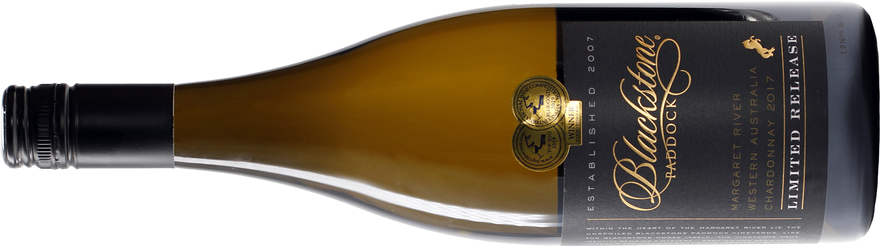
Looking at Huon Hooke’s list of top 2019 chardies from Australia – in order of ranking – we find the $17 Blackstone Paddock from Aldi sitting at number 33, just below the $175 Penfold’s Yattarna on number 32. I tried to get a sample at 3 different Aldi stores but no luck. 3 strikes and you’re out.

On Huon’s list of Best Chardonnays in Margaret River, we find the $25 Domaine Naturaliste Floris Chardonnay 2019 nestled comfortably in 6th place, between the $100 Fraser Gallop Palladian and the $80 Moss Wood.

The 2019 was our top Chardonnay under $25, and one of the best under $50, but it’s long gone. Sadly the 2020 isn’t in the same lofty class. The Discovery 2020 is also underdone. Shame. Is it the vintage?

WILDCARDS

Miles from Nowhere Chardonnay 2020 – $10 at Kemenys (as a secret label). Scores 95 points at the Real Review:  ‘Scents of summer leap out of the glass, stone fruit, nectarine, peach and apricot. Noble reduction, sweet spices, ginger blossom and acacia, super-fine acidity and a slight phenolic grip adds intrigue. A myriad of layers keeps me coming back to this wine. 95 points, Amanda Yallop.

This wine didn’t grab me as much as it did Amanda, but it’s terrific value for money even with our score of 92 points.

The $17 Blackstone Paddock from Aldi is another wildcard. The 2019 picked up trophies for best Chardonnay and Best White at the 2020 Margaret River show. Huon Hooke has been beating the drum for this wine for years – here’s his review of the 2020: ‘Light, bright yellow hue, with an intense grapefruit aroma, very typical Margaret River chardonnay, the palate bright and zesty, intense and alive, with great energy and drive, the acidity balancing a subtle twist of sweetness, before a medium-length finish. A smart wine at an eye-widening price.’

THE SHORTLIST UNDER $30

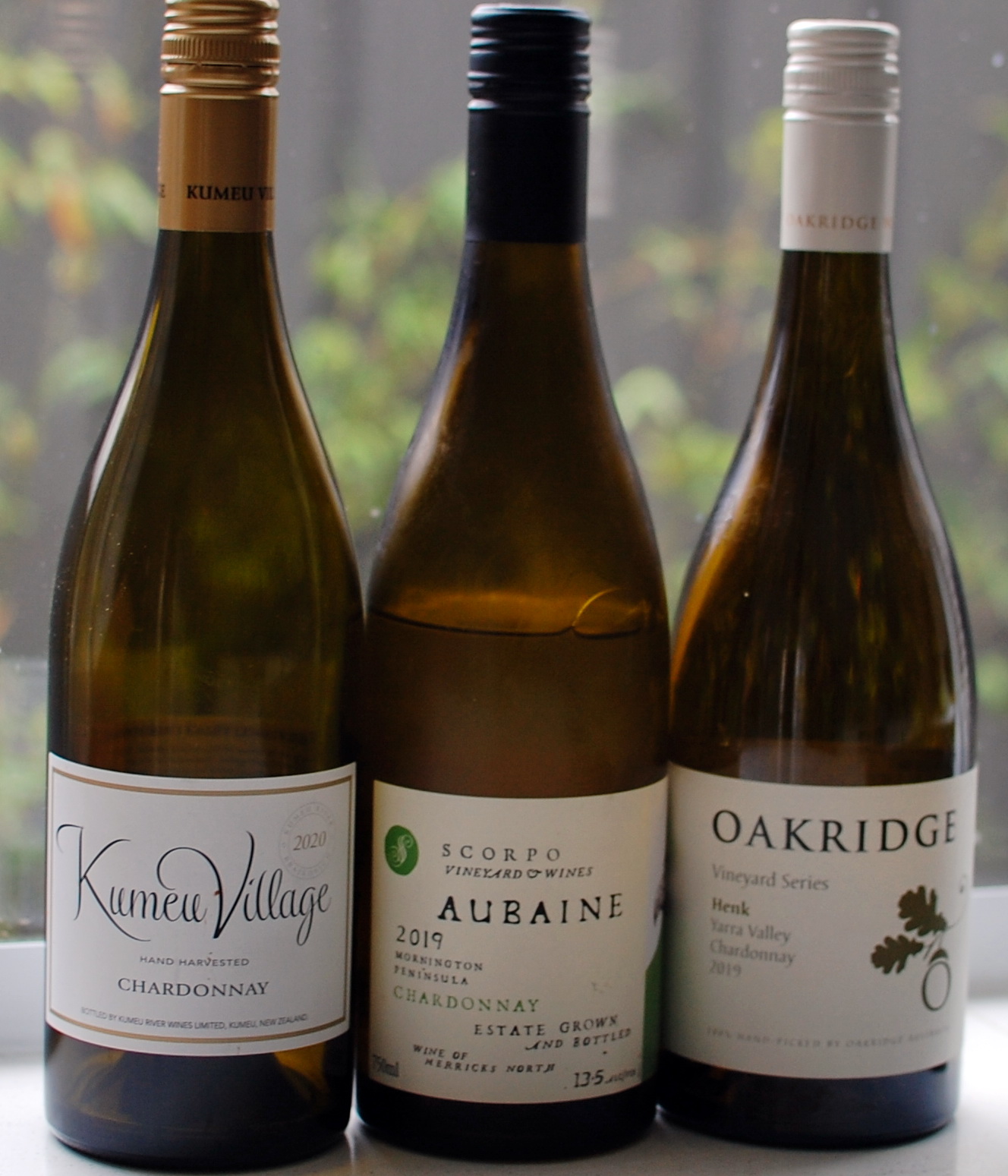
One of our best picks this year was the Scorpo Aubaine Chardonnay 2019 – still on offer for $28 at Nicks. There’s plenty of flesh on its bones, especially for a Mornington Peninsula chardy, and lots of flavour. The fruit is white peachy, the oak nods toward cashews, there’s a soft touch of struck match. It’s a vibrant chardy, full of life and flavour. Perfect pitch.  96 points. You’d be hard-pushed finding a better chardy for less than $50.

The brilliant Hoddles Creek Estate 2019 has long gone, however. It was a stunning chardy for the money ($20), richer and more full-flavoured than usual. It was a warm year, and I suspect Franco d’Anna allowed more malolactic fermentation than usual.

The Hoddles Creek Estate 2020 is back to the clean, restrained style of the 2018, which I thought would build flavour and character in bottle. I was wrong: It sat on the knife’s edge for a time and then fell over to the lean and mean side.. Gary Walsh likes the 2020 better than the 2019. I have my doubts but bought 6-pack to see what happens.

The first time we tasted it a few months ago, the Kumeau Village Chardonnay 2020 came across as more low-key than the 2019 I love, yet a second bottle we opened this week was much more convincing, full of vibrant energy and tension, yet still with that seamless, silky texture that makes this label a stand-out. No struck matches here, and no oak chips or grapefruit pips to spit out, just a gorgeous Chardonnay that will become another favourite. 94+ points. $19 at Kemenys or DM’s.

Jancis Robinson likes it too: ‘Surprisingly rich nose. Fine, appetising, crisp palate with just a little chewiness still evident at this point. There’s a suggestion of sweet grapefruit juice. Really clean, fresh and long. 16.5 / 100.’

Another wine that impressed us in 2021 is the Isabel Chardonnay 2019 – $25 at DM’s. It’s from a New Zealand winery owned by Dan Murphy’s, so you won’t find it anywhere else. They often run a $25 member offer on this wine, which knocks 4 off the usual price. I liked the 2018 a lot, but it will take another year or two for the oak to calm down. The 2019 is just as rich, round and intense with the oak less intrusive. (95 points)

BEST CHARDIES OVER $30

The price is creeping up but Oakridge still offers great value compared to most of the fancy contenders out there.

The Henk 2019 is fast selling out – you can still get it at Cloudwine for $33. The nose promises finesse and polish, with aromas of white peaches and cashews, and a palate that unfolds like a fan made of the finest silk. After a day or two in the open bottle, it shows more depth and intensity yet the finesses remains. A modern Chardonnay master class. 96 points.

Willowlake 2019 – $32 at MyCellars where the freight is free for subscribers on any quantity (promo code BWU20). All the chardonnays in the Vineyard Series are made the same way, so they tend to be very similar. Willowlake is a tad more crisp and nervy, and shows more citrus and notes of green apple. Needs a bit more time to settle down. 95 points.

The Hazeldene Chardonnay 2019$32 at DM’s – is yet another option, which I haven’t tried. MB at The Wine Front likes the ‘minerally tang, great and pretty appley character underlying. It’s firm too; time to burn. A great impact here. Serious and stern and complex. It’s emphatic about Australia’s modern, high quality chardonnay credentials. 95+ points.

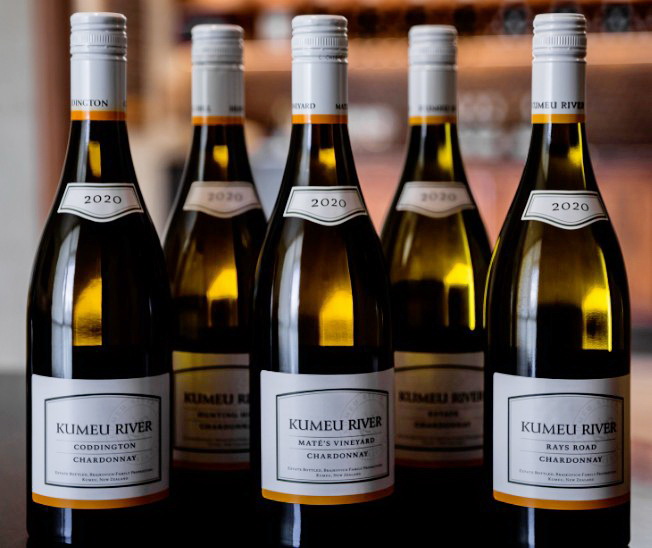
Kumeu River Estate Chardonnay 2020 – $36 at Summer Hill Wine. The Braijkovich family makes world-beating Chardonnays from its vineyards at the western outskirts of Auckland. When entered in blind tastings overseas, critics and winemakers often think they’re drinking drinking Corton-Charlemagne or Meursault.

Here’s a recent blind tasting of Kumeu River against top class Burgundies reported by Decanter, and by Jamie Goode at Wine Anorak. Lisa Perotti-Brown from the Wine Advocate said: ‘If you can taste history, duty, and family pride in a glass, it’s there in the Kumeu River Chardonnays … now producing some of New Zealand’s greatest Chardonnays, not to mention the world’s.’

The Real Review’s Bob Campbell describers this wine as ‘a rich, textural and silken chardonnay with tree fruit, peach, nectarine, toast and brioche flavours. A seamless wine with a backbone of bright acidity helping to drive a lengthy finish. A stylish, polished chardonnay. 94 points.

Grand Dame of British Wine critics Jancis Robinson says of the 2020 Estate Chardonnay: ‘Lightly but not excessively reductive on the nose. Already quite expansive on the nose with beautiful impact on the palate: citrus, blossom and really neat acidity without much astringency. Elegant and racy – almost lightweight on the mid palate and then it is impressively persistent. A thorough delight already. 17/20 points.’

Here’are JR’s reviews for the other KR chardies, which range up to $100 in price. The good news for us is that only a single point on JR’s scale separates the most expensive wine (Matè’s Vineyard Chardonnay at 17.5) from the least expensive (Kumeau Village at 16.5). Keep in mind that top class Burgundies cost between $500 and $1000. Also keep in mind that JR is a very hard marker.

James Suckling and Nick Stock give Matè’s Vineyard Chardonnay 2020 a perfect score of 100 points.

Image source: Cam.Doughlas MS.com

Toolangi Pauls Lane Chardonnay 2019 – $37 the Winepress. Last year’s wine was spoilt by excessive sulphide notes (struck matches) which are the products of ‘reductive’ wine making techniques designed to prevent oxygenation. In the 2019 these characters are reduced and allow the stone fruit and gentle oak to shine . Great length and great style. 96 points.

The Dexter Chardonnay 2019 – $38 at betterbythedozen is vibrant in the usual refined framework, with pitch-perfect balance of white peach fruit, pencil shavings oak and the finest acid. Great depth of flavour and a long finish. A classy Chardonnay from the Mornington Peninsula. 96 points.

What about Dappled Chardonnay, the star performer from last year? Shaun Crinion didn’t send me a sample, and it seems other reviewers including the Winefront didn’t get one either. Shaun told me it was a tiny vintage that sold out fast. I found some at Cellarspace for $40 a bottle but didn’t buy any since the wine would most likely be gone by the time I reviewed it.

Shaun says ‘the season produced a beautifully fragrant wine with white flowers and citrus aromas with complex grilled hazelnuts, mille-feuille and hints of flint and smoke. The palate is precise and textured with white stone fruit flavours and citrus mineral line. While absolutely delicious now, as I have seen with the 2017’s this wine will blossom with time and patience.’

There are a few bottles of the single vineyard Dappled ‘Champs de Cerises’ Chardonnay 2020 left at fivewayscellars and Wine Decoded, for about $50.

So how is the 2019 Chardonnay fairing? The wine I gave a rave review and 96 points? It’s one of best Aussie Chardonnays I’ve tasted, regardless of price, the complete package with wonderful energy and tension, a wine that shows more class every time I open a bottle. I’d rate it 97 points now. I wish I’d bought more than three 6-packs.

THIS IS A WORK IN PROGRESS

You can read Part 2 HERE, and Part 1 HERE


Cellaring Wine in a Hot Climate – Over 4 Decades of Hard-Won Wisdom


Confessions of a Peripatetic Wine Tragic

With summer just around the corner, we’re taking a deep dive into cellaring wine, using my own experience of over 4 decades. We’ve finally created the perfect cellar on a shoestring in our new home. Along the way, we blow up a number of myths dished out by the experts on the rules of wine storage.

‘If you’re going to cellar, you need to find a way to keep your wine below 17 degrees Celsius, but ideally between 12 and 15 degrees. If you go above this range, factor in that your wines will develop at a faster rate and are unlikely to cellar long-term.’

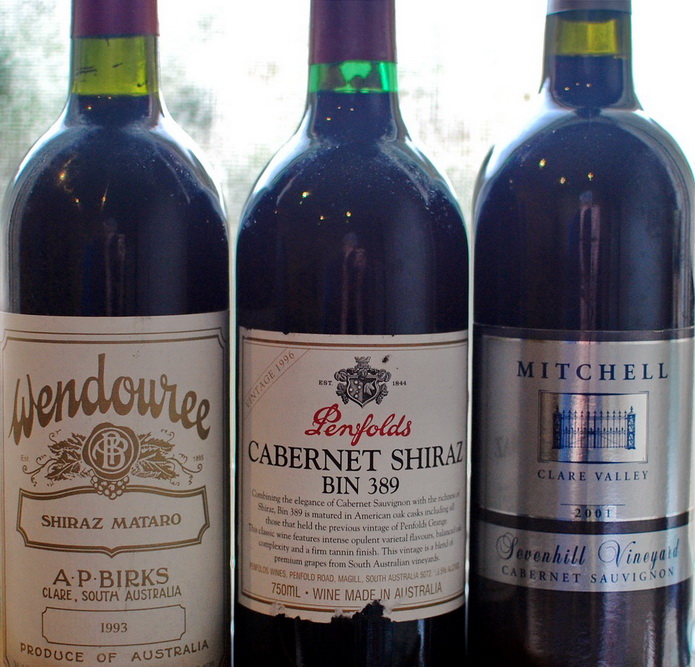
That’s the advice from Campbell Mattinson in James Halliday’s Wine Companion. The advice from other experts is a little less prescriptive but they all agree that a constant temperature of around 15 degrees is ideal. That’s absolute rubbish, as I’ve proved over 4 decades of maturing wines in less than ideal conditions. I have 30 year-old reds in perfect condition that prove my point.

For various reasons, the last two decades of my life have been unsettled. I’ve lived in 7 different homes, some owned, some rented. The worst of these for wine storage was a second-story flat in Balmoral. I lived in that spectacular part of the world for almost a decade, with my precious wines tucked into a large hallway cupboard, and taking up all the space under 2 beds in the spare room.

My first cellar in our Avalon house almost met the ideal temperature specs; it was mostly underground, south-facing, below the main bathroom under a concrete ceiling. Alas, access was through a manhole in the wall, and inside it was so squeezy that a jockey would’ve struggled.

The reason was a huge rock that occupied most of the space. I chipped away at it for a while, but it felt as futile as digging an escape tunnel out of Stalag 13 on my own.

The other option was to dig some dirt out from around the rock. That proved a little more productive, and eventually I’d dug out enough dirt to make room for some banana boxes stacked on their sides – remember those rough and heavy hardwood things? They held about 15 bottles and cost nothing at the fruit shop.

Luxury

The next Avalon house sat on a concrete pad, and had a brick garage. I covered the windows and doors with foam, and bought a small eggnishner. It was a leap into wine hyperspace – I had plenty of room I could walk around in without bumping my head, and a straight concrete floor.

Things went downhill from here. The next house at Bilgola had a huge underground area built into the hill, facing south, which was so wide open that the southerlies went straight through it. I was buying most of my wines from wineries at the time, and used the wooden and cardboard boxes they came in to provide a buffer against the weather.

To my surprise it worked for the 5 summers I was there – up on a hill enjoying cool breezes. Then came an old block of flats at Cremorne Point, which had a south-facing garage of solid double brick construction. That worked when the weather was dry, but water leaked in after heavy rain.

Tough Love

Next was the second-floor flat at Balmoral, one street away from the promenade. It was an old block of 4 flats, solid double brick, small windows, well insulated from the elements. This would really test my theory that it was more important to protect wine from sudden changes in temperature than keeping it at a constant 17 degrees, but all my wine was on the line here.

Of course I thought about storing my wines at Kennards or the Wine Ark, but their facilities were expensive and a long way from home, and I preferred to spend the money on more wine. I have to admit to a few sleepless nights during hot summers at Balmoral, when the inside thermometer nudged 25 degrees.

One concession I made was upgrading my wine boxes to industrial strength, so I kept hunting for the right kinds of boxes in the DM stores on the lower North Shore. However, the best boxes by far came from Calabria Wines in Griffith, and I used them for my most precious wines. More here including pictures.

The Black Diamond

Some 5 years ago Tracey’s wonderful mum went into aged care in Berry, south of Sydney, after enjoying a full and active life.. It was a sad time but at long last, Tracey said YES to a question I had asked her almost 17 years before. We were married on a cloudless summer’s day at the Silos winery near Berry, with our mum watching and crying with joy.

We decided to rent in Thirroul, a beachy suburb of the Illawarra, the halfway point between Berry for visiting mum and Sydney where my kids lived. If we liked Thirroul, we planned to buy there.

It was the first time we’d lived in the same house; until then we were just spending weekends together. That arrangement had worked like a treat for nearly two decades, and we both wondered if living together full-time might kill the magic. It didn’t (but it had its moments).

Most of the wine went under the stairs in the house we moved into, the rest into the laundry. It was a modern house with air-conditioning, which we only used during heat waves.

After a while, we found that Thirroul didn’t really grab us. So, after our mum left this world (fortunately before the world was turned upside down by a virus), we decided to move to further south. We’ve always loved the South Coast, especially Kangaroo Valley, where our mum used to live. Yet, we really love the water and the beach. We decided to rent in Kiama to get to know the place before we bought.

No Country for Tall Men

The house near the top of Barney Street had a perfect little cellar, built into a steep hill, double brick, concrete ceiling and a dry dirt floor. The only challenge was a ceiling height of 5 foot, which wasn’t a good match for my 6 foot 4 frame. Getting the wine boxes in there was a backbreaking effort, on par with my first cellar in Avalon, the one with the big rock in the middle. Only this time I was 40 years older.

Our wines were getting older too, and I have to confess that they’d survived in better shape than I had. Ullages on old reds don’t come much better, do they?

I dug some of the floor out to gain more height but soon struck bedrock. Tracey bought me a small metal stool so at least I could sit down. She took pity on me, I think, emerging daily from the cellar looking like a pained pretzel. I ended up channeling Quasimodo, getting around dragging the metal stool behind me. The things we do for the love of wine!

Is there anybody out there?

We must’ve looked at close to 100 houses, and not a single one came with a cellar or a suitable space for one. What on earth is wrong with people? Are they really happy to drink 2-year-old reds that burn the enamel off their teeth? And 6-month-old Rieslings or Semillons that would make great paint strippers?

We decided to cast the net wider and ended up buying a much bigger house than we planned, just across the border in Shellharbour.  It’s walking distance to the emerging marina at Shell Cove and to the old village, harbour and beaches. There was no cellar, but the garage was big enough to serve as a ballroom when the lockdown was over, so we decided to build a cellar in one corner of it.

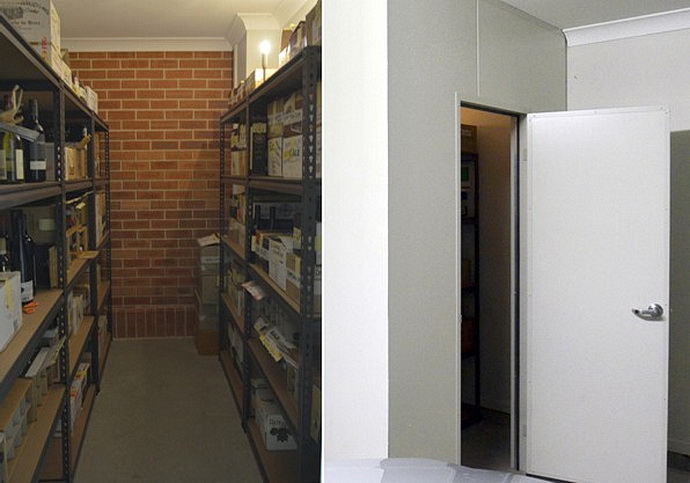
Our builder suggested a commercial cool room, which we had made-to-measure by Campbelltown Coolrooms. The walls were made of 100mm thick, floor-to-ceiling polystyrene panels sandwiched by powder-coated steel. Tracey was thrilled that she could choose the Surfmist colour to match the walls. But, just after the materials were delivered, greater Sydney went into lockdown, and for reasons known to no one, Shellharbour was included. So, our builder couldn’t come in from Berry to install the thing. Bummer.

Tracey isn’t one to take no for an answer, so she hunted around for a cool room installer. Not easy to find, as it turned out. Over the next 10 weeks she spoke to as many tradesmen. 9 of them promised to pop in and quote but never turned up or didn’t even bother to return her calls or texts.

Meanwhile our entire cellar lived in the sitting room, and the weather was beginning to warm up …

Stairway to Heaven

The problem was that all the tradies in lockdown (or maybe their wives) had decided to fix all those things around their houses that they’d ignored for years. In the end we found Laurence, a builder from south of Nowra who called when he said he would, came when he promised, and did a perfect job despite some bits and pieces missing from the material CC had supplied.

The result resembles a sleek white bank vault. Temperature is stable and slow to change, with no need for air conditioning, which translates to a huge saving in electricity. The wines sit on 5 sets of $50 shelves, up to 6 boxes per shelf (36 bottles), so our 800 bottles have left enough room for an extra 400. There’s also room for a 6th set of shelves should we ever need it.

The salient points:

  • Total Capacity: just under 1300 bottles
  • Total cost including racks and installation: $3650
  • No electricity needed, and nothing to break down or wear out
  • We’ve proved over 4 decades that constant temperature control is overkill.

And who needs humidity control in the age of the Stelvin closure? And do I really need to put my wines on display? Only if I want to impress friends and neighbours.

  • I could let the boxes go now that the environment is controlled, but why? Most of our wines are 6-packs of the same wine, with labels on the boxes.

Ready-made options

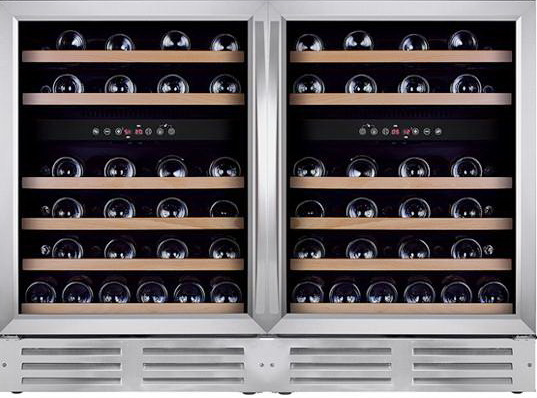
  • Grand Cru 290 – $4300 for a 92 bottle cabinet / fridge – ‘you cannot be serious’


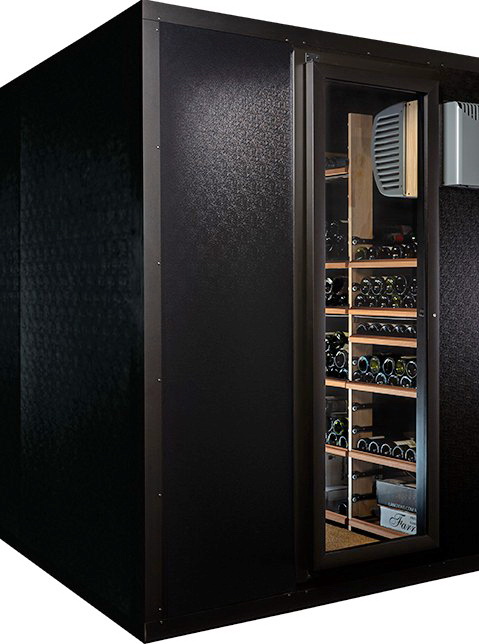
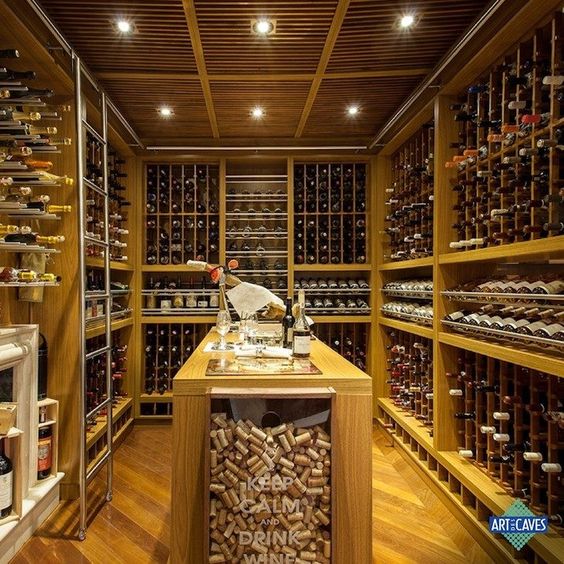
Vintec 1000 Bottle Walk-in Wine Cellar – $24,000 at Harvey Norman. More details at Vintec. Fancy pull-out shelves, multiple temperature zones, air-conditioning, humidity control etc.

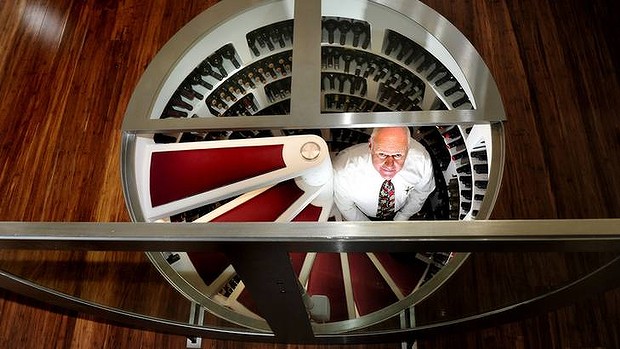
Underground Spiral Cellar – capacity unknown, $42,000 at thisiswhyimbroke. The name of the site says it all, doesn’t it?

If money is no object, there are of course many more fancy options

5 Luxury Homes With Exquisite Wine Cellars

MORE READING 

The Rough Guide to Cellaring Wine in a Hot Climate – A Survival Guide for Apartment Dweller

17 Homemade Wine Cellar Plans You Can Build Easily. If you have some suitable space, some of these ideas might make the last weeks of the lockdown more rewarding. Please note that I haven’t had time to check the details.

HOW TO BUILD A WINE CELLAR IN A WEEKEND, with lots of pictures.

Penfolds Grange, the Musical


Penfolds launches $168,000 wine – Gago gone Gaga? I was reminded of this ludicrous leap into wine hyperspace back in 2012, when I read about Penfolds’ latest leap into eccentric creations that have little to do with wine or the legendary Max Schubert.

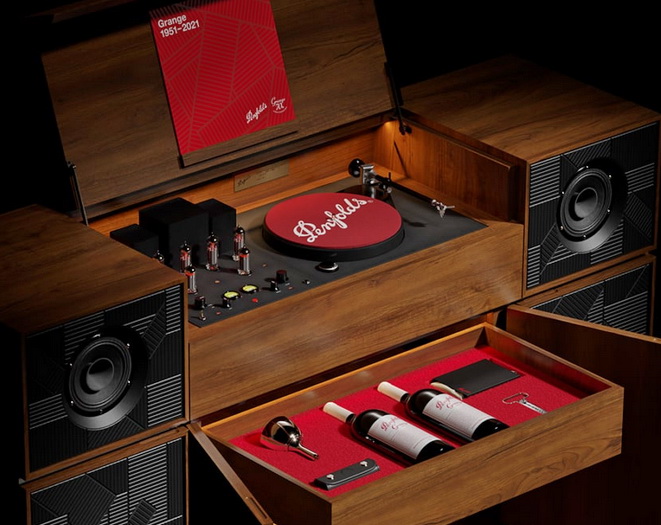
The latest offer is a $95,000 bespoke music cabinet with a valve amplifier and a Penfolds-branded turntable. Apparently Max was a music lover. Is that so? He’s been dead almost 30 years, and now someone remembers that he loved music?

What’s the Occasion?

We’re celebrating 70 years of Grange. ‘Only seven individually crafted pieces have been produced globally (I think they mean in toto),’ says Penfolds, ‘paying homage to the “all in one” console design from the 1950s – the same decade Grange was first created by Max Schubert.’

‘As if a symphony (sic), parallels are drawn between the creation of a blend and the marriage of voice and instrument. Inside, wine lovers are welcomed by the rare “White Capsule” release Grange magnum duo of vintage 2010 and 2017. Hidden within the wine console compartment that also houses a suite of luxury accessories including a hand-blown Grange Decanter, crafted by leading Australian glass artist and designer, Nick Mount.’ More Here

You’d think they could afford a competent copywriter or proof reader, wouldn’t you? And what’s so special about the white capsule?

From Rolex to Citizen

Max worked for Penfolds his entire life yet Penfolds didn’t show much appreciation for his enormous contribution. As Richard Farmer reminds us, ‘The loyal servant of Penfolds had always hoped his farewell would be celebrated in that old fashioned way with a good watch. A Swiss Rolex was to be his pride and joy but he just got a Japanese Citizen, and for the rest of his life there was not even a free case of his masterpiece every vintage.’

This slap in Max’s face is staggering. He retired in 1975, just before the Penfold family sold out to Sydney brewer Tooth & Co. Max had to wait years for recognition, which came much later in the form of the inaugural Maurice O’Shea Award, an Order of Australia, Decanter magazine’s Man of the Year in 1988, and an Australia Day Citizen Award in 1991.

From Grand and Gaudy to Cheap and Chintzy

For decades, Penfolds (these days owned by TWE) has milked Max’s name for all it’s worth. The great man has been so much more valuable dead than alive. The milking has seen highs and lows – the latter finding their ultimate expression in wines made for Chinese New Year. More in Max’s Collection & Tribute Range – Why is Penfolds Trashing a Great Australian’s Name for a Fistful of Dollars?

More recently, the Chinese New Year offering has gone up-market with a magnum of Bin 389 in a special box. It’s over $300. Some Bin 389 with your dim sums, Sir? Here are the tasting notes from Penfolds’ website:

‘Balance of the sweet (cabernet) and the savoury (shiraz). Possesses what has now often been referred to as a black forest cake 2018 vintage flavour profile. Darker fruits – closer to that of a black cherry liqueur than a crème de cassis component of Kir. Flavours of roasted beetroot – a venison sauce beetroot reduction … similar texturally to a congealed sweet fat (a custardy emulsion/film – not a grainy paste). Oak and tannins absorbed. Both are certainly present, yet not at all demanding their own space on this Bin 389 stage. Substantial, intense.’

I’m not making this up, I swear. ‘ … similar texturally to a congealed sweet fat (a custardy emulsion/film – not a grainy paste) … ‘ Who writes this garbage? And what are they smoking? Or vaping?

Here’s Campbell Mattinson’s review from The Wine Front: ‘It’s a showy Bin 389 or perhaps by that I mean that the oak shows quite a bit. It’s also warm through the finish. It’s substantially flavoured, a bit ferrous, a bit meaty, with coffee, toast and dark chocolate notes adding beef to blackberry, blackcurrant and gum leaf. It has the substance and the structure to age well, if not superbly. I tossed up between 93 and 94 here and, after revisiting many times, finally settled on the former, though it was a close-run thing. It’s not quite as compelling as I expect Bin 389 to be, but its quality is still high.’

Ho Hum. Campbell had to work very hard to avoid telling us that this bin 389 is disappointing and overpriced. Maybe better served with red bean buns? Or maybe use it as a present for someone you want to impress, and have some Chinese rice wine instead?


Gray’s Wine – where Customer Service died a Gruesome Death


It was my birthday, the 29th of July, the first birthday in the middle of a lockdown, and I felt like spoiling myself in addition to the pressies fromTracey and the kids. So I ordered a 6-pack of Oakridge VS Henk Vineyard Chardonnay 2019 from Grays, one of the last sources I could find that had stock left after a rave review and a 97 points score from Huon Hooke.

The order confirmation promptly arrived in my inbox, saying ‘here’s a copy of your invoice.’ They also sent me a $10 ‘Welcome to Grays’voucher, with a note that said: ‘Dear member, welcome, we’re so excited you’ve decided to join Grays! Assuming that you’re a Grays novice, here’s a quick intro to what you can expect.’

Dear member? Assuming you’re a Grays novice? I’ve ordered wine from this outfit a number of times over the years, so why don’t they know me?

Is there anybody out there?

On August 3, I received another voucher, this time for $40. I bit more generous, I thought, how nice. Then I wondered why I hadn’t seen a dispatch notice for the wine I’d bought, so I checked to make sure I hadn’t overlooked it. No, I had not.

I sent an email to Grays Customer Support, and their computer shot back a support ticket number and this note:

‘Thanks for contacting the Grays support team. We have received your request and will be in contact within 2 business days.For answers to Frequently Asked Questions, why not browse our Help Centre on the link below? https://www.graysonline.com/content.aspx?block=FA Regards, Grays Support Team.’

My first thought was: why would it take up to 2 days to answer the simple question: when will you ship my wine? I buy a lot of wine from a number of wine merchants, and they respond promptly on the same day.

I thought I’d cheer myself up with that $40 voucher, and looked around the site to see if they had more good chardies. Yes, they did: they had the 2018 Henk chardy, a real favourite in our house but long gone from retail. Yet here it was, so I grabbed a 6-pack and headed for the checkout to see if the deal was real. The landing page said it was, so I copied the voucher number into the box and clicked the GO button.

It refused. When I looked for reasons why, I saw a tiny note under the voucher box that said ‘please enter a valid number.’ I double-checked the number but no go.

Don’t let me down

A second email followed later that day, this time from a lady called Charmyne. It said: ‘Hi Kim. I am sorry to hear you haven’t received your order. Please allow me to look into this matter as I need to liaise with this concern internally. I’ll get back to you within 1 to 2 business days or as soon as I receive an update. My apologies for any inconvenience it may have caused you.’

I tried to envision Grays’ warehouse somewhere in Sydney’s west, where they sell anything from wine to babies’ toys to garden furniture to electronics and trucks. Maybe they’d upgraded it to compete with Amazon, where they have small armies of casuals rushing around filling orders, and getting told they don’t need to return the next day if they hadn’t filled enough orders.

Or maybe they were all locked down at home, and left a skeleton crew of casuals at the warehouse.

‘Hey Fred, do you know where they keep the wine around here?’

‘Haven’t come across it, mate. Behind the garden furniture? Or the trucks maybe?’

‘Mm, I’ll go and have a look.’

‘Please don’t get lost. We still haven’t found Frank and Louise.’

Help me if you can, I’m feeling down

The two days passed without incident, and without another message from Charmyne. All I got was a note from Grays asking if I wanted to complete the order I had started (for the second 6-pack).

I picked up the phone to customer service, worked through the options, waited for half an hour listening to 56 repeats of ‘we’ll be with you shortly’, no advice on place in the queue, no time estimate when someone would help – nothing.

I hung up and sent an email to customer service instead. Yes, you guessed it: the computer’s response was prompt, identical to the first one, accompanied by another support ticket.

Two days later, we went through the same pantomime, though this time the phone lady offered a call back if I pressed 1. I did, but I’

m still waiting. I fired off another email to customer service, with the words ‘appalling customer service’ in the subject box, and a third robotic email came back …

Tell me Why

It was now August 7, about 10 days after this painful affair began. I thought of calling Grays’ head office and ask to talk to the guy in charge of grayswine, but decided against it. I didn’t have more time to waste; instead I found boss man Greg Fitzsimmons on LinkedIn and sent him a message about my experience, supplied my email address and offered to tell him what happened.

Nothing came back yet, every day since they welcomed me, I got at least 3 emails offering me anything from fancy watches, jewelry, chainsaws, laptop computers, hand-made rugs, water purifiers, cool gel mattresses, Para Port, Tiffany & Co Solitaire rings, and Natural Stone Bathtubs and Basins.

And every other day, an email would remind me that I hadn’t completed that order for more wine, and that my voucher was running out on August 16.

The Long and Winding Road

I sent another email to customer Support on Tuesday August 10, not expecting a real answer. By now I was curious to find out how much longer these people could keep up this cruel charade.

On August 13, my lucky day, an email from Charmyne arrived. Was she perhaps the only real person in this game of drones? It said:

‘Unfortunately, we have been advised by the vendor that this item is no longer available due to a stock discrepancy. As such, I will be organising for you to be issued with a full refund of the item and any subsequent freight charges. The refund of 203.94 will be processed back to the registered payment method for this invoice. Please allow up to 10 business days for the refund to be processed and for the cleared funds to reach your account. Our sincere apologies for any inconvenience this has caused you.’

I sent this response: ‘Charmyne, in the one and only email I received from a real person at Grays (I think) you promised to look into this on August 3. That was 10 days ago, and 5 days after I ordered the wine. Now you tell me you can’t fulfill the order, and you’ll take another 10 days before I get a refund? This is appalling customer service, no it’s the opposite of customer service – it’s an absolute disgrace.’

From me to you

This time her response was swift. ‘I’m sorry to hear that you were not totally satisfied with your recent interaction with Grays. We are always striving to improve the service that we offer to our customers and so we appreciate you taking the time to provide us with this feedback. It has been forwarded to the appropriate department head so that we can address the issues you have raised. Thank you and I hope that you decide to try us again in the future.’

Dream on Charmyne. Not a sausage from Grays 3 weeks later. Clearly you folks at Grays live in a different world from most of us mortals, a world where we wait patiently for our turn, which may never come. A world where you talk to customers when you feel like it, which is not often. A world where no one seems to care, where support is a foreign concept, and where customers are dispensable.

What could I salvage? I could write a blog post, and share it with my subscribers. I could find out how to make that $40 voucher work for the Henk Chardonnay 2018. Love that wine, but I’d have to go through another interminable session on the phone. Let’s check if it’s real, I thought – just as well I checked, because it was another mirage that vanished when you got close to it.

Kim

BEST WINES FOR SURVIVING A LOCKDOWN


Whites

Secret Label Margaret River Chardonnay 2020 – $10 at Kemenys. I’m always on the lookout for a decent $10 Chardonnay. It’s mission impossible most of the time, but we’re in luck here. This wine is made by a Margaret River winery that’s nowhere near anywhere, and it hits all the right notes: ripe peaches and nectarines, a whiff of oak on the nose but the oak knows its place, the palate is soft, round and mouth-filling. Perfect drinking over the next 12 months.

Rapaura Springs Sauvignon Blanc 2020 – $11 at Liquorland. Strong on the aromatics, not all that tangy but crunchy enough, with a clean line of acid to keep it all neat and tidy. Very morish.

Hidden Label Adelaide Hills Sauvignon Blanc 2020 – $12 at Kemenys. The wine is made by Darryl Catlin who used to make the savvies for Shaw & Smith; now he makes wine for Sidewood, also in the Adelaide Hills. Similar quality at half the price.

Hidden Label Adelaide Hills Pinot Gris 2020 – $12 at Kemenys, this is the sibling of the previous wine, just as well made and just as much of a bargain.

Hidden Label Adelaide Hills Chardonnay 2020 – $13 at Kemenys. It’s either Tomich or Sidewood, both good wineries, and the wine is a winner and a serious bargain. Check Tony Love’s review at the link. 94 points.

Tar & Roses Pinot Grigio 2020 – $17 at Summer Hill Wine. Full-bodied style that delivers a lot of luscious flavour for the money. Rich and round, ginger and Turkish delight, hard to resist, serious value. 93 points.

Kumeu River Village Chardonnay 2019 – $19 at Kemenys. A soft and seductive chardy from this great winery north-west of Auckland, as seamless as Mozart’s Clarinet Concerto. It’s just a gorgeous mouthful of fruit and nuts that keeps you coming back for more. Bob Campbell calls it a ‘pour me another glass texture’. I bought a dozen of it, and have only 3 bottles left. Kemenys is about the last source of the 2019. 94 points.

K1 by Geoff Hardy Gruner Veltliner 2019 – $22 at MyCellars, where the freight is free for subscribers on any quantity. This is a deceptive variety with a very light footprint. Ethereal almost. It mixes floral and savoury characters with hints of green apples and fennel. It opened up over a couple of days, revealing pears and minerals. 93 points. It’s different, and interesting.

Tahbilk Grenache Mourvedre Rose 2020 – $17 at Kemenys. Cherries and raspberries with a squeeze of pomegranate. Close to perfect pitch, sharp price. 94 points.

Cullen Dancing in the Moonlight Rose 2020 – $22 at Kemenys. Gorgeous wine, as you would expect from Vanya Cullen who is one of Australia’s best winemakers, at a modest price. The vineyard is certified organic, and the wine is a blend of all the red varieties grown at Cullen. 94 points.

Reds

Secret Label Margaret River Cabernet Merlot 2018 – $10 at Kemenys. Another giant-killer from that winery that’s nowhere near anywhere. A real smooth talker. Won the Trophy for Best Red Blend at the National Wine Show of Australia 2019. 92 points.

Colinas De Lisboa Red Blend 2018 – $12 at DM’s. A Portuguese red made from Castelao; Camarate; Tinta Minda; Touriga Nacional. It’s different, it’s gentle and elegant, couldn’t be more different from our Barossa fruit bombs. At barely 13% alcohol, it’s easy on the gums and on the head the next morning. 91 points.

Shingleback Red Knot Shiraz 2019 – $12 at DM’s. These guys make good reds in McLaren Vale; this is an impressive red for the money that serves up ripe, juicy fruit on a vibrant palate, a lick of oak and a fresh acid backbone. 92 points. Will please crowds.

Secret Label Clare Valley Shiraz 2019 – $14 at Kemenys. Seductive red at a give-away price. Check my review at the link. Bargain Buy.

Luccarelli Negroamaro – $15 at Wine Sellers Direct. Another soft, seductive rustic red variety, this time from its home in Puglis at the heel of the boot that is Italy. A lockdown is an opportunity to explore new varieties and flavours. 92 points.

Calabria Private Bin Montepulciano 2019 – $15 at the winery. This family winery has gone from strength to strength, and recently bought the McWilliams operation in Griffiths. The wines under the private bin label are full-of-flavour and Italian charm. Real bargains, grab some of their Nero d’Avola while you’re there. 92 points.

Majella the Musician Cabernet Shiraz 2018 – $17 at Kemenys. They hit the bull’s eye this vintage, with a rich, full-flavoured classic blend of Cabernet and Shiraz. Dark fruits do the talking, with oak in the backseat. Medium-bodied, smooth with fine tannins on the finish.. Perfect pitch. Will improve for years. 94 points, serious value. 5 golds and 2 tropies, plus wine of the year from Winestate with 97 points.

Naked Run The Aldo Grenache 2019 – $19 at MyCellars. A new ones for me, made by Steve Baraglia of Pyikes from ancient vines. 95 points and a rave review from Jane Faulkner at the link. Grenache and some of its blends are comfort wines, aren’t they? So soft and slurpable.

Turkey Flat Butcher’s Block Red Blend 2017 – $20 at Summer Hill Wine. This is an old favourite, a Grenache Shiraz Mataro (Mourvedre) that still delivers in spades at a bargain price. So much flavour crammed into a bottle – dark cherries and blackberries, pepper, spices and charcuterie, licorice and earth, not too big and heavy, great line and length. 95 Points. Serious bargain.

Vasse Felix Filius Cabernet Sauvignon 2017 – $20 at Winestar. Every now and then, you come across a wine that far exceeds your expectations. This is one of those, a perfect Cabernet: cool and classy, dark fruits polished with fine oak, medium weight, silky texture, real finesse, great line and length, perfect pitch. Already good drinking but the balance will see it live for years. Made from Margaret River Cabernet Sauvignon, a bucket of Malbec and a drop of Petit Verdot. 96 points. BUY.

Sons of Eden Kennedy Grenache Shiraz Mourvedre – $22 at Nicks. Power and Polish. Perfect pitch. I don’t know how these guys do it at this price level. Nicks’ review is on the money. 95+ points.

Geddes Seldom Inn Grenache 2018 – $23 at MyCellars, where the freight is free for subscribers on any quantity (promo code BWU20). The fruit for this red comes from old bush vines near Blewitt Springs, not far from Yangarra. The area has the highest altitude, highest rainfall and coolest winters in McLaren Vale.
Bush vines they might be but Tim Geddes has turned out a polished performer here, smooth as silk and not one hair out of place. Under the glossy surface, we find plums and red cherries in a medium-bodied frame, good length and balance, drinking well already but will keep for a year or two. Perfect pitch. 95 points. Underpriced!

That’s my review from months ago. Meanwhile The Young Gun of Wine has published the results of a Grenache tasting, where this wine came third among a lot of fancy labels costing 3 and 4 times as much. It was Steve Webber’s (de Bortoli) top wine of the tasting. His take: ‘Spice, grace, perfume, gentle tannin, pinot-like.’

Bubbles

Seppelt The Great Entertainer Sparkling Shiraz NV – $10 at DM’s. New label, haven’t tried it but it’s hard to see how you could go wrong with this wine from the oldest maker of this style at this price.
Black Chook Sparkling Shiraz Nv – $20 at Windirect. The EOFY sale makes this rich and ripe red bubbly irresistible. Alexia Roberts at Penny’s Hill is turns out stunning McLaren Vale reds every year, but keeps a low profile. She’s pitched this crowd-pleasing bubbly just right – it’s opulent and wholly seductive but has enough discipline to get away with it. 93 points.

Dessert Wines

Buller Premium Fine Muscat 375ml – $9.50 at Dan M’s. A great example of the Rutherglen  Muscat style. It’s fairly light on its feet but hits all the right notes of raisins, toffee and honey. 93 points. Serious bargain.

Campbells Rutherglen Topaque 375mL – $18 at Dan M’s. My favourite Tokay anywhere near $20, just pips the Morris model at the post with a tad more flavour. These are just gorgeous dessert wines at give-away prices. 95 points.

SPECIAL WINES

Pirie Sparkling NV – $25 at Kemenys. One of our best sparkling wines made down under, from the apple isle. Masterful, and a bargain at this price. Check Halliday’s review at the link. 95 points.

Oakridge Local Vineyard Series Henk Chardonnay 2018 – $34 at Jimurphy. I prefer the 2018 to the 2019 at the moment since it’s richer, rounder and more full-flavoured. As good as it gets for me – be quick though, this is the last source I can find. 96 points.

Turkey Flat Grenache 2019 – $32 at Wine Experience. I haven’t tried this vintage but Gary at the Wine Front has: ‘It has a lovely perfume that’s kind of warm and comforting. It smells of brown spices, dried flowers and herbs, golden fruitcake, raspberries and poached strawberries. It’s juicy and ripe in fruit, but earthy and shot through with sweet spices and orange peel. Tannin is a little gritty and grippy, and the finish is long, saline and stony. It’s a really good wine. It will be better with a few more years under its belt.’

Wynns Black Label Coonawarra Cabernet Sauvignon 2013 – $33 at Winestar. I’ve opened a few older black labels in recent months, and confirmed what bargains they are. We enjoyed a stunning 2006, and a 2009 that surprised us since it’s not seen as one of the better vintages. The 2013 is the most youthful and full-flavoured, rich, dense and concentrated but not heavy. The seductive cassis fruit is backed by subtle pencil shavings oak, good line and length, and fine tannins on the finish. Classic Black Label with years in front of it. 96 points. Bargain.

The famous black label and the winemaker behind it: Sue Hodder