Big Time Rip-Offs at Woolworth’s Bottle Shops


Best Wines Under $20 is about finding good wine at the lowest prices. We explore the outer reaches of the internet to find the sharpest prices, and we buy most of our wine online.

The worst places for buying wine are the bottle shops attached to Woolworths and Coles. Most of their sales are to people grabbing a bottle on their way home, after they’ve done their shopping. It’s the convenient thing to do. The supermarkets know that, and exploit that scenario. Just look at the simple table we’ve compiled:

WINE BWS DM’s Other
Franklin Tate Estates Chardonnay $19 $12
Domaines Astruc Chardonnay $17 $24
Petaluma White Label Chardonnay $30 $27 $20 at WSD
Pikes Traditionale Riesling $29 $24 $22 at Nicks
Heggies Eden Valley Riesling $27 $19
Petaluma Hanlin Hill Riesling 2022 n.a. $35 $27 at Winestar
Squealing Pig Rosé $15 $20 $14 at 1st Choice
Ninth Island Sparkling Rosé $28 $25 $22 at Get Wines Direct, $17 at DM’s Carnes Hill
Seppelt Original Sparkling Shiraz NV $25 $20 $18 at VC
Sieur d’Arques Cremant de Limoux $27 $18
Moët & Chandon Impérial Brut $85 $70 $65 at WSD
Cow Bombie Shiraz $18 $12
Borsao Selección Grenache Blend $22 $17
Louis Latour Bourgogne Pinot Noir $40 $31
McWilliam’s 10 Year Old Grand Tawny $34 $28 $25 at Coles

As you can see, Woolworths screws us without mercy. It owns Dan Murphy’s and BWS. The cost of convenience is around 25 to 40%, as you can see. That’s 5 – 7 bucks for a bottle under $20, 10 bucks for under $40 bottles, and 20 bucks for fancy bubblies.

It’s outrageous, it’s daylight robbery. Al you have to is to drive around a few blocks and buy the same wines at Dan Murphy’s, and save a bundle.

And Dan Murphy’s doesn’t have the sharpest prices out there either, as it claims. And if we remove the wines above that are direct imports or made for DM’s, that becomes even more obvious.

To disguise this, Dan Murphy’s has been busy buying wineries and having wines made exclusively for them. The list is growing rapidly, and you can check it here: https://www.therealreview.com/who-makes-my-wine/.

The list is put together and updated by Huon Hooke and his team at The Real Review, a wonderful website that delivers on its promise: straight talk on wine.

The list starts with labels owned or imported by Coles, who owns 1st Choice Liquor, Vintage Cellars and LiquorLand. We’ll do a comparison of their prices in the near future.

If you don’t want to pay through the nose for your wine, grab 4 weeks of our BEST BUYS WEEKLY mailer for free here

Essential Reading: Online – The Smart Way to Buy Wine
 

YOUR CHRISTMAS WINES SORTED – Without Breaking the Bank


It’s the time for generosity, so we’re giving you the best Festive Season Wine List Down Under, for free. Terrific hand-picked wines at hard-to-believe prices. No dodgy cancelled orders from overseas, no obscure brands you can’t track down for love or money, no hot air and hype. And there’s plenty of time for delivery before Christmas, even in the country.

Whites

Rapaura Springs Marlborough Sauvignon Blanc 2022 – $11 at First Choice. Great savvy for the money, and much better quality than the pop stars from Marlborough. 92 points.

Hidden Label Eden Valley Riesling 2022 – $13 at Kemenys. The label hides Mountadam Eden Valley Riesling.  Lemons and limes, chalk and talc, lean and elegant. Crisp and fresh as the morning dew. Bargain. 92 points

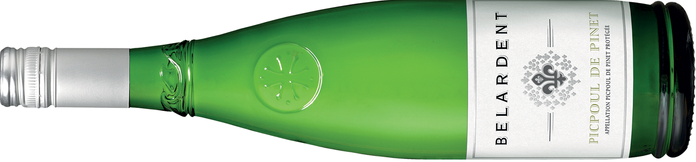
Belardent Picpoul de Pinet 2021 – $16 at DM’s. An old variety from the south of France that’s going through a renaissance.  Citrus and sea spray, green apples and wet stones. The crunchy acidity reminds me of young Semillon. Perfect with oysters and white fish. 93 points.

Robert Mondavi Buttery Chardonnay 2020 – $18 at Dan Murphy’s. When all you want for Christmas is a rich, peachy, buttery Chardonnay. OK, it’s not the most subtle of chardies, but it’ll go with most foods on the Christmas table.

Penny’s Hill The Black Chook Sparkling Shiraz – $17 at 1st Choice. Voluptuous, seductive, rich and spicy (and a touch sweet), Christmas pudding in a bottle. Will please large crowds. 93 points

Deutz Marlborough Blanc de Blancs 2018 – $25 at Boozebud or $142 for a 6-pack. Plus 10% off your first order. Made from Chardonnay, fresh and crisp, notes of citrus and warm bread, fine line of acid. You won’t find better bubbles anywhere near this price. 95 points

Deep Woods Harmony Rose 2022 – $9 at DM’s. This Rosie is a tremendous bargain at its usual price ($13 – 15). At this price, it’s an absolute steal.

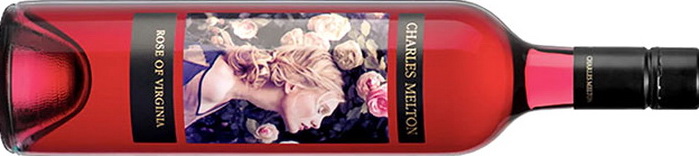
Charles Melton Rose of Virginia 2022 – $30 at Summer Hill Wine. Masterful, as you’d expect from Charlie Melton who resurrected the almost forgotten Aussie Rosé style 3 decades ago. The whole package is a class act. 96 points.

Reds

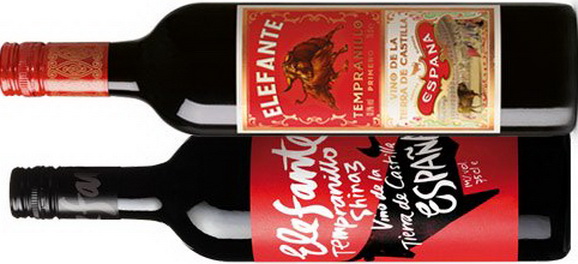
Elefante Primero Tempranillo 2019 – $12 at Our Cellar. A big outfit that turns out quality reds at bargain prices. This wine comes from the high and dry plains of Castilla la Mancha in the north of Spain; it combines opulently ripe red berries with pepper, hints of cola and sweet spices, plus the merest hint of Vanilla from oak. Elegant crowd pleaser. 92 points.

Elefante Tempranillo Shiraz 2019 – $11 at Vintage Cellars. An ingenious blend – Tempranillo has more exotic flavours than Shiraz but less substance / body. Another winner from the big elephant. 92 points.

Hidden Label Margaret River Cabernet Sauvignon 2018 – $13 at Kemenys. This is Robert Oatley Signature Cabernet, made by the very talented Mr Cherubino. Perfect balance between flavour and finesse – cassis and pencil shavings oak, gravel dust and a whiff of black olives. Great line and length, and fine tannins on the finish. Great drinking already but will improve some more. 95 points.  It’s a steal.

Secret Label Adelaide Hills Pinot Noir 2021 – $14 at Kemenys. Made by a winemaker who likes fencing, and used to make wine in the Clare Valley. It’s a decent Pinot at a more than decent price, and that’s a rare event. I’m not sure it deserves a rave review and 95 points that Jeni Port bestows on it, but you can’t argue with the value proposition. 92 points.

Hidden Label Coonawarra Cabernet Sauvignon 2019 – $17 at Kemenys. This is the best young Coonawarra Cabernet I’ve tasted in years, and the price would make Californian winemakers weep. It’s rich and generous, with ripe black currant fruit leading the profound impact on the palate. Fine acid and ripe tannins add some pucker, with pencil shavings oak and dried herbs in the background. The tannin grip is firm but provides perfect balance.

The wine is seamless and the balance pitch-perfect, so you can enjoy it now with a char-grilled steak, but it will grow with time in a dark place. The label hides Leconfield. 95 points, heading for 96. Buy some before it’s all gone.

Secret Label Barossa Grenache 2021 – $19 at Kemenys. ). Made from 50-year old bush vines. The strong colour and seductive nose of raspberries and cherries are a great start. The velvet texture is continues the seduction, adding herbs and spices, a savoury, slightly stalky edge, and fine, ripe tannins on the finish. Perfect pitch, gorgeous drinking already, will get more gorgeous in a year or two. Made by two mates who like to leave their purple finger prints on the label.  96 points. Back up the Ute!

Christmas Pudding Wines

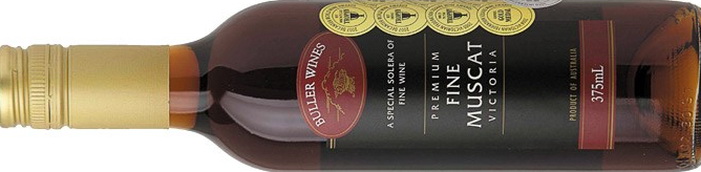
Buller Wines Premium Fine Muscat 375ml – $10.50 at DM’s. Great with traditional puddings, sweet minced pies, Pavlovas and chocolate cake. Or give it a chill and pour it over your special ice cream. 94 points. Bargain!

Campbells Rutherglen Topaque 375mL – $20 at Summer Hill Wine. Same deal, just a more subtle flavour, and real style. 95 points.

I wish you all a peaceful and joyful Christmas Break

Kim

Bargain Rosés – September 2022


From our Best Buys Weekly Spring Selection 

Barton & Guestier AOC Rose d’Anjou 2021 – $9.50 at 1st Choice. It’s the best bargain French Rosé out there, fresh, soft and fruity, and easy drinking. 91 points.

Deep Woods Harmony Rose 2021 – $11 at DM’s (member offer). An old favourite from Margaret River that’s hard to go past at this price. A blend of Shiraz, Merlot and Tempranillo. Vibrant raspberries and strawberries, good length, great balance and a long, dry finish. Gold Medal & 95 Points at the 2021 Margaret River Show. 93 points. Terrific bargain

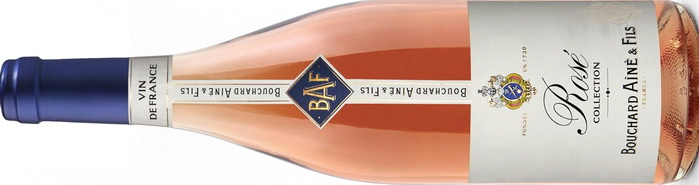
Bouchard Aine & Fils Rosé  NV – $13 at Our Cellar. The non-vintage option gives this shipper more flexibility with the final blend, which is seamless, elegant and seductive. 93 points.

Chapel Hill The Parson Sangiovese Rosé 2021 – $14 at DM’s as a member offer. I don’t know this wine but the winery is tops, and the winemaker who raised it there is Pam Dunsford who won the coveted Maurice O’Shea award this year. Better late than ever.

La Vieille Ferme Rose 2021 – $15 at Our Cellar. A blend of Cinsault, Grenache and Syrah made by the Perrin Family in the Provence who also owns the famous Chateau de Beaucastel. Lovely aromas of ripe fruits, with a touch of sweetness balancing the fresh line of acid. Long and balanced. 92 points

The Penfolds Collection 2022 – More is Better


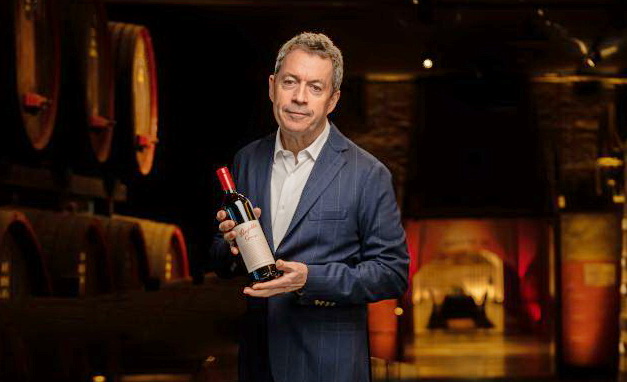
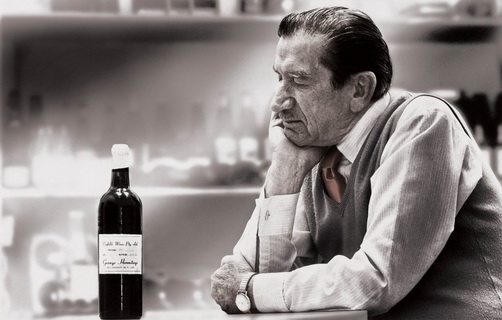
I so look forward to the release of the Penfolds Collection. It’s a high point in my wine year. Have you noticed that most of the wines in this release are just 2 years old these days? And have you noticed how bored Penfold’s Wein Meister Peter Gago is with the whole thing? He doesn’t look happy, does her? He looks like he’s ready to retire.

For a winemaker, Gago has made huge profits for his masters. We have to give him  credit for getting people to spend mega dollars on seriously silly Penfolds Follies. Like the $167,000 ampoule, and the $100,000 music cabinet. Check my last post on this subject for more details – The World is Not Enough

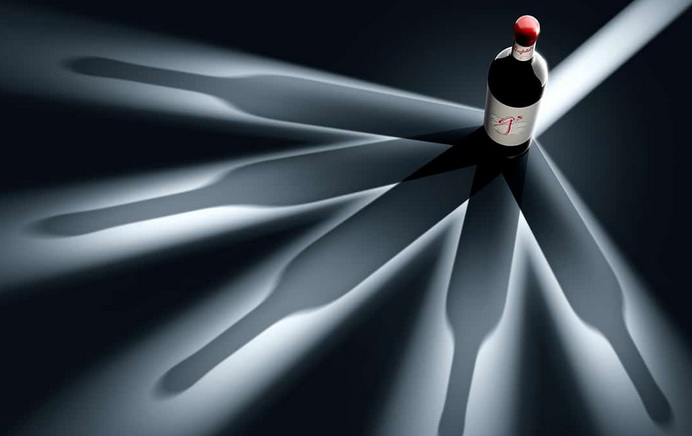
However, Gago’s master stroke was the g series, those blends of different vintages. The g5 is the latest, a five-vintage blend of Granges stretching back to 2010 that sells for $3500 a single 750 ml bottle. They pour bottles from 5 vintages into a vat, stir the blend and bottle it under a fancy new label. Then they sell it at 4 times the price of the current vintage Grange.

Hang on, you actually have to express interest in writing to Penfolds. You can’t just rock into your local Dan Murphy’s and grab a case. Keep in mind that, for the $3500 asking price of single bottle of g5, you can buy 5 pitch-perfect Granges such as the 1976, 1986, 1990, 1991 or 1996 at auction.

That’s right: 5 bottles of the best Granges made in the last 50 years for the same money as a single bottle of g5. That’s money for jam; that’s sheer genius. Yes I know, some would call Penfolds greedy. I only hope they give Peter Gago a Rolex for his retirement celebs, not a citizen as they did for Max Schubert.

At Last, the $1000 Grange

I guess it was only a matter of time before they broke the sound barrier with Grange, since special bottlings of other reds have done that many times, leaving the Grand Icon down there scratching with the chooks.

A couple of years ago, Penfolds got together with champagne maker Thiénot, and launched a champagne under a label that carried the names of both wineries. ‘We have re-ignited our love affair with France,’ Peter Gago told the media, ‘a special place for Penfolds where our winemaker Max Schubert was inspired to create Grange.’ This is a long bow to draw, even for Gago, since Max fell in love with Bordeaux, where he observed how they made red wines. He never went to champagne to the best of my knowledge.

Gago Goes Global 

You could argue that it makes more sense for Penfolds to sell blends of Napa Valley and Bordeaux reds. It’s hardly logical, but clearly the big wine company’s 100-odd labels don’t offer nearly enough choice for its loyal customers.

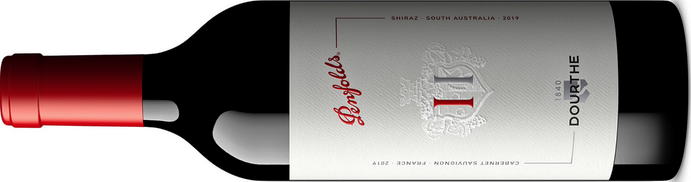
‘As expected,’ writes Huon Hooke, ‘the wines are of very high quality; what is perhaps less anticipated is their lofty pricing.’ That comment took me by surprise, given Penfold’s track record of charging ludicrous piles of money for reds of no great distinction. The pinnacle of the international offerings is Penfolds x Dourthe II Cabernet Shiraz Merlot (AUD $500) – Bordeaux and Barossa Valley.

Jamie Goode was at the launch, taking photos.

‘This is the start of our French winemaking journey,’ Peter Gago told the wine media. ‘Our main objective? To remain true to the winemaking ethos of both wineries, to deliver the best blend possible, to ideally make Bordeaux and South Australia proud. This wine is not about bigness or boldness or assertion. It is blended to convey an ethereal lightness, subtlety on the palate – sensitively binding two hemispheres, Old World and New.’

Ethereal lightness? From Penfolds? The home of over-ripe, over-worked blockbuster reds? I’m choking on a glass of 1996 Bin 389 as I read this. I’m lost for words, or maybe just lost?

‘It’s about curiosity and experimentation,’ says Penfolds chief winemaker Emma Wood. ‘We’re not about competing with French wines – it’s about making a “Penfolds wine” from France.’ Are you confused yet? I’m lost AND confused.

More Space Travel

In a unique move,’ the Robb Report tells us, ‘Penfolds will enable the public to celebrate the 2022 Collection through an innovative three-day event platform – “Venture Beyond By Penfolds” – to be held at Sydney’s Carriageworks.

‘The nightly live show will include wines from the new collection, a space-themed menu by chef Nelly Robinson (delivered in a red rocket?), live entertainment and music from Client Liaison and DJ Dan Lywood as well as an immersive experience by BabeKuhl and masterclasses led by a Penfolds winemaker.’

I can hardly wait for Gago’s next move – what will it be? A Rosé from the dark side of the moon?

The Awful Truth

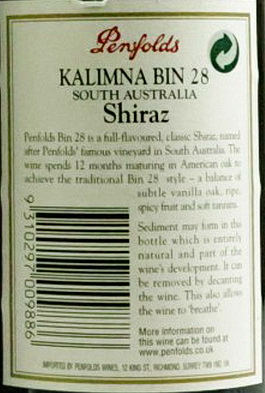
Guess what – someone finally spotted that the name Kalimna has disappeared from the Bin 28 label. Philip White shared that important detail as long ago as 2015 in a piece he wrote for Adelaide’s InDaily.  Kalimna isn’t just any vineyard in the Northern Barossa. It headed Max Schubert’s list of favourite sources for Grange for many years.

‘Instead of revering that special place,’ says Philip, ‘some marketing genius decided to make Kalimna a registered brand name in a more generic sense, so the grapes in this wine come, as the label vaguely admits, from South Australia, which is a fair bit bigger than little ol’ Kalimna. Not to mention quite a lot cheaper, as far as buying grapes goes.’

Philip adds a parting salvo: ‘Maybe the buyer of Penfolds red at these prices is expected to be so breathlessly aspirant that they won’t notice such polish from the propaganda division which somehow lives on in the ruins of Foster’s old Melbourne ramparts. I seriously doubt whether these people actually drink wine.’

Wait, there’s more

Just for fun, I checked the back label of a 1996 Bin 28, and it says ‘the wine is named after Penfolds’ famous vineyard in South Australia.’ It doesn’t say it’s made from Kalimna grapes. It also says South Australia in big letters on both front and back labels. So did Bin 28 ever come from the famous Kalimna vineyard?

When asked by the nosy wine media about Kalimna’s vanishing act, Gago assured them that ‘The importance of the vineyard to the Penfolds story remains as strong as it ever was. With Kalimna we can’t forget where we came from, and we can’t forget that those grapes go into the very best of our very best wine.’

But we can simply forget to mention that the fruit from Kalimna hasn’t gone near the wine once labelled as Bin 28 Kalimna Shiraz in years. ‘We attach a lot of emotional energy to it,’ says Gago. ‘And we are doing everything we can in the vineyard to preserve its legacy. It is very Penfolds in every sense, and I don’t think we would ever walk away from Kalimna.’

No, you just didn’t tell us that the wine once called Kalimna Shiraz walked away from us mug punters years ago. I guess this is the final act in Peter Gago’s transformation from wine meister to marketing meister, spinning vacuous fairy floss for his masters.

Footnote 

If you’re one of those rare people who buy exalted Penfolds wines to drink, rather than collect them in the hope of impressing their friends, Huon says the 2020 RWT Bin 798 Barossa Shiraz is his pick of the new collection at a modest $200. He also likes Bin 389, St Henri and Bin 150 Maranaga. All cost less than $200.

And there you have the short story.

Red Wine — Fountain of Youth?


For Wine Lovers, it’s the Best News in Years

We are all mortal until the first kiss and the second glass of wine. Eduardo Galeano

Plastic Surgeon Richard Baxter’s book ‘Age Gets Better with Wine’ tells the story of Jeanne Calment who died in her sleep in Arles in the south of France in 1997, at close to 123 years of age.

‘Her birth predated the telephone,’ writes Baxter, ‘and her death was announced via the internet.’ As a young woman she sold art supplies to van Gogh and other impressionists who came to the Provence to catch the light. When she reached the age of 90, she made an agreement with her lawyer to subsidise her stay in her apartment until her death when it would pass to him. He died years before her, and his heirs had to continue paying the rent.

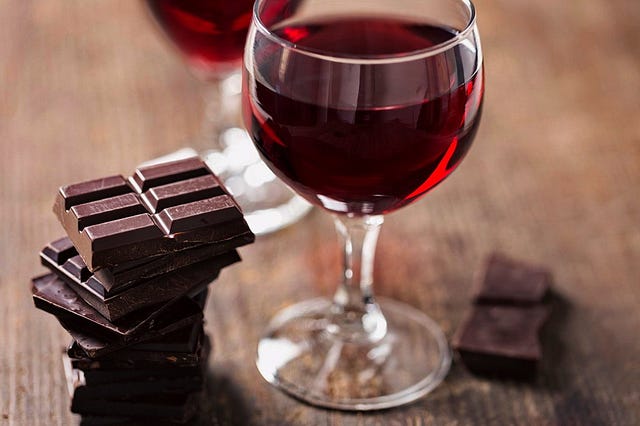
Apparently Calment followed a Mediterranean diet, loved rich foods, chocolate and red wine (not at the same time perhaps). A few years after her death, researchers discovered resveratrol, a compound that Baxter calls the most potent antioxidant of all. The best source, as luck would have it, is red wine because the process of making it extracts large amounts of resveratrol from the grape skins.

Source: The Independent

More >>

The World is Not Enough – Penfolds Follies Blast Off into Space


‘Max Schubert was a man of the people, an unpretentious, even humble man, who was bemused by the success of his most famous creation, Penfolds Grange Hermitage, and even more so by the prices paid for it, and the way it was captured by collectors and speculators.’ Huon Hooke.

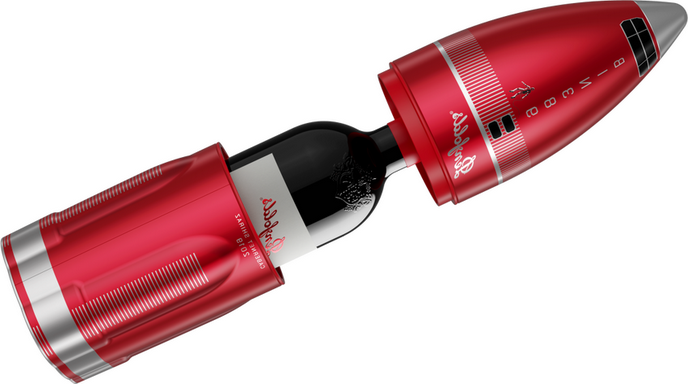
‘Since the beginning, Penfolds has been looking to the stars,’ says the landing page for this red rocket. ‘Dreaming of what could be beyond. Our new limited edition rocket tin celebrates this pioneering spirit of going beyond, rather than accepting the status quo.’

Get the Penfolds side of the story HERE, and make sure you scroll down to the video. You’ll ask yourself: Is it a Space X rocket? Is it a NASA space shuttle? No, it’s a bottle of Penfolds red. What’s it doing in a tin rocket?

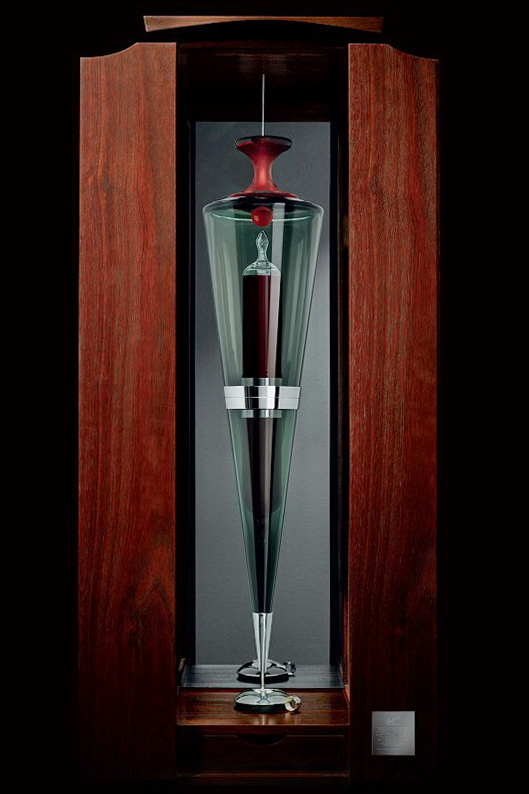
Remember when Penfolds released its 2004 Block 42 Kalimna Cabernet 10 years ago in a hand-blown glass ampoule, suspended by a bespoke glass plumb-bob in a wooden Jarrah cabinet? Only 12 were made of this ‘beautiful, thoughtful, unique objet d’art, designed to store wine in an ideal environment.’

‘The ampoule also provides a truly memorable experiential and sensory engagement,’ the press release added. ‘When a decision is made to open the [$168,000] ampoule, a senior member of the Penfolds winemaking team will travel to the destination of choice, where it will be ceremoniously removed from its glass plumb-bob casing and opened using a specially designed, tungsten-tipped, sterling silver scribe-snap.

The winemaker will then prepare the wine using a beautifully crafted sterling silver tastevin.’

We assume that the Penfolds winemaker will also blow your nose and wipe your bottom after the event, most likely with a handkerchief made from spun gold.

Marketing at Penfolds is a disaster area of long standing

‘Wine becomes just another vacuous totem of wealth,’ Decanter’s Andrew Jefford wrote, and compared creations like the Penfolds ampoule to ‘pointlessly complicated watches, tank-sized vehicles for urban use, houses which are never lived in and boats which spend the year bobbing about on their moorings.’

He added that he takes no issue with market forces that make rare wine unaffordable to many drinkers, but takes exception at marketing initiatives that ‘look so obviously like the fantasy of pale people who have spent too much time locked up in a room with glossy magazines.’

He also makes the point that ‘they [the pale people] are hilariously alien to the great Aussie traditions of piss-taking and pretension-popping,’ (which is what we’re doing here) and adds that turning fine wine into artificially exclusive luxury goods damages the brand.

‘No First Growth in Bordeaux or top Burgundy domain would contemplate anything this silly,’ he argues, ‘they leave that kind of ludicrous marketing excess to the bubble-brained Champenois, where form regularly eclipses content.’ Read the full post here. 

Marketing Genius or End-of-Empire Insanity?

How do you top a $168,000 extravaganza? With a £1.2 million, never-to-be-repeated Penfolds Collection: a flight of Granges from 1951 through to 2007.

Each of the Grange bottles comes signed by either Max Schubert, John Duval or Peter Gago (the current custodian of the Holy Grail). But wait, there’s more: a set of 13 magnums that includes the rare 2004 Bin 60A and the 2008 Bin 620 special bottlings. In addition, Penfolds will throw in one case of its icon and luxury wines every year for the next 10.

‘Gago believes this is probably the finest set of Penfolds wines ever to be assembled and sold,’ Decanter reports. ‘It is certainly the most expensive … Treasury Wine Estates have been aggressively re-positioning Penfolds icon range as a global luxury brand to capitalise on opportunities in newer markets such as China.’


Yes, China, and haven’t those pale people worked hard to make Penfolds’ reds attractive to Chinese folk down under and in China. What would Max think about his wines being wrapped in such chintzy, truly awful labels?

Max Schubert, the Renegade

Somewhere along the line, the pale people came up with a new angle: to paint Max Schubert as a renegade. What a shame they were too lazy to check a dictionary, which would have told them that renegade means ‘a person who deserts and betrays an organization, country, or set of principles.’

Max Schubert was unerringly loyal to Penfolds all his life – he worked for the firm for all of it – and always stuck to his principles. I suspect the word they were looking for is Maverick, which my dictionary describes as ‘an unorthodox or independent-minded person.’

The Blending Obvious

In 2017 Penfolds released the g3, a blend of 3 Grange vintages. Had Penfolds’ marketing minions run out of ideas for special bins? In the last couple of decades, Penfolds added a bunch of these, along with over 100 new labels.

‘Blending across vintages is part of Penfolds winemaking philosophy,’ Peter Gago told the media and referred to Penfolds’ Tawny ports, ‘famous in the mid-1800’s (they’re out by 100 years, but the lifestyle magazines didn’t pick that up) made by blending multiple vintages. ‘A natural progression was to apply this venerated technique to create a new Penfolds red style,’ said Gago.

This claim is fanciful at best, and cynical at worst as Gago well knows: Unlike vintage ports, tawny ports are blends of multiple vintages, and so are most champagnes. However, in both cases the single vintage wines fetch much higher prices than the blends because they’re only made in great vintages, in limited quantities.

I don’t know of any great reds in the wine universe that are blends of several vintages (although someone is bound to correct me). That said, the faithful snapped the up g3, and the g4 that followed in 2020. And then came the g5, an obvious move by Penfolds since it’s all money for jam.

Where do you get it? You can’t just walk into your local Dan Murphy’s and buy a 6-pack. Oh No, you have to go through an expression of interest process with Penfolds, where you might score a bottle or 2 if you’re fast enough. As John McEnroe yelled at the umpire: ‘You cannot be serious!’

The g5 is a five-vintage blend of Granges stretching back to 2010 that sells for $3500 a single 750 ml bottle. Is that it? YUP, that’s it. They pour bottles from 5 vintages into a vat, stir the blend and bottle it under a fancy new label. Then they sell it at 4 times the price of the current vintage Grange. Or 6 times the average auction price of the 2008 Grange, which scored 100 perfect points with Robert Parker’s Wine Advocate.

Is the blend of 5 recent vintages worth so much more than older vintages of Grange? And I’m talking about pitch-perfect Granges here such as the 1976, 1986, 1990, 1991 or 1996. Do you know that you can buy these FIVE vintages at auction for a total of $3500?

That’s right: 5 bottles of the best Granges made in the last 50 years for the same money as a single bottle of g5, or the same money as FOUR bottles of the current Grange 2017.

Sheer Genius

Perhaps I overlooked something here: the folks who buy Grange and the special Penfolds bottlings are a different breed from you and me: they don’t buy these wines to drink, they buy them as investments and to impress their friends.

Penfolds produced just 2,200 bottles of the g5 to make it a rare collector’s item, underscored by the expression of interest nonsense and the announcement that the g5 was the last ever rendition of multiple Grange blends. You and I might laugh at this nonsense, but the investors lapped it all up and coughed up the money.

Some wine merchants did as well, and now sell the g5 for $5,000. The package they come in provides the buyer with the most elaborate unboxing experience I’ve ever seen – check this video and listen to Peter Gago go into raptures about the packaging, with James Suckling watching his every move, trying hard not to break into raucous laughter https://youtu.be/Jd6tGhddG_o.

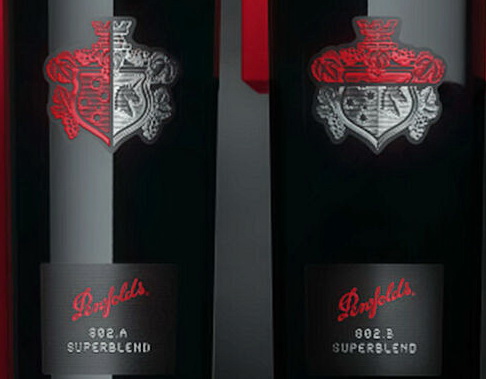
When these multi-vintage blends were snapped up by the faithful, Gago made more blends – and why wouldn’t he? Penfolds launched ‘Superblend’ 802-A Cabernet Sauvignon Shiraz 2018 on an unsuspecting world in 2021, for the same price as the current Grange.

This was a double release – 802-A had a twin called Superblend 802-B. One was matured in American oak, the other in French. The labels don’t look like Penfolds labels; instead they suggest a split personality dressed in bleak medieval garb. Have the pale people lost their branding template?

Grange, the Musical

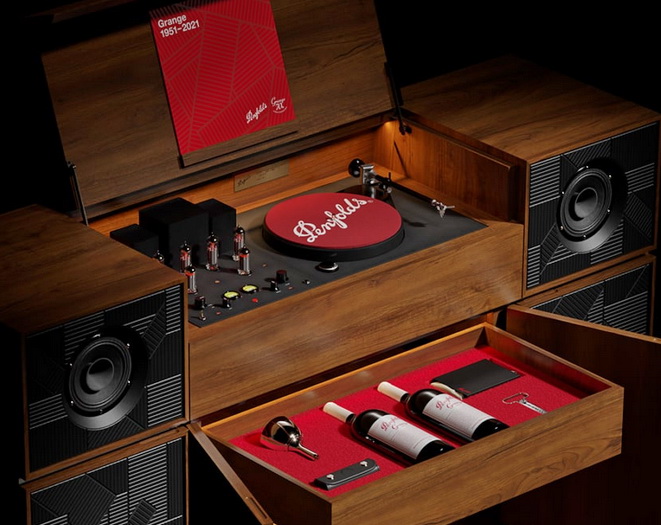
How do you top these bold marketing moves? There’s only one option: a $100,000 bespoke music cabinet with a valve amplifier and a Penfolds-branded turntable. Apparently Max was a music lover. Oh really? He’s been dead almost 30 years, and now someone remembers that he loved music?

What’s the Occasion? Ah yes, we’re celebrating 70 years of Grange. ‘Only seven individually crafted pieces have been produced globally (I think they mean in toto),’ says Penfolds, ‘paying homage to the “all in one” console design from the 1950s – the same decade Grange was first created by Max Schubert.’ More Here, and here’s the video

Postscript

I want to express my gratitude to Peter Gago, Penfolds and TWE for supplying us with so much fabulous material for piss-taking and pretension-popping. Most of the ideas made no sense to this marketing brain, but they clearly found a ready audience among the Penfolds faithful and other investors with money to burn.

Kim

Best Chardonnays in Australia 2022 – Part 4


Chasing the best quality /price ratio between $20 and $60

You can read Part 6 HERE (2025 update),  Part 5 HERE, Part 3 HERE, Part 2 HERE, and Part 1 HERE

In earlier parts of my ongoing quest for great good value Chardonnays, I added the ‘best’ bets from other reviewers. This time, that was too hard. The WineFront guys didn’t do their annual survey, perhaps due to Covid lockdowns, and Halliday’s WC list of best chardies is up in the $$$ stratosphere.

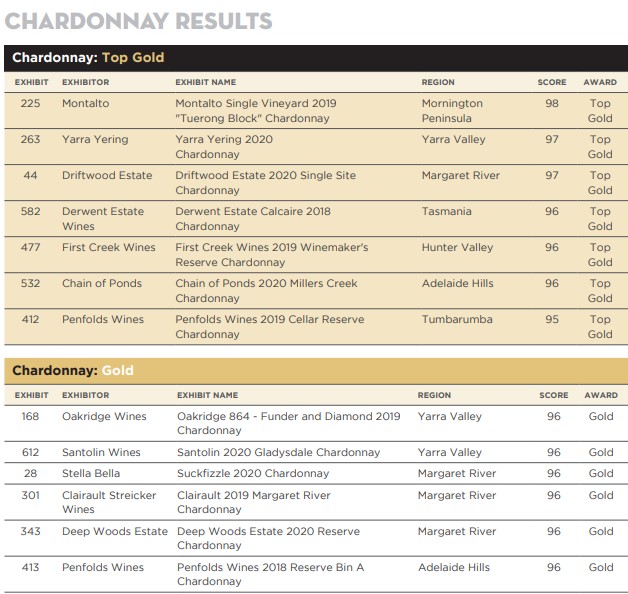
The Halliday Chardonnay Challenge, which has nothing to do with the man apart from his name, went ahead and now includes a Cabernet Challenge as well. The list was too long already, and now it’s as big the senate ticket in tomorrow’s election. I’ve added the list of the winners  – wines scoring 96 points or more – at the end of this post.

Huon Hooke’s Real Review produced some useful suggestions, which I’ve included in this list.

I’ve added more Kiwi Chardonnays to this list, and some from further afield. This is not a purist’s pursuit but a search for the best value Chardonnays we can lay our hands on in Australia.

I’ve also stayed mostly away from the Mod Aussie styles, the reductive ones that that throw struck matches around by the handful. When this kind of trickery is overdone as it has been these last years, it’s an aberration. We’ve found a couple of new entries on the other end of the spectrum, both from California.

At the entry level, giant killer Hoddles Creek’s price for the Estate Chardonnay has shot up to $24, which is fair enough. Higher up the scale, Dappled Appelation’s production of the 2020 was miniscule, but the 2021 is more plentiful. It’s gone up as well

I had a chance to taste some Kumeu River chardies with my best mate Reg who has long been a champion of this winery in the Auckland suburbs. The only wine they make that comes in under $20 is the Kumeu Village Chardonnay, which I’ve recommended more than once in recent years.

The  other wines from this winery cost a bit more, but they’ve demolished some of the finest white Burgundies in blind tastings, over the last decade. KR Estate and the Ray’s Road from Hawke’s Bay fit in the under $50 group, while the Coddington, Hunting Hill and Maté’s Vineyard are around $65, $90 and $120.  Given that they’ve beaten grand cru Burgundies that cost 10 times more in blind tastings, they’re stunning bargains.

Now that their fame has spread around the globe, these chardies are on allocation. We’re a bit late catching up with the 2020s, so be quick if you want some. If you miss out, relax because 2021 was another top vintage – please check my post on the astounding success of this family business.

The Short List

Kumeu Village Chardonnay 2021 -$20 at Kemenys. This has been our go-to chardy for years. I wish I’d bought more of the 2020, which was the best vintage winemaker Michael Brajkovich says he’s seen in 40 years. The 2021 has a bit more to it, and needs a little more time to settle down. 93 points.

Tim Atkin is a big fan as well, but I think he got carried away. ‘This is only Kumeu River’s entry-point wine,’ he says, ‘but is typically well balanced, refreshing and focused, with just a hint of oak spice, leesy complexity, some struck match undertones and a chiselled, refreshing finish. A Kiwi wine that’s better than many Puligny-Montrachets.’

Te Mata Estate Chardonnay 2020 – $23 at Our Cellar. Made by one of New Zealand’s best wineries, this wine tends to show cool restraint and classic lines. The warm 2020 vintage has produced a richer chardie with ripe stone fruits, without losing its classic lines. 94 points.

Robert Mondavi private Selection Buttery Chardonnay 2019 – $22 at Summer Hill Wine. Nothing subtle about this wine made for those of us who hanker after the chardies of yesteryear. Ripe peaches, more oak than butter at this stage, soaked in vanilla essence, with a creamy texture that lingers. Try it with full-flavoured foods – we had it with a Cassoulet, and it was a good match. 93 points. Good drinking now, and will improve for a year or 2.

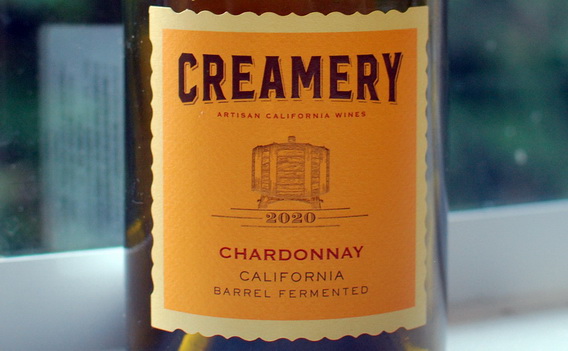
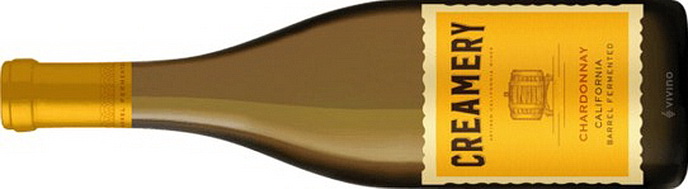
Creamery Chardonnay 2020 – $24 at Our Cellar. Made by O’Neill Vintners, who make ripe Chardonnay from grapes grown in California – Monterey, Paso Robles and Clarksburg. It’s 100% barrel fermented, 100% malolactic fermentation, and spends seven months in American and French oak. Younger and more restrained than the 2019, but the style and build is the same. It’s good, rich drinking now, and will fill out with another year or two. 93+ points. BUY.

Creamery Chardonnay 2019 – $28 at Wine Square. This was the crowd favourite at a recent lunch we had for a big birthday with family and friends. So many of us prefer this style of ripe, peachy, creamy and buttery chardy to the austere grapefruit concoctions so popular with somms and critics. The 2019 is a little richer than the 2020 at this timeIn California they know how to fine-polish these styles too. Gorgeous drink, usually sells for around $30 or more. 94 points. BUY.

La Crema Monterey Chardonnay 2019 – $32 at Jim’s Cellars. In this case. La Crema refers not to a creamy Chardonnay but to the the cream of the crop – La Crema Viñera was the original name of the winery when it was founded in 1979. Still, the wine delivers peaches and cream with a buttery smoothness, backed by vanillan oak – less than the Mondavi – in a crisp, balanced, polished package. Malolactic fermentation and 8 months on lees with regular stirring. Good drinking, but a touch expensive for what is. 93 points.

Flametree Chardonnay 2020 – $24 at Winestar. I haven’t tried this vintage, but Huon Hooke says this would have to be one of the best buys under $30: ‘Light, bright yellow colour, with a complex spicy, smoky, struck-flint reductive and honey-tinged bouquet, almost Chablis-like. Delicious flavour, refined and penetrating, tensioned and long-lingering. It has lemon-citrus, honey and mineral-chalky flavours in a beautifully balanced combination. Good acidity drives the long finish. An excellent wine. Astounding value. 95 points.’

Isabel Marlborough Chardonnay 2019 – $28 at DM’s ($25 member offer at the time of writing). The fruit is stronger than the 2018, classic stone fruits and almonds; it’s a big mouthful, and the oak is a touch less heavy here. Less struck match funk too. Well integrated already but will improve over the next year or three. 95 points. The 2020 has just appeared on the shelves – the fruit is richer and more forward, but it needs more time to settle down.

Scorpo Aubaine Chardonnay 2019 – $29 at United Cellars. A great chardie from the Mornington Peninsula at a sharp price, and ready to enjoy. It has enough flesh on its bones, the fruit is white peachy, the oak nods toward cashews, and there’s a soft touch of struck match. It’s a vibrant chardy, full of life and gorgeous flavour. Perfect pitch, and ready to drink. 95 points. Grab some while the price is so sharp.

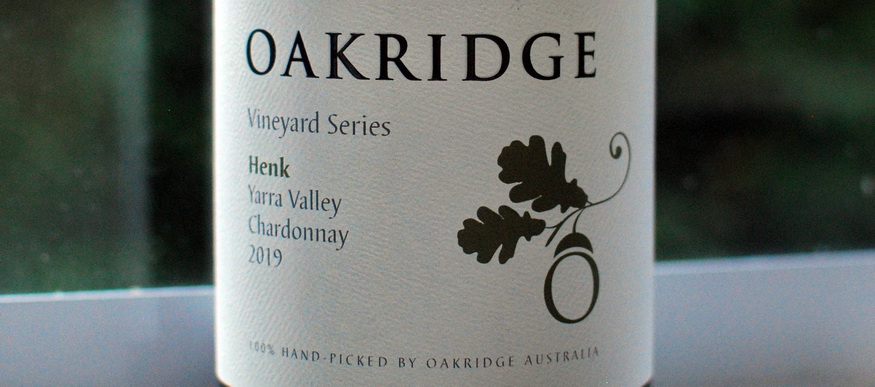
Oakridge VS Henk Chardonnay 2019 – this has been one of our favourite chardies these last 12 months, but it’s just about all gone. There’s some left at Crown Cellar & Co for $38, and at Cellars for $40 in a 6-pack with free shipping across Oz. The prices are up but the wine is worth it. The subtle layers of flavours have real depth and intensity here – stone fruits and a squeeze of lime, almonds and cashews, cool minerals on the long finish. Great balance of flesh and fine bones, lots of finesse. Last year I thought Huon Hooke’s score of 97 points was a notch too high but now I agree. This is one of the top wines on this list.

Dog Point Chardonnay 2019 – $34 at Summer Hill Wine. White peach, citrus, grapefruit, spicy oak, good depth an intensity wine with a fine line of acid. Malolactic fermentation has added a creamy texture with hints of toast and butterscotch. 95 points.

Merricks Estate Chardonnay 2021 – $35 at Nicks. Haven’t tried the 2021, but the folks at this long-established winery on the Mornington Peninsula haven’t put a foot wrong in a long time.  The 2021 is more opulent than usual, according to the guys at Nicks who score it 96 points – check their review at the link.

Dominique Portet Origine Chardonnay 2019, Yarra Valley – $36 at Wineaway. Dominique Portet has been making wine down under since the late 1970s, starting with immensely tannic reds in the Victorian Pyrenees. In 2000 he moved to the Yarra Valley, and now son Ben is helping with the winemaking. This wine is new to me, but The Real Review gives it a rave review.

‘The fruit for this wine is sourced from a mature vineyard in the Upper Yarra and it displays all that high-quality Yarra chardonnay should. This is archetypal gear: Lifted, layered and complex aromas of grapefruit pith, struck-match, bacon fat, grilled nuts and nougat. The palate delivers big time: stone fruit, melon, nutty, mealy, minerally, textured and layered. There’s a whole lot going on here and it’s très smart. 96 points. Outstanding value.

Medhurst Estate Vineyard Chardonnay 2020 – $38 at Langton’s.  ‘Wowee,’ says Jane Faulkner at the Wine Companion. ‘This is a bit of rock’n’roll. All citrus tones, with flint, fennel and daikon. It’s complex and savoury, with lots of texture. Brilliant acidity wraps it up tightly. Moreish and utterly delicious. 96 points.’

Dexter Chardonnay 2019 – $40 at Winesquare. Tod Dexter has been making great Chardonnays on the Mornington Peninsula for years. The hallmarks are intense flavours combined with finesse and purity, energy and drive. Perfect pitch, truly classic style. 96 points

Te Mata Estate Elston Chardonnay 2020 -$40 at United Cellars. ‘This is the first wine I have scored 100 points,’ said Bob Campbell MW in 2014 about Te Mata’s top chardy; he runs the NZ arms of The Real Review.

The 2020 reflects the warm vintage. I can’t improve on Huon Hooke’s review: ‘The bouquet is very rich and complex—roasted hazelnuts, buttered sweet corn, skillfully integrated oak and no reduction. This all translates to a beautifully framed palate, which is tremendously deep and intense, powerful and long, with multi-faceted flavours that will only grow and build more detail if given more time. An outstanding full-bodied chardonnay… 95 points’

Santolin Gladysdale Chadonnay 2020 – $42 at Prince Wine Store. This vibrant chardy from the upper Yarra Valley has a rich, seductive nose that makes you want to find out more. The palate delivers white peaches and nectarines with a squeeze of grapefruit, a sprinkle of nut meal and exotic spices. The wine’s bones are cool-climate delicate but the flavour is rich and the texture creamy. There’s a lovely tension that gives an extra lift to the wine. A winner. 96 points.

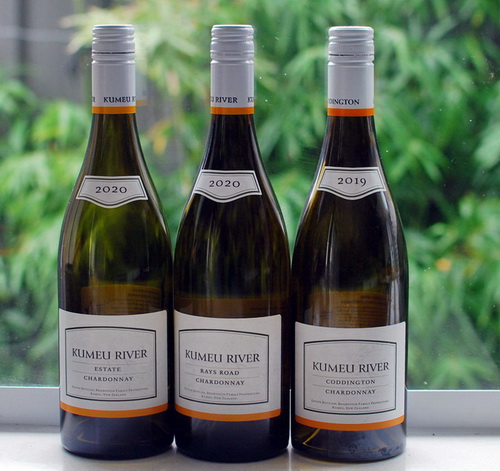
Kumeu River Estate Chardonnay 2020 – $42 at Good Pair Days. This is about the last place with stocks of this wine. It’s still a bit reserved but shows the hallmarks of the style, the rich, round fruit, the seamless integration of gentle oak, the fine acid needed for graceful aging. It just needs a couple more years to fill out. 95 points. BUY. Bob Campbell says the wine is as good as any he’s seen under this label.

Domaine Naturaliste Artus Chardonnay 2020 – $43 at MyCellars. This is one of the examples from the mid-price section of great Chardonnays Matthew Jukes makes in Margaret River. Just a hint of struck match on the nose, lots of rich goodies on the palate, from stone fruits and nutty oak to chalk and gravel dust; there’s even a hint of butter. 96 points.

Kumeu River Ray’s Road Chardonnay 2020 – $48 at Summer Hill Wine. This comes from their recently acquired Hawke’s Bay vineyard. I expected a leaner style, but the wine is rich and round, a polished mouthful of silken texture. All class, and likely to give winemakers in Burgundy a big scare. 95 points.

Neudorf Home Block Moutere Chardonnay 2020 – $55 at Winesquare. One of the best Kiwi wineries IMHO, along with Te Mata and Ata Rangi. They’re based at Nelson, not far from Blenheim on the northern tip of the south island. Moutere is an area where the soils consist of clay and gravel.

I haven’t tried this vintage, but Bob Campbell says it’s more than good:  ‘Delicious, finely-nuanced Chardonnay with grapefruit, citrus, stone fruit, ginger, oyster-shell and baguette crust flavours. A taut, nervy wine, with a delicious backbone of fruity acidity helping to drive a lengthy, mouth-watering finish. 97 Points

Kumeu River Coddington Chardonnay 2019 – $60 at Winesquare. The Coddington vineyard produces the richest, most seductive expressions of the KR range. Ripe peaches and apricots do the talking here, backed by subtle oak suggesting hazelnut meal. It is the biggest wine in the KR range, yet kept neat and tidy by the minerals on the finish and the fine natural acidity these wines have. Fewer than 1000 dozen made. 96 points.

Kumeu River Coddington Chardonnay 2020 – $64 at Winesquare. This vineyard in KR’s neighbourhood produces opulent Chardonnays, and 2020 added even more riches – about 1% of the grapes showed some botrytis, which added an extra touch of apricot to the wine. Seductive ripe peaches and cream do most of the talking, supported by exotic spices, French oak (30% new) and subdued struck matches. A fine line of cool acid keeps everything neat and tidy. 96 points.

Grab some for your next special occasion; these wines fly off the shelves at great speed, and Auckland’s urban sprawl casts a big shadow over the vineyard’s  future.

The Halliday Chardonnay Challenge 2021

Kumeu River, New Zealand’s Montrachet


August 2022 Update

I sent  a link to this post to Kumeu River, asking for corrections. omissions and additions, and received an email from Michael Brajkovich the following day with a few of these. He thanked me and addedd that he was happy to answer any remaining questions I might have,

I was surprised at the rapid and comprehensive response from this brilliant winemaker who has received so much recognition from the top wine critics in the UK and USA. He really doesn’t need our blessing. This family is so well-grounded, and just so plain humble!

Montrachet

Yes, that’s the wine some of the world’s wine critics have compared these wines to great Burgundies, and they’re made in the suburbs of Auckland. I had a chance to taste some Kumeu River chardies with my best mate Reg who has long been a champion of this winery. The only wine they make that comes in under $20 is the Kumeu Village Chardonnay, which I’ve recommended many times in recent years.

It shows some of the seamless polish of the wines further up the scale, in a ready to go, easy on the gums frame. The KR Estate and the Ray’s Road from Hawke’s Bay fit in the under $50 group, while the Coddington, Hunting Hill and Maté’s Vineyard are around $65, $90 and $120.  Given that they’ve beaten Grand Cru Burgundies in blind tastings that cost 10 times as much, they’re colossal bargains.

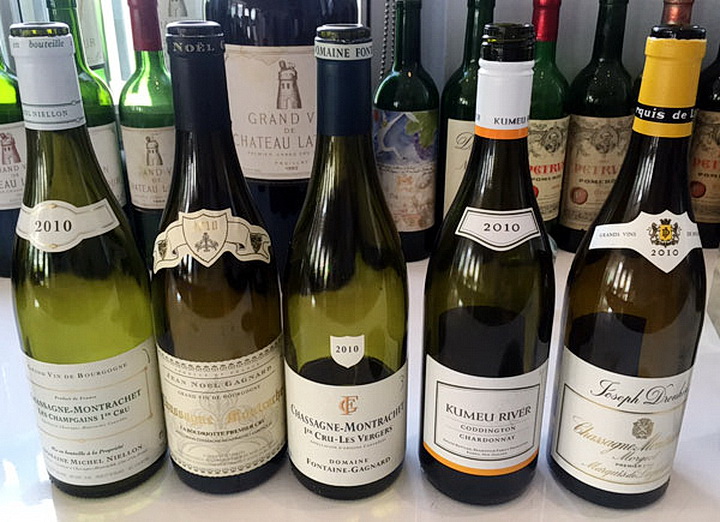
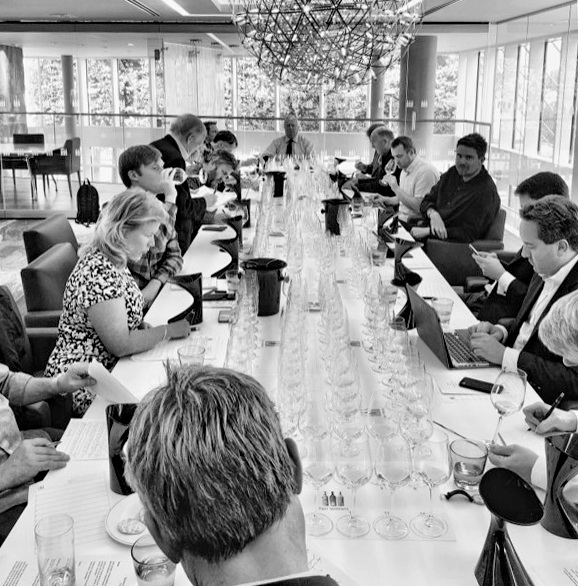
Fine wine merchants Farr Vintners in London have championed Kumeu River Chardonnays for about 25 years, and they arranged two blind tastings with the heavy hitters of the British wine trade, in 2015 and 2018. They put KR chardies up against white Burgundies costing many times as much.

4 Rounds with Heavyweights

Paul Brajkovich went to London in 2015 – while his brother Michael stayed at home and took care of winemaking – for the first blind tasting at Farr Vintners, which pitched KR’s chardies against top class Burgundies.

In the four flights of wine of the tasting (5 wines each), KR’s wines were outright winners in three, and came equal first in the fourth. The publicity this tasting generated made the English-speaking wine world sit up and take serious notice as you can imagine.

What a great result! Wild colonials showing up the aristocracy of Burgundy, makers of the best dry white wines in the world, and trouncing their precious labels in an international blind tasting. The Judgement of London.

Jancis Robinson, the grande dame of UK wine writers said, ‘the Kumeu wines shone because they were better made and more sophisticated. Perhaps the Brajkoviches are simply trying harder. It was not the performance of these inexpensive Kiwi wines that was shocking but the state of the white burgundies.’

She added that ‘every one of the Kumeu River wines was fresh as a daisy and clearly had a glorious future ahead of it.’

Jamie Goode’s take on the tasting was: ‘I think the first thing that most of us will have done straight after the tasting is to go online and see who has stocks of Kumeu River. They are sensationally good wines.’

More details here

Once More With Feeling

Farr Vintners ran a different tasting in 2018. I guess they had established the quality of the KR Chardonnays 3 years earlier, so this time it was a retrospective: a massive tasting of 12 vintages of KR wines, from 2006 to 2017. 48 wines in total. The tasting panel included Oz Clarke, Steven Spurrier, Jancis Robinson, Neal Martin and Will Lyons.

‘The result of this tasting was a clear winner for the quality and consistency of the wines from Kumeu River,’ wrote Michael Brajkovich in the Kumeu River blog. ‘The tasting ended with an ovation for the wines and the clear consensus that of the 48 wines presented there was not one poor bottle. This never happens in tastings of this nature.’

Jancis Robinson was elated. ‘I have long argued that New Zealand makes even better Chardonnay than Sauvignon Blanc,’ she said. ‘Kumeu River somehow manages to make some of not just New Zealand’s but the world’s finest Chardonnay from vineyards in the Auckland suburbs. Three years ago I participated in a professional blind tasting where Kumeu Chardonnays comprehensively knocked spots off some of the finest white Burgundies.’

Joss Fowler at Vinolent offered a sobering comparison: ‘It’s been a very long time since I tasted Coche-Dury Corton-Charlemagne, but I reckon that a punchy vintage of Maté’s Vineyard could take it on. And Maté’s Vineyard is less than £300 a case, compared with £1,000+ for a single bottle of Coche-Drury Corton-Charlemagne.’

You read that right, a thousand pounds for a single bottle. The most recent price I can find for this wine down under is $5000 a bottle.

40 Vintages and Counting

2021 was Michael Brajkovich’s 40th vintage at KR. Michael’s father Maté had been there to work with him until his death in 1992. Cellar master Nigel Tibbits continued to work with Michael; he joined KR in 1974 as a 16-year-old. 2023 will be his 50th vintage.

‘Nigel continues to do the sterling work he has always done,’ says Michael. ‘We have grown together in our roles over these 40 years and the evolution of the Kumeu River style has continued steadily over that time. Nigel has played a huge role in that.’

Michael says 2020 was the best vintage he has experienced at Kumeu River, and it’s bracketed by the outstanding 2019 and 2021 vintages. The Maté’s Vineyard Chardonnay 2020 was James Suckling’s wine of the Year [short video] with a perfect 100 point score (JS appears to have taken over from Robert Parker). How do the brothers Brajkovich keep their feet on the ground?

Michael studied winemaking at Roseworthy in the early 1980s, and worked a vintage in France. He became the second Master of Wine outside the UK (after Michael Hill Smith), and served as chair at both the Royal Adelaide (for 3 years) and the Air New Zealand wine shows (for 5 years) .

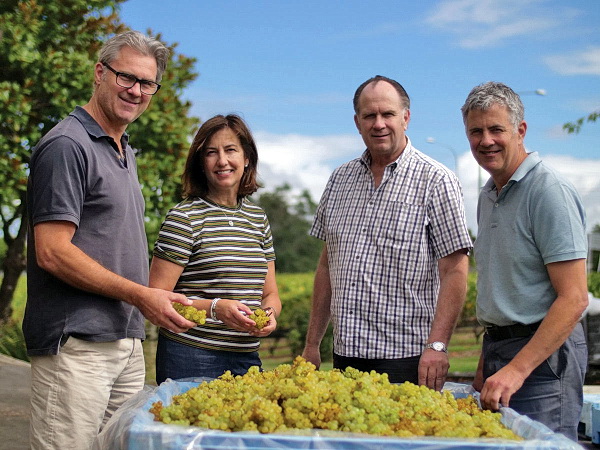
Kumeu River is a family business, with matriarch Melba heading up the firm, and the next generation doing the hard work.

From left to right: Paul, Marijana, Michael and Milan

Ten Questions with Milton Wordley is an interview with Michael Brajkovich that covers the family history and reveals lots of insights into how KR developed such a winning range of Chardonnays. And there are lots of photos of the family’s journey.

This extensive profile Peter Richards wrote for Decanter fills in more blanks, and provides time lines.

What makes KR Chardonnays so special?

Milan Brajkovich looks after the vineyards. He says, ‘We’ve always just made wines we like to drink. New World wines with an Old World twist, for a fair price. We focus on what we do best: Chardonnay. We didn’t choose Chardonnay – it chose us.’

Behind that simple statement lies a sharp focus on every aspect of making outstanding wines, which some people would describe as obsessive. It comes back to Jancis Robinson’s conclusion at one of the London tastings that the Kumeu wines shone because they were better made and more sophisticated than the best white Burgundies.

The Vineyard

Most serious winemakers will tell you that the quest for outstanding wines starts in the vineyard. The climate around Kumeu River is very close to that of Burgundy, but more humid due the proximity of the ocean – 15 kilometers to the west coast, and 20 kms the other way. It’s cool to moderate around here, with temperatures rarely exceeding 30 degrees C.

The soils on the other hand are nothing like those of Burgundy: heavy clay over sandstone, not gravel over limestone. The textbooks imply that this is not the best soil mix for producing wold class wines, but they’re clearly wrong. The soil at Kumeu River has the advantage of hanging onto enough water even during dry summers, so the vineyards don’t need irrigation which keeps yields low and the quality of fruit high.

The Lyre trellis system KR uses for the grape vines is no longer popular these days, as it doesn’t suit mechanical pruning and harvesting. Since the grapes at KR are picked by people and not machines, this is not an issue. The reason Micheal and Milan like the Lyre trellis system is that it reduces over-vigorous canopy growth and exposes the grapes to more sunshine, while the increased airflow reduces the chance of mildew forming. MORE HERE [3 min. video – an interview with Jamie Goode]

Winemaking

The fruit is hand-picked from low yielding vines, whole bunch pressed, and fermented with wild yeasts in French oak barriques. As the fruit arrives at the winery in bins, it is tipped straight into an air-bag press which is much gentler than the traditional crusher. The juice that comes out of the press is pretty clean, but requires some settling to clarify. It’s left overnight at 12 degrees C, then the clear juice is racked off, leaving behind less than 1% solids.

‘We will often also take some of the lighter golden-coloured lees to complex the fermentation,’ Micheal adds. ‘We are most concerned about leaving behind the heavy, easily removed, grape solids. These also contain most of the sulfur spray residues which lead to reductive characters in the ferment.’

After the primary fermentation, the wines go through a complete malolactic fermentation, which converts the green malic acid to softer lactic acid. This adds complexity and creamy texture to the wine. Buttery characters (caused by diacetyl) are avoided by extended maturation on yeast lees in barrel, well past the end of the malolactic fermentation.

‘[the malo] is pretty much a no-no with Chardonnay makers down under these days,’ says Michael. I agree wholeheartedly, as I’ve said more than once. Our young gun winemakers avoid the malo like the plague in their Chardonnays, or restrict it to a small portion of the finished wine.

That’s where the grapefruit tang comes from in mod-Oz chardies. The extended solids fermentation techniques they use also promote the struck match funk, that reductive sulfide character we see so much of in our up-market chardies these days.

Michael is no fan of that nonsense. He says, ‘it became very popular with winemakers both here and in Australia. But, true to the new world adage that if a little bit of something is good, then a whole lot more must be great, things went to extremes. Our wines have not changed in this regard, they have the same low-level reduction that they’ve had for many years. We have certainly not pursued the technique of full-solids fermentation, which maximises this effect, because we believe it also unbalances the wine.’

Balance is something KR chardies have plenty of. The wines are matured in French oak barriques, some of them new, and the oak integration is exemplary; it doesn’t poke out even in the young wines, the way it does in expensive white Burgundies. In short, KR Chardonnays are made to let the superb fruit do the talking.

Michael stresses the importance of the Mendoza Chardonnay clone in Maté’s vineyard. This clone is famous for producing ‘Hen & Chicken’ fruit sets in bunches of grapes, also known as millerandage. The result is small berries and normal-sized ones on the same bunch, which adds a richer texture and more complexity to the finished wine.

Mendoza is a close relative of the Gingin clone used in Margaret River. Professor Harold Olmo brought it with him from California when he was consulting to the W.A. agriculture department’s Bill Jamieson at the dawn of the Margaret River wine region. Various clones have been carefully selected for each of KR’s vineyards.

To sum up, what makes KR Chardonnays so special is the painstaking attention they receive at every stage of production. It’s labour intensive and costly, and doesn’t follow current winemaking fads. One gets the impression that Michael, Milan and Nigel Tibbits have been working with an unerring compass which they calibrated to perfection over many years.

The Future

Kumeu River is clearly an operation at the very top of its game. The demand for its wines has never been stronger, which has resulted in limited allocations so that every market will at least get some of the wines.

Auckland’s urban sprawl has engulfed Kumeu River’s original vineyard, which is a mere 30 minute drive from the centre of Auckland. As a result of spiraling land prices, expansion of the 30-hectare vineyard is not feasible.

That’s why the family bought the Ray’s Road vineyard in Hawke’s Bay when it came up for sale a few years ago. The Coddington vineyard is also in the way of the suburban tsunami, but the Brajkovichs have signed a 5-year lease with the new owners so its immediate future is safeguarded.

How long can the Brajkovichs hold on in the face of rising values for their land? At some point the economics of their position will force the issue, so I expect that KR will buy or lease more vineyards further afield.

I suspect that the critical factor for their success is their 40 years of experience making great Chardonnays, and this experience is transferable as long as the terrain and climate are suitable. New Zealand seems to have plenty of both in abundance.

Right now, these wines present outstanding value. Their quality is up there with the best Chardonnays from Burgundy and the Napa Valley, so my advice is this: scratch together all your spare pennies and buy whatever 2020 KR wines are left in the marketplace. Winesquare, Wineaway, Summer Hill Wine, The Vine Press, Grevillea Wine, The Wine Collective and Prince Wine Store have minute quantities of some of the 2020s left at the time of writing – July 2022.

Save some money for the 2021 though, the third great vintage in a row at Kumeu River, and Michael’s 40th.

These wines are becoming ever harder to find because of their limited production, and their growing fame worldwide.

MORE READING / VIEWING

Hill of Grace challenges Grange for Top Spot

 Blank on Purpose

Can you Improve a Wine by Raising its Price?

I wrote  a post under this heading a while back, and a few weeks ago a loyal subscriber wrote about his experience with the iconic Aussie red. His post could be titled Why I No longer Drink Hill of Grace.

‘I look forward to and read the advice in your email,’ Des wrote. ‘As a person who didn’t drink until i travelled overseas and discovered there was life outside a 1950s Aussie country  pub culture. I returned and read Len Evans column and booklets and then under some very bright wine merchants ie licensed wine/grocery stores advice i built a collection of 300 bottles.

Went overseas again and arrived back in the seventies to drink Hill of Grace etc. So i have always followed good advice and you have continued my luck. NOW i know longer drink Hill of Grace.

As an 81 year old I thought i should share my introduction to Henschke wines and how over time I and Henschke reconnected  given your recent newsletter’s foot note.

As a construction worker, but one who had been round the world by the mid 1960s, I had returned to Perth and bought my wine and spirits from wine merchants, one of whom sold my brother and I Henschke wines and said if you dont like it, the restaurant on the Perth Esplanade will all ways buy them off you.

Well we went off to travel the world again and I arrived back in the seventies with an idle cellar. At the time of my marriage, I plus the new wife were taken out for dinner by 12 of our closest friends and I took – it was bring your own – 4 of 1960s Henschke Hill of Grace, and Mount Edelstone wines.

Some years  later I was at a luncheon, strawberries, champagne and cheese, with several of the original wedding dinner reps plus others, and the same luncheon host. When he saw the three Henschke wines, corks drawn, said are you still recycling  those bottles? No one touched them after that, so I took them them home. And I said to the host you will never ever sip any of the remainder of  my cellar.

Many years later in Hobart at one of my favourite restaurants, the Mona Lisa, they had a vintage wine list, no names but you could ask for a wine off the hidden list. He used to buy estate cellars. The owner one day said I am not going to let you access the vintage unless you ring on the day and say you will be there for lunch – I want to air my choice. On one occasion he served a Hill of Grace, this is the 1990s, we ordered a second and he said I never serve two of those for lunch.

And we didn’t pay hundreds.

Kim, as a subscriber i thank you for your efforts, your contributions go beyond the wine itself; in my early adulthood the only source about wine for tradies was Evans in the Bulletin plus our three wine merchants. i am a buy local but I weaken occasionally and buy interstate.

Regards

Des

PS: I also picked up the deep woods ebony. We were at the NSW WINE SOCIETY 50th  dinner at the Must Restaurant  in Perth, and Deep Woods were present and announced they had won the Jimmy Watson, and my table neighbour was Dennis Lilly. After the dinner, Deep Woods laid on the Sparking wine for the diners, what memories of wine, companies – and I married into a Swan Valley grape grower soldier settler family.

Thanks for the story and the feedback, Des

OK, let’s answer the question: Can you improve a wine by raising its price?

I read with interest that Stephen Henschke wants to push the price of Hill of Grace past the price of Grange. Why? ‘When you think of rarity and story,’ says Stephen, ‘Hill of Grace is clearly the most precious wine.’ It follows that it should cost more, he argues.

Such crisp logic takes your breath away, doesn’t it? On our website, we provide abundant proof that price is a fickle guide to the quality of wine. Last year, Decanter magazine gave the trophy for Australia’s best Shiraz (and best red) to a $37 Shaw & Smith 2012. And late in 2013, a $27 Grant Burge Filsel Shiraz 2010 won Winestate magazine’s Great Shiraz Challenge. Also in 2013, a $17 Pepperjack 2012 won the Visy Great Aussie Shiraz challenge.

For this contest, Editor Peter Simic bought samples of Grange and Hill of Grace since their makers don’t enter them in competitions or wine shows for fear of embarrassment. It was a good move by Peter. This is what I wrote after studying the results: ‘ … near the end of the 20 pages of reviews we find Grange and Hill of Grace sitting in a corner like two school boys who’ve misbehaved in class. 3 stars out of 5 is a disgrace for wines that carry price tags in the $600 – $800 range.’

More >>

Best Value Reds of the Barossa

This is an example of our weekly mailer, which we’re using to support a Facebook ad

THIS WEEK

The nights are getting cold, and we’re longing for rich casseroles that call for heart-warming reds. They don’t come much more heart-warming than the reds of the Barossa Valley, so that’s where we’re going today.

Weekend Reading: The Vintage Journal – Barossa 2022, by Andrew Caillard and Angus Hughson\

Weekend Tucker: Dead Easy Sausage and Bacon Casserole.

WINE OF THE WEEK

Creamery Barrel Fermented Chardonnay 2020 – $24 at Our Cellar. Made by O’Neill Vintners, who take ripe Chardonnay made from grapes grown in Monterey, Paso Robles and Clarksburg. It’s 100% barrel fermented, 100% malolactic fermentation, and spends seven months in American and French oak.
This was the crowd favourite at a lunch we had for a big birthday with family and friends. So many of us prefer this style of ripe, peachy, creamy and buttery chardy to the austere grapefruit concoctions so popular with sommeliers and critics. California winemakers know how to fine-polish these styles too. Gorgeous drink, usually sells for around $30. 95 points.

BEST VALUE BAROSSA REDS

Yalumba Homefullness Grenache 2017 – $120 a dozen at the winery. Insights into this wine from Wine Companion. Yalumba donates half the proceeds to an outfit that builds homes for the homeless. It sounds like alight red that  can take a chill.

Duval Surgo Barossa Valley GMS 2018 – $10 at DM’s. I’m not sure about this one – a $10 red made by an ex-Grange winemaker who learnt his craft from Max Schubert? Check it out if you’re near a DM shop.

Thorn-Clarke Sandpiper Shiraz 2018 – $15 at Summer Hill Wine. A perennial bargain, from the great 2018 vintage, a generous red of solid build, chock-full of honest flavour. Will improve for 3 – 5 years.

Peter Lehmann Portrait Cabernet Sauvignon 2019 – $16 at mycellars, where the freight is free for subscribers on any quantity (promo code BWU20). This red won a bunch of bling, most likely because it’s a crowd pleaser, soft juicy and slippery. Drink now and over the next couple of years. 94 points.

Glaetzer Wallace Shiraz Grenache 2018 – $18 at Summer Hill Wine. Old vine Barossa Grenache at a bargain price. Aged in old oak so the fruit does most of the talking. Juicy red fruits, soft and silky on the palate, with the Shiraz adding weight and fine tannins on the finish. Another crowd pleaser. 94 points.

Secret Label Barossa Valley Grenache 2020 – $19 at Kemenys. Made by a couple guys who get their fingerprints all over their labels, this is a real charmer, soft and silky, mid-weight with lots of finesse. Lovely style. 95 points. Bargain.

Secret Label Barossa Valley Mataro Grenache Shiraz 2020 – $19 at Kemenys. From the same makers as the Grenache above. We opened a 2016 this week, and it was a beauty at its peak. The 2020MGS will reach its peak a bit earlier I think. The perfumed Mataro adds something special here. 95 points.

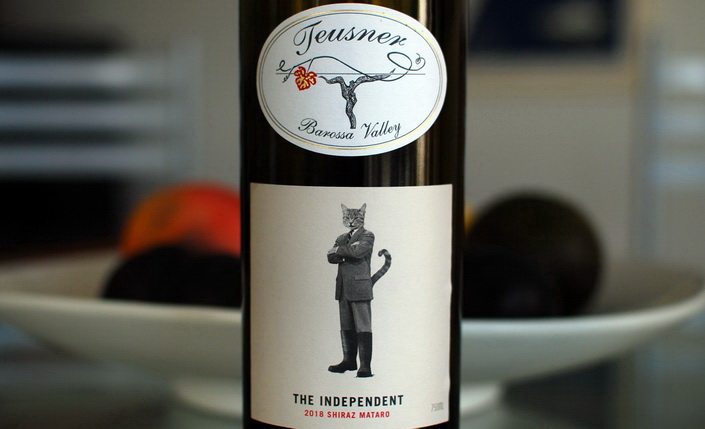
Teusner The Independent Barossa Valley Shiraz Mataro 2018 – $20 at Our Cellar.
2018 was a great vintage for reds, as I keep telling you, and Kym’s team made the best of it. This is a 50 / 50 blend. The Shiraz is rich, plummy and peppery, and the Mataro adds dark cherries, exotic spices, charcuterie and earthy notes. Layers of rich and robust flavour make this a superb Barossa red that is the perfect match for a hearty sausage casserole. 95 points. Back up the ute.

Shanahans Silence is Golden Barossa Valley Shiraz 2019 – $21 at DM’s (member offer). Top red from the word GO. Profound Shiraz with a spicy nose and a glossy texture. Rich, ripe fruit, dark chocolate and Christmas pudding spices, with some charcuterie in the background. Fine tannins on the long finish round it all off nicely. Perfect pitch, one of those reds you can enjoy now (after some airing) and keep for 20 years. Brilliant. 96 points. A genuine bargain.

Chaffey Bros Pax Aeterna 2021 – $23 at Our Cellar The brothers are 3 smart young Turks who make wines that are different, more modern, more intriguing, more colourful. I haven’t tried this wine, but CM at The Wine Front has. I love his opening line:
‘It took Grenache roughly 150 years to become an overnight success in Australia but the glory days of Aussie Grenache are upon us. This release is fresh, delicate, laced with dry spice and tannin, juicy with fruit, and high in drinkability. It feels authentic because it is. Raspberry characters with a glow to them. Earth notes inlaid. Everything on firm/sure tippy toes, ballerina-like, elevated and exact. There’s texture here too, warm texture, silk fresh from the ironing board, treated right. A lovely drink, it is. 92 points.’

Head Red Shiraz 2018 – $22 at Kemenys. Another red from the great 2018 vintage, and another one I haven’t tried. Gary at the Wine Front says: ‘Medium-bodied, succulent, intense fruit of perfume and weight, dark chocolate tannin, savoury elements, very long fresh finish. Super vintage. Puppy-like in enthusiasm as at now. Almost 94 points, though that’s kind of arbitrary.’

Gibson The Smithy Shiraz Cabernet 2018 – $25 at Nicks. Rob Gibson was amking reds at Penfolds until he went out on his own in 1997. He got the nickname ‘Dirtman’ because of his obsession about vine growth which led him to dig deep pits in between vines.
This is a big red, close to 15%, with impenetrable colour, a nose of ripe red berries, seductive oak, various spices, hints of warm earth and touch of tar. Another product of the 2018 vintage, and one that should improve for years. 95 points.

SPECIAL WINES

Teusner Joshua 2021 – $28 at Our Cellar (where the freight is free for subscribers (promo code BWU20). Grenache Mataro Shiraz stored in stainless steel to showcase the freshness and boldness of top notch Barossa fruit. Which is intense, glass-staining, and full of youthful exuberence. The attraction is strong but a little more time will not hurt the wine. 94+ points.

Teusner The Dog Strangler Barossa Valley Mataro 2018 – $28 at Our Cellar. I adore Mataro, and it’s so underrated. I love the flowery notes and seductive aromatics. In France it used to be known as ‘étrangle chien’, because it makes tough reds in a cool climate. In the Barossa it tells a different story. 95 points.

Duval Plexus Shiraz Grenache Mourvedre 2019 – $35 at Kemenys. Another Rhone blend, this one from ex-Grange winemaker John Duval. Haven’t tried it; check the real review’s rave review at the link. 95 points.

Sons of Eden Zephyrus Shiraz 2018 – $35 at Kemenys. Corey Ryan and Simon Cowham make generous Barossa reds, which always seem to have had some fine polish applied that adds a silky texture. Another great red from 2018. 95 points.

Yalumba FDR1A Barossa Valley Cabernet Sauvignon Shiraz 2015 – $44 at Our Cellar. A medium-bodied style of elegance and finesse, made from Eden Valley fruit a stone’s throw from the Barossa, stylish and good drinking already but there’s no rush since the pitch is perfect.
I remember the 1974, which was unloved and discounted heavily, a winemaking triumph in a wet year. The wine was still great 20 years later.

INTERESTING STUFF

2022 Barossa Wine Guide from Winepilot
Old School Meets New in Barossa, From Young Gun of Wine
World’s Drunkest Job – Wine Blogging, from the wine folly
Heat Threatens Oregon Pinot Noir, via wine searcher

That’s it for this week

If you want to support what we’re doing, please spread the word to your friends & colleagues, and on social media so they can subscribe to http://bestwinesunder20.com.au/

Your suggestions for improving this site are always more than welcome, as are your reviews of great wines you’ve found for under $25. We also want your feedback on the wines we recommend – please don’t hold back kim@bestwinesunder20.com.au or info@bestwinesunder20.co,.au

Kim Brebach
Wine Sleuth & Riesling Freak