Cellaring Today’s Wines – is it worth the Trouble?

The wines we drink have changed a lot in the last few decades, whether they’re Australian or imported. Reds have changed most of all: they’re bigger, richer and softer, they’re more fruity and less tannic these days. Most commercial reds are ready to drink when they’re released 2 or 3 years old, therefore the question in the title of this post.

What about the big guns?

Grange and its iconic siblings are still made for the long haul, and will repay some years in the cellar. So will the top of the line Henschkes, Torbrecks and Brokenwoods, the serious reds from Leeuwin Estate, Cape Mentelle and Wendouree. Some of our best Rieslings and Semillons will improve for a decade or more as well.
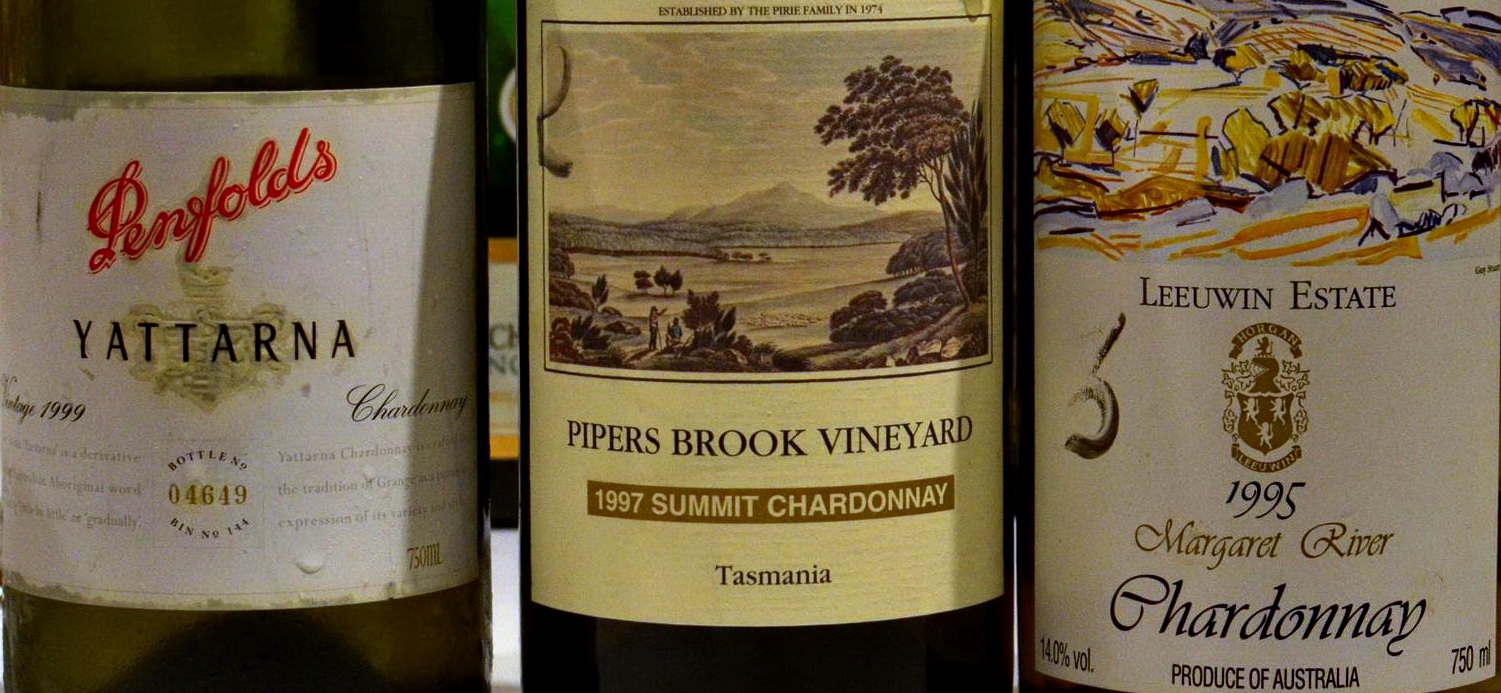
Yattarna

What about  the great names of Bordeaux and Burgundy, Italy and Germany? The Wine Spectator’s Matt Kramer raised the cellaring question not long ago and concluded that ‘most of today’s fine wines will reach a point of diminishing returns on aging after as few as five years of additional cellaring after release.’ He added that even great Bordeaux and Burgundies, and the best Brunello di Montalcino or Barolo wines would repay 10 years of cellaring at most.

Green Harvests

The main reason Kramer gives is ‘green harvests’, the practice of taking green bunches of grapes off the vines a few weeks before harvest. This practice, which wasn’t widespread until the 1990s, results in uniformly riper grapes. Kramer says the practice ‘has transformed the quality of fine red wines nearly everywhere, ensuring more uniformly ripe grapes with rounder, softer, finer tannins.’

Kramer adds that cleaner winemaking, malolactic fermentation and the practice of maturing reds in small oak barrels have also played a role in making today’s wines are far more drinkable than their counterparts of 20 years ago.

Later Harvests

Kramer only mentions the recent trend of ultra-ripe late picking in passing, which is a little strange given that it has the most obvious effect on bringing wines forward. The riper and richer red wines are, the more appealing they are in their youth. As they age, they tend to fade rapidly like so many Mediterranean beauties but it’s easy to forget that when confronted with the blush of youth.

beautyMost wine judges and reviewers fall for the lush young beauties, and winemakers haven’t been slow to notice. ‘There is a race towards concentration, to please many critics [read Robert Parker],’ Professor Denis Dubourdieu told Decanter magazine. He said later picking – sometimes even after the Sauternes harvest in October – had become common practice.

Jean Claude Berrouet, formerly at Petrus and now winemaking director for various estates in Pomerol, told Decanter that he had seen alcohol levels rise between 2 and 2.5 degrees in his 40-years of winemaking. The 2009 and 2010 Bordeaux reds support his claims, with alcohol readings of 14.5 to 15% – details HERE.

The Gamble of Long Term Cellaring

I’m lucky to be part of a group of wine lovers who have deep cellars, and we get together every few months for dinner. We all bring a bottle or two of our finest, and at least half of them are either over the hill, or disappointing, or dud bottles. Yes, you end up with quite a few duds over the years.

In the cold, hard light of day, this is what happened: you bought a $100 bottle of wine and stored it in your purpose-built cellar for 25 years. It’s now worth $2000 but it’s a dud. You can’t even get your $100 investment back, let alone present value. If you’d bought bought 5 shares in Microsoft at its IPO in 1986 for $105 instead, they would’ve turned into 1440 shares over the course of nine stock splits and would be worth about $37,000 today.

Age is overrated

The longer you keep a wine, the higher the chances that you’ll be disappointed. That’s because age throws a harsh light on character flaws, as it does with people. At every one of these dinners, I come away thinking that the good wines we shared would’ve been better 10 years ago (excepting the fortified wines).
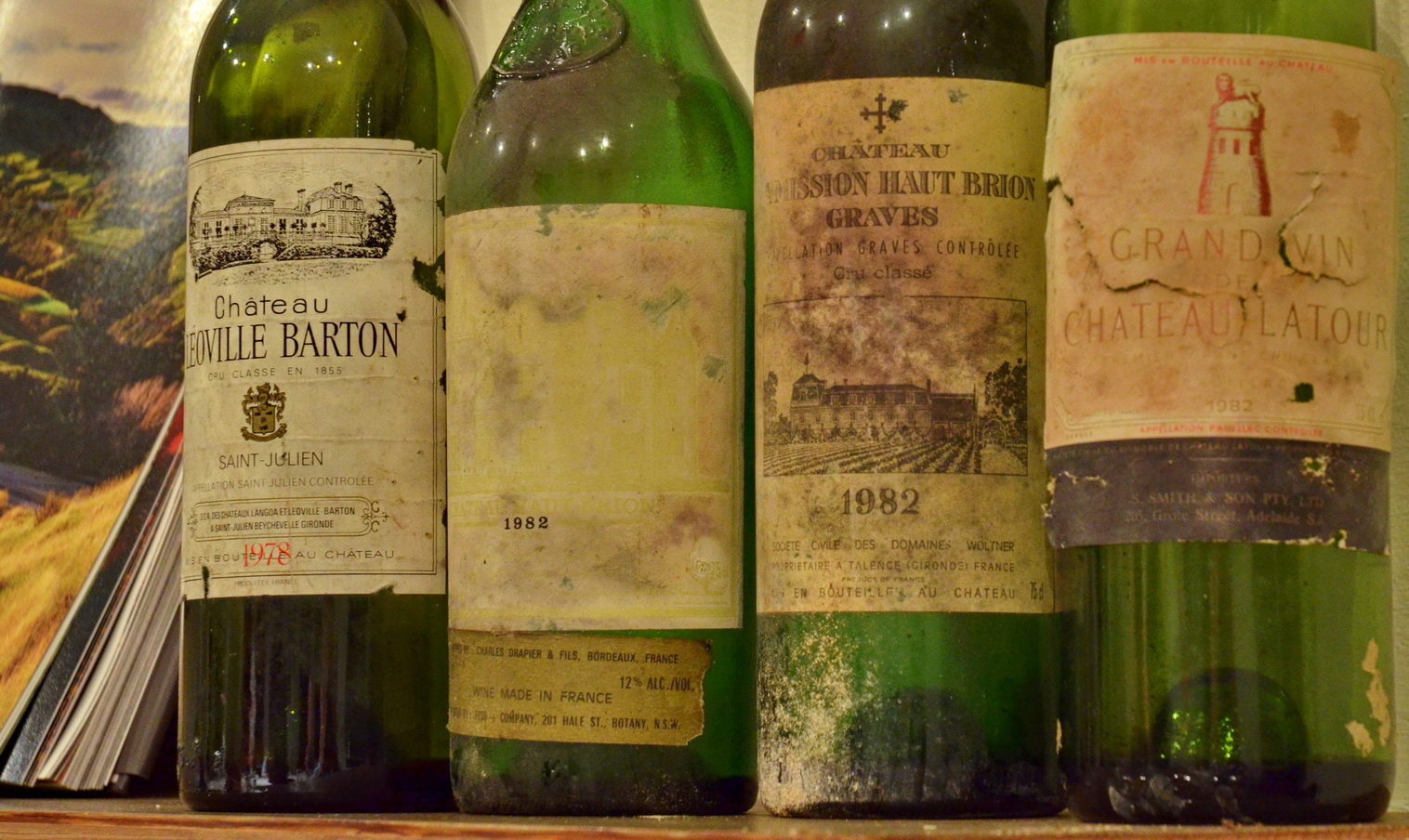
Front Bench 2012 079One night in 2012, we shared four 1982 Grand Cru Bordeaux including first the growths Latour and Haut-Brion. Even these fabled wines from a fabled vintage would’ve been better ten years earlier. There are sublime exceptions: a 1976 Grange was at its absolute peak in the same year, and so was a 1975 Chateau d’Yquem.

The thing to remember is this: if you open a bottle and think the wine is good but needs a few more years to reach its full potential, you’ll most likely enjoy it anyway. If you open a bottle and think it would’ve been better 5 years ago, the disappointment will linger. If you have more bottles of the wine in your cellar, the disappointment will linger longer.

Back to the Real World

I’ve just updated our list of Best Cellaring Wines under $20, and it’s a real struggle to find wines – red or white – that will improve for more than 3 -5 years. As you can see from the examples below, among the safest cellaring bets are Aussie Rieslings and Semillons made the traditional way.

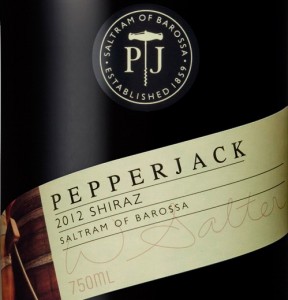
Pepperjack Shiraz 2012/3 3 – 8 years
Knappstein Cabernet Sauvignon 2012 3 – 10 years
Mildara Coonawarra Cabernet Sauvignon 2012 3 – 7 years
Lake Breeze Cabernet Sauvignon 2012 3 – 10 years
Lake Breeze Shiraz Cabernet 2012 2 – 8 years
Balnaves the Blend 2012 3 – 7 years
Frogmore Creek Riesling 2013 7 – 10 years
Mount Majura Vineyard Riesling 2014 7 – 12 years
Mandala Yarra Valley Chardonnay 2013 3 – 7 years
Tarrawarra Estate Chardonnay 2012 3 – 5 years
Tahbilk Marsanne 2014 Now – 15 years
Thomas Wines Braemore Semillon 2014 7 – 15 years
De Bortoli Deen Vat 5 Botrytis Semillon 375 Now to 7 years


How can we tell if a wine will improve for 5 – 10 years? Two ways: We look for a good structure, that is: depth of flavour, line and length of fine acid (in white wines) and a decent tannin grip on the finish of red wines. The fruit may be subdued and the component parts may be immature and edgy, but the wine must show good balance overall. It’s not easy to explain in words, but experienced tasters think they can tell (yours truly included).

As with the weather, the further ahead you forecast the more uncertain things get. That means the longer you keep a wine, the greater the gamble. This is why reviewers of thoroughbreds look at the bloodlines. If a wine has a history of aging well over 20 years, it’s a safe bet that the new wine of a good vintage will follow suit. That’s if all else is equal, the winery hasn’t changed hands, and the winemaking team is still the same.

Corks and Stelvin caps

The screwcaps have banished cork taint but have had no impact on winemaking for obvious reasons. Most of us expect them to slow down the aging process but that’s not yet been proven beyond doubt. If it’s true, it may help keep some wines alive a bit longer which could be a good thing given the shorter lifespans of most modern wines.
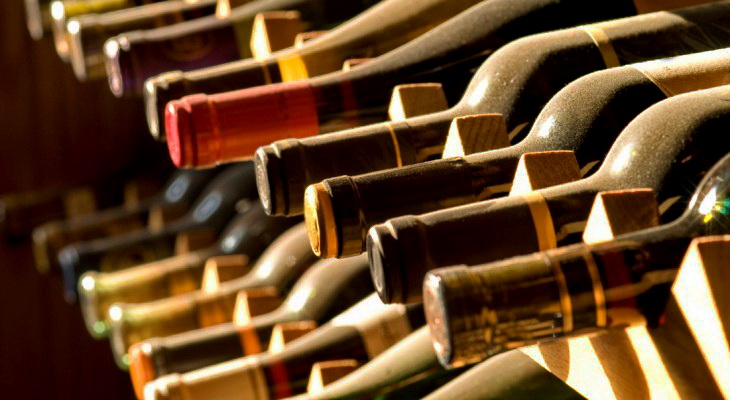
cellaringThe screwcaps have also had an impact on ‘laying wines down’, since they can now happily stand up in your cellar. Of course, most of us down’t have a cellar in the traditional sense so we’ve put together our Rough Guide to Cellaring Wine in a Hot Climate to show you some practical options.

Kim
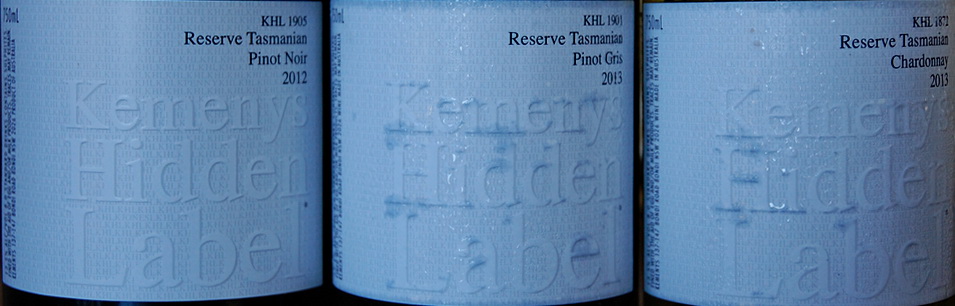
Kemenys Hidden Labels Uncovered

A few weeks ago, I wrote a piece about Jason Bowyer, the Wine Whisperer at ALDI who roams the country and the world to find bargains for the supermarket chain. This piece is about another wine whisperer: David Reberger at Kemenys, Australia’s largest independent liquor store.

David is described in the press as chief financial officer for the family-owned company, and he’s clearly an effective arm twister judging by some of the deals he’s done. The fact that he towers over me despite my six foot four height may give him an unfair advantage. Anyhow, Kemenys has a unique concept: a range of wines sold with a ‘Hidden Label’. These are not cleanskins but branded wines under a plain wrapper. The labels even invite you to guess whose wines lurks under them, and that’s often possible with a bit of sleuthing.

DSC_1191

More >>

Best Big Reds for Cold Winter Nights

This is Premium Content for BWU$20 subscribers. We’re providing it for free to show you how our Best Wine Lists work. They’re shortlists of our TOP 40, which we update every month: Best Wines Under $10, $15, $20 and $25, Best Sparkling, Best Boutique, Best Cool, Best Cellaring (all under $20). You can subscribe HERE for $30 a year, or you can grab 4 weeks of our BEST BUYS WEEKLY mailer for free HERE.

Updated May 2015

The autumns winds are howling, and we’ve gone out of our way to find some really exciting big reds that will warm your insides and won’t break the bank. The wines are listed by variety, each in ascending price order, with direct links to the merchant(s) with the best deals. We update the list monthly, so you’ll always find quality big reds at the best prices across Australia.

More >>

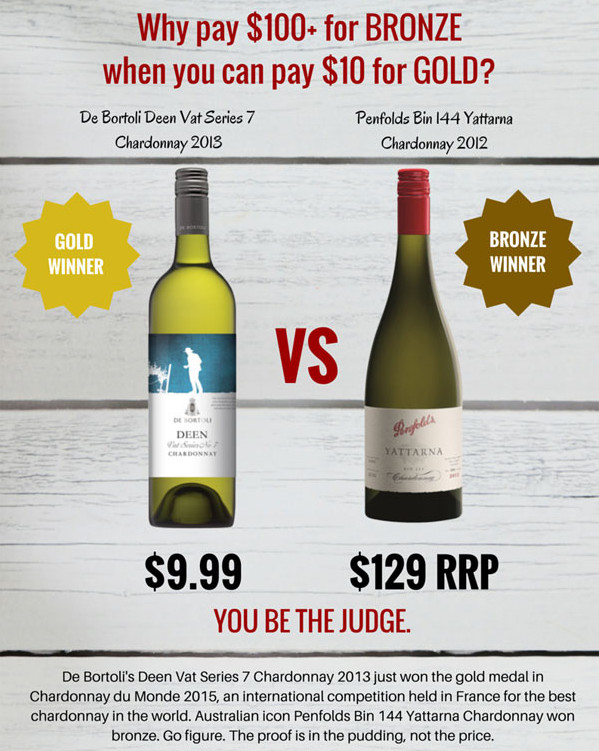
$10 de Bortoli beats $130 Yattarna at Chardonnay du Monde 2015

de bortoli vs YattarnaWineonline.com.au sent me an email with this note. When I checked the results, the wine that won second place overall was listed as DB Reserve Chardonnay 2013. Some inquiries confirmed that this is the export version of de Bortoli’s humble Deen Vat 7 Chardonnay.

So who are these people who have so deftly confirmed what I’ve been saying for so long? That you can get terrific wines for less than $20, and even $10?

The idea of this competition, says the website, is ‘to bring together the world’s best Chardonnays in an elegant setting- the Château des Ravatys, the wine estate of the Pasteur Institute. The ambition of this international confrontation limited to Chardonnay wines is to pick out the best wines on the basis of their intrinsic quality …

More >>

Yalumba – sometimes you really wonder Y

Australia’s oldest family-owned winery

Yalumba is a wine company I’ve always had a soft spot for. It’s the oldest wine company in Australia that is still intact, and still owned by the Hill-Smiths. Yalumba has also been an innovator, both in terms of new territory and new varieties: Viognier, Roussanne, Vermentino and Tempranillo.

Yalumba’s Signature Blend red has a long and illustrious history, and is unique in celebrating the key employees and family members that made the company what it is today, every year. Christobel Hill-Smith was honoured this way back in the seventies, when Yalumba made an elegant Cabernet Shiraz in one of the wettest vintages on record. Initially it was labelled FDR1A but, after it collected many gongs and plaudits, Yalumba released the wine as Christobel’s blend.

christobel

More >>

Whom can you Trust with Wine Reviews?

We keep running into this issue, and we will show crass examples from time to time. I’m not saying we’re more consistent than the rest, but these examples show how hard it is to find consistent reviews.

Last Horizon Pinot Noir 2013

Destemmed and cold-soaked for 6 days pre-fermentation before 10 months maturation in mainly used French oak. The bouquet is expressive, but it is the palate that sets this wine apart, the fruit coating the mouth with red and blue fruit flavours that run from the tip of the tongue to the lingering aftertaste that won’t go away, Tasmanian acidity cunningly woven through. 95 Points James Halliday

A quietly powerful Pinot with a very good , youthful hue and a complex potpourri, dreid herb and forestry bouquet. Medium bodied, focused and intense, it has superior depth and flavour. Elegant, long and refined. 94 points, Huon Hooke, Gourmet Traveller Wine, 100 Top new releases

Clean, fragrant, stone fruit meets green grass scents in the bouquet. Pretty simple, but communicates the variety and region well. Crisp, tangy, zingy to taste with electric, citrussy acidity and a light menthol character finishing off the wine. Not a lot of depth, but a lot of refreshment factor. 86 points, Mike Bennie at the Winefront

More >>

The Best Shiraz in Australia is a $17 Pepperjack

 xxxxxx

Or is it a $37 Shaw & Smith or a $150 Penfolds RWT?

Pepperjack (1)The judges at London’s 2014 International Wine Challenge said it’s the Shaw and Smith 2012. The cream of Aussie wine reviewers at Gourmet Traveller Wine said it’s the Penfolds RWT 2010. The judges at the Visy Great Aussie Shiraz Challenge 2013 said it’s the Pepperjack Shiraz 2012. What does GOM of Wine James Halliday say? He provides a list of 7 wines that are very hard to buy – more on that further down.

Let’s start with the good news

Saltram’s Pepperjack Shiraz 2012 took out the trophy for best Shiraz at the 2013 Visy Shiraz Challenge with a score of 19. It is often discounted to $17 and is still widely available – our kind of wine. Second place went to the Ingoldby Shiraz 2012, with a score of 18.8. We liked the Pepperjack and scored it at 92 points, we liked the Ingoldby a lot less and gave it 89.

More >>

Buying Wine Online – The Great Equalizer

 xxxx

Best Wines Under $20 is optimised for Buying Online

We receive many glowing testimonials, but we also get emails from subscribers deploring their lack of shopping choice in country areas. ‘We only have a Dan Murphy’s where I live,’ said one, ‘so we have no real choice.’ Another asked: ‘Can you suggest a good retailer in North Queensland?’ A third said: ‘Your site seems to favour Sydney Retailers. I live in Melbourne.’ Actually, we provide links to 6 Melbourne Retailers and several in Adelaide and Brisbane, but that’s missing the point: Buying Online gives you easy access to virtually every wine retailer in Australia.

Big Benefits if you live in the Country

Our site is designed for easy online ordering, with direct links to the retailers with the best price. All our Best Wine and Best Buys lists include live links to merchants so you can buy online. It no longer matters where those merchants are based, since almost all of them will ship wine anywhere in Australia using couriers like AusPost or FastTrack. Buying online gives you:

  1. wineworldwarehouseChoice: access exactly the same wines as everyone else, regardless of where you live
  2. Convenience: no need to travel; order from anywhere and have it delivered to your front door
  3. Independence: purchase online from major and independent retailers, and vineyards directly
  4. Savings: buy wine at the special prices we find, and get free or low cost freight

Free Delivery to your front door

Here’s a short list of independent merchants who deliver for free or next to nothing (some of these guys will ship your beer and spirits as well). Virtually all have a ‘free returns if not happy policy’, which takes the risk out of buying wines you may not be familiar with.

MyCellars is based in Adelaide. The website makes my eyes water, but each wine listing shows the available reviews for it. They deliver orders over $250 for free across the country, and orders of any size for free to BWU$20 subscribers – use the code BWU20 at the checkout. You don’t have to buy a dozen here – you can buy 2 bottles and there’s only one price, and delivery is free. How easy is that?

Winestar delivers for free to 98% of the country for a dozen or more, from Melbourne. Each wine listing on the site include available reviews for it. This is an online only set-up.

Winedirect in Adelaide offers free freight on any order of 12 bottles or more, and $7.50 for anything less than 12 … anywhere in the country, including Tasmania.

Different Drop – based in Sydney, specialises in boutique wines that are hard to find elsewhere. Offers free shipping for any orders > $150 to most East Coast locations, and $9 for orders below $150. Surcharges apply for shipments to Western Australia, Tasmania and the Northern Territory.

Kemenys, the biggest of the independents is based in Sydney. Good mix of big sellers and boutique wines at sharp prices, most of all under the Hidden Labels. Excellent website and phone order service. Delivery cost is $10 a dozen to most locations.

OurCellar is a small Sydney-based merchant with an interesting range and some very sharp prices on selected specials. Delivers anywhere in Australia at reasonable rate, details HERE.

Winesquare (used to be Sixty Darling Street). Prices are for mixed 6-packs, and they ship anywhere in Australia but subscribers tell us that deliveries can take some time. Big range including imported wines. No shipping terms on website – call 02 9098 8600.

Winelistaustralia delivers $200 + orders for free, again from Melbourne. Owned by the di Pietro family, which has been in the wine business for decades.

Winesellersdirect is Melbourne-based and offers free shipping on dozens or more. Prices are very competitive.

Cloudwine is another Melbourne based merchant that specialises in interesting boutique and imported wines. They have a separate site for imports, the European Winestore. We have not dealt with them but subscribers say they’re both excellent.

Vintage Direct – Nicks is also based in Melbourne, and has been in the wine business for decades. Huge range of wines, including many direct imports, free delivery for orders over $200.

Wineonline – also in Melbourne, interesting range including boutique and imported wines, competitive prices, frequently offer 10% off. Shipping costs vary.

With most of these guys, the goods take just 2 – 3 days to get to east coast cities, and 5-7 business days to more remote areas. Why on earth would you go to a liquor store and schlepp cases of grog home?

You can even buy from Dan M’s online, where delivery will cost you $7 a case. But be warned: there’s no central warehouse, so wines can arrive in dribs and drabs when sourced from different stores (by Dan M).

Please Note: If you can point us to similar wine merchants – good range, competitive prices and excellent service – in Brisbane, Perth and Darwin, please drop us a line at info@bestwinesunder20.com.au

Kim

Does Merlot have a Future after Sideways?

sideways10 years ago Merlot got a bad rap in the film Sideways, where Miles said this to his friends: ‘If anyone orders Merlot, I’m leaving, I am NOT drinking any (expletive) Merlot!’ The movie made a strong case for avoiding Merlot even if all the dirt and derision that was heaped on the poor variety was never justified.

More >>

Cabernet Shootout – Margaret River Trounces Coonawarra

March 2015 Update

Decanter featured a fascinating tasting last year, which served up some real surprises. That Margaret River won the bake-off is no surprise, since we’ve been saying for a while now that this is where the best Aussie Cabernets come from. In this tasting, Margaret River demolished Coonawarra scoring no fewer than 8 in the top 10 wines.

Perhaps it’s also not surprising that some of these wines are no longer or not yet available down under. Sadly, the winners aren’t anywhere near our $$ sweet spot this time. The two outstanding wines (both scoring 95+ points) were

  • Leeuwin Estate Art Series Cabernet Sauvignon 2010 – $60 at AusCellarDoor
  • Woodlands Cabernet Sauvignon “Alex” –  $115 at Cracka

public_image_gallery16

More >>