

‘To put it simply – we lost. We couldn’t afford the numbers of QCs that our opposition had … The boundary issue was imposed on us by the Geographical Indications Committee of the Australian Wine and Brandy Corporation. … [now we] have to live with some poorly framed legislation, with the greed of some big multinational wine companies and a questionable decision by the AAT and the Federal Court.’ Brian Lynn, Majella Wines

Decades ago, the late Bill Redman said: ‘From 1890 to 1945 you can write failure across the face of Coonawarra.’ Most of the wine was distilled into brandy, and in the 1930s the South Australian government offered ex-servicemen in the area a bounty of four pounds and ten pence an acre to remove their vines and convert the land to dairy farming. The vineyards of Coonawarra were soon reduced to 121 hectares from 365 hectares at the turn of the century.
In 1951, a far-sighted David Wynn decided to buy the stone winery and cellars built by John Riddoch back in the 1890s. At the time, the Redmans were the only people making wine in Coonawarra – a Shiraz they sold in bulk to Woodley Wines, and later to Thomas Hardy, Reynella, Leo Buring, Yalumba and Mildara. With red wine sales booming in the sixties, these companies soon rushed in to buy land and plant vineyards. A quarter of a century later, Coonawarra was building a reputation for producing Cabernets that rivalled the great reds of Bordeaux.
 The exaggerated wine scores and winery ratings are misleading. I’m indebted to one of my subscribers for these numbers, which show clearly what I mean:
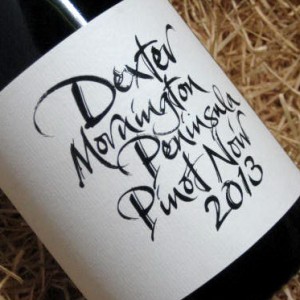 It’s more grist to our mill, that price is no guide to quality, even if $40 is outside our sweet spot. It is the cheapest Pinot Noir at this top of the range tasting; the dearest is $130.